Why have your watch appraised in Aix-en-Provence: the Mostra approach
In the quiet of a workshop, a watch reveals far more than the time. Expertise makes it possible to understand its history, determine its value, and preserve its integrity. In Aix-en-Provence, Mostra offers dedicated days to shed light on each piece with precision and rigor.
Having a watch appraised is not only about finding out its price. An appraisal helps you better understand its origin, coherence, condition, market value, transmission potential and the precautions to take before a sale, insurance, restoration or inheritance. In Aix-en-Provence, Mostra supports this process with a watchmaking, heritage and market-oriented perspective.
There comes a time when a watch is no longer simply worn. It raises questions. About its origin, its value, what it says about the person who chose it, the person who preserved it, and sometimes the person who will pass it on.
Having your watch appraised is therefore not just about asking “how much is it worth?”. It means agreeing to look at it differently: as a mechanical object, of course, but also as a witness to an era, a collector’s piece, a family asset or a watch that may be sold, insured, restored or passed down.
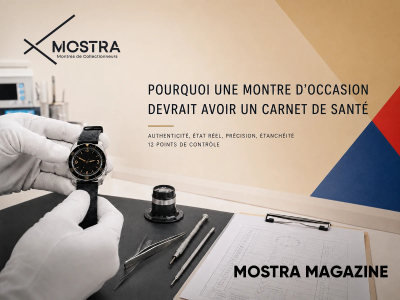
In the discreet atmosphere of a workshop, between the precision of a gesture and the attentive observation of a movement, a watch often reveals what it does not say at first glance: an authentic patina, a replaced part, overly heavy polishing, a preserved calibre, a coherent dial or, on the contrary, a detail that deserves to be explained.
For a request directly related to valuation, authentication or obtaining a certificate, you can visit the page dedicated to the appraisal of pre-owned watches at Mostra. This article, however, helps you understand when an appraisal becomes useful and what it can really bring.
Understanding, passing on, protecting: the real reasons to have a watch appraised
We often think of an appraisal at the time of a sale. That makes sense, but it is reductive. A watch can also be appraised to prepare a transmission, secure insurance, document a collection, decide between preservation and restoration, or simply better understand what you own.
The value of a watch does not depend only on its brand or reference. It also depends on its condition, coherence, history, configuration, possible presence of documents, quality of its dial, case, movement and level of preservation.
A serious appraisal therefore helps move beyond approximation. It makes it possible to distinguish intuition from observation, theoretical market value from realistic value, and an appealing watch from a genuinely coherent one.
When should you have your watch appraised?
Not every watch requires an in-depth appraisal. However, certain situations clearly justify seeking a professional opinion, especially when dealing with an antique, vintage, collector’s or luxury watch.
Before selling a watch
Before putting a watch up for sale, an appraisal helps position it more accurately on the market. It helps identify what may strengthen its value, what may limit it, and what an attentive buyer will look at first.
This is particularly important for sought-after models, Rolex, Omega, Breitling, Cartier, Jaeger-LeCoultre, Tudor, Heuer, Longines, Seiko, Yema watches, or military and dive pieces, where configuration details can strongly influence the interest of the watch.
Before inheritance or transmission
A watch passed down within a family does not only have market value. It may carry a story, a memory, a period of life. But in order to pass it on properly, it is often useful to document it.
An appraisal then helps place words, reference points and sometimes a value on the object. It helps heirs or relatives understand what they are receiving, and decide whether they wish to keep, insure, restore or sell the watch.
Before insurance
To insure a valuable watch, it is preferable to have solid elements: identification, condition, estimated value, photographs and overall coherence. A documented watch is easier to declare and justify if needed.
Here, the appraisal plays a securing role. It does not transform the watch, but it clarifies what it is.
Before restoration
This is one of the most sensitive cases. Restoring a watch without a diagnosis can sometimes do more harm than good. Overly heavy polishing, a dial change, a part replaced without discernment or an intervention that is too modern can alter the interest of an older watch.
Before making any major decision, an appraisal helps distinguish what should be preserved from what should be corrected. It helps avoid a restoration that would erase part of the watch’s history.
Before buying a pre-owned watch
An appraisal can also take place before a purchase, or as part of understanding a piece already identified. In the pre-owned market, two watches bearing the same reference can show major differences: case condition, dial quality, component coherence, service history, presence of accessories or past interventions.
To go further on this point, you can read our article dedicated to buying a vintage men’s watch in 2026 in Aix-en-Provence, which discusses condition, source and coherence before purchase.
Free valuation and in-depth appraisal: understanding the difference
A valuation and an in-depth appraisal do not answer exactly the same need. A valuation provides an initial reading: order of value, potential interest, apparent coherence and general positioning of the watch on the market.
An in-depth appraisal goes further. It may require more time, closer observation, technical examination, photographs, verification of references, numbers, markings or internal elements. Its purpose is to establish a more complete understanding of the watch.
This distinction is important to avoid misunderstandings. An initial valuation can open the discussion. A full appraisal, however, is intended to document a piece more precisely when its value, history or complexity justifies it.
What a watch appraisal really seeks to verify
A watch is never just a brand name written on a dial. An appraisal consists of examining the whole: what can be seen, what can be inferred, and sometimes what can only be confirmed after a more detailed examination.
Identifying the watch
The first step is to identify the watch: brand, model, reference, period, type of movement, collection family and coherence with expected characteristics. This identification makes it possible to move beyond vague descriptions and establish a clear basis.
Coherence of the elements
The dial, hands, crown, case, caseback, bracelet, markings and movement must tell a compatible story. A watch may have lived, been maintained or received service parts without necessarily losing all interest. But these elements must be understood and explained.
State of preservation
Condition is not limited to appearance. A shiny case may have been over-polished. A patinated dial may be highly desirable. A clean movement may require a check. An apparently simple watch may hide decisive details.
The role of the appraisal is precisely to go beyond first impressions.
Market value
Value depends on demand, rarity, condition, configuration, history and level of documentation. It must be assessed with caution, as the watch market can evolve according to brands, periods and collecting trends.
An appraisal is therefore not about applying a mechanical price guide. It is about placing the watch in a real context.
Free appraisal days at Mostra in Aix-en-Provence
Mostra regularly organises days dedicated to the free appraisal of watches and jewellery in Aix-en-Provence. These appointments allow owners to present a piece, benefit from an initial professional opinion and discuss its origin, condition, interest and potential value.
These days are designed as moments of exchange. They do not always replace an in-depth appraisal when the watch is complex, but they make it possible to lay the first foundations: understand what you own, identify the points to check, and decide whether a more detailed analysis is worth pursuing.
During these meetings, Mostra’s watchmaking perspective may be complemented by expertise relating to the market, auctions, collector’s watches or jewellery. This cross-disciplinary approach avoids reducing the watch either to its mechanics alone or to its commercial value alone.
When should you request a full appraisal file?
A full appraisal file becomes relevant when the watch has significant value, a particular history, technical complexity, rarity, a transmission issue, a potential sale or an insurance need.
In that case, the aim is no longer simply to give a first opinion. It is to document the watch methodically: identification, condition, coherence, photographs, technical elements, observations on components and, where necessary, a more detailed examination of the movement.
This type of file can become a genuine identity document for the watch. It helps strengthen traceability, secure a transaction, support an inheritance or keep a clear basis for any future decision.
Why have your watch appraised at Mostra?
Choosing Mostra means benefiting from a perspective that does not stop at a value announced too quickly. Each watch is considered as a whole: history, coherence, mechanical condition, preservation potential, collecting interest and market reality.
This approach helps avoid certain common mistakes: underestimating a discreet but coherent watch, overvaluing a famous but tired piece, restoring too quickly a watch that would have benefited from remaining in its current condition, or overlooking a detail that changes the interest of the whole.
Having your watch appraised at Mostra also means preparing for the future. A watch that is understood, documented and supported is easier to pass on, clearer to sell and better positioned for insurance.
Appraisal, workshop, sale: long-term support
An appraisal can lead to several decisions. Sometimes, the best option is to keep the watch as it is. Sometimes, a light intervention, a mechanical check, servicing, considered restoration or sale may be worth considering.
This is where the continuity between boutique, workshop and appraisal makes real sense. A watch is not only considered for what it is worth today, but for what it can become: a piece to wear, preserve, pass on or offer to a collector.
If the appraisal reveals a technical need, orientation towards the Mostra Store watchmaking workshop then makes it possible to consider the appropriate next steps, without confusing appraisal, maintenance and repair, while taking into consideration precautions for antique watches service.
Mostra welcomes you in Aix-en-Provence
In Aix-en-Provence, Mostra welcomes watch owners who wish to better understand their piece, prepare a sale, secure a transmission, consider insurance or simply obtain a professional opinion.
Having your watch appraised means agreeing to look at it differently. Not only as an object you wear, but as a set of clues to be read: an era, a movement, a configuration, a condition, a history and a possible value.
For an initial valuation, an in-depth appraisal or a request related to a collector’s watch, you can prepare your visit to the Mostra boutique in Aix-en-Provence.
These products might interest you
Speedmaster 321 Pre Moon Right-Stuff

Type 20 pilote f-84

airman 1 special aopa homologation

F-84 pilot RFA mcqueen

accutron astronaut nasa

Pilote BundesMarine

Speedmaster mark 2 vintage

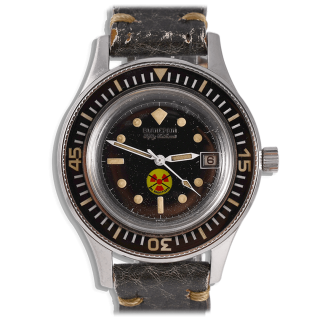
fifty fathoms cousteau
calatrava petite seconde

Classique Finance

62MAS Hashigo Dressed

cccp staline heroe of soviet union

submariner meter first

cccp earlier soviet army cold-war

Marine Nationale extrait archives

Navitimer Cosmonaute Scott Carpenter The Right Stuff
a-11 us air force pilot

VERRE SEIKO VINTAGE
seamaster chronometre vintage 1969

thin o matic mannix
reagan 987 plaquée avec boite d'origine

constellation vintage

Broadway Classic 36 Vintage

speedmaster 861 vintage 69 ST

pilote armee de l air chevalier du ciel

memovox fullset

astro caribbean

dirty dozen british army d-day

Dirty Dozen royal army

US 554 ORD Dept Marine Corps Pacific

US ARMY Ord In Europe German Issue

Geomatic jumbo Chronometer

COURONNE VISSE YEMA ORIG
Oyster Perpetual Bubbleback
Excelsior Park Chronographe
Aviator Petite Seconde
Supermatic Helbros War is Over
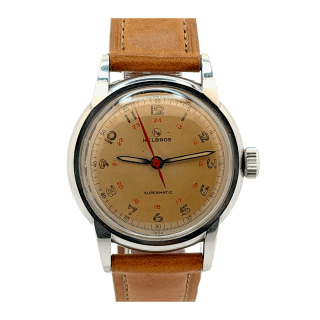
Classical Military Type 1940
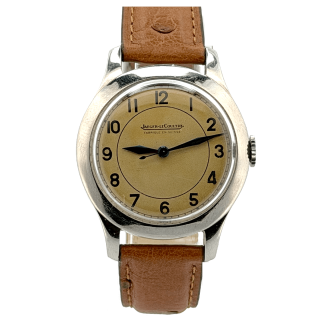
Rectangular Art Deco Gold
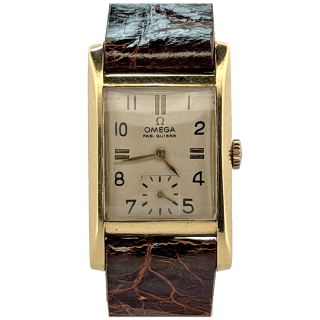
French AIr Force Chronograph Type 21
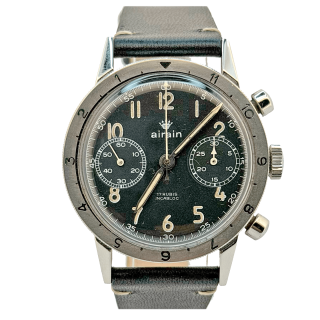
marine nationale indochine
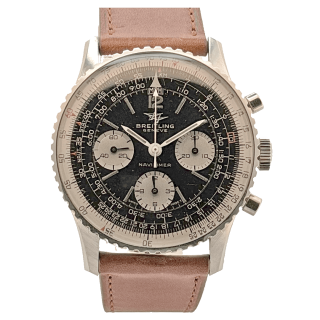
Navitimer 806 Twin Jet MK-7 Boxed 10
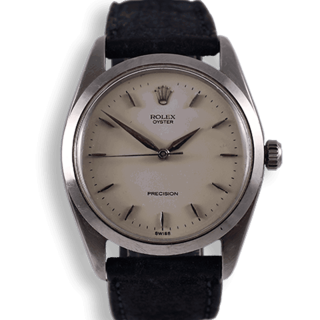
Oyster Precision Classic Transitional
Speedmaster Gemini V Missions NASA

Speedmaster Mission Gemini 10

sturmanskie pilot navy cccp

speedmaster full-set 1978 space-shuttle

Chronomat Frecce Tricolori

Navitimer 2 Patrulla Aguila

adanac special forces usa

w-10 desert storm british

W-10 royal navy desert storm

de gaulle gign magnum 357

Buran Soviet Space Shuttle Military Program

cccp soviet army black dial

sturmanskie cccp pilot su 27

sturmanskie cccp air base commander

sturmanskie russian air force pilot

w-10 close protection unit

w-10 pegasus airborne unit

sturmanskie air superiority

marine nationale submariner snowflake

cccp soviet army white dial

Flieger Astronaut ESA Nasa STS 99 Endeavour Mission STRM
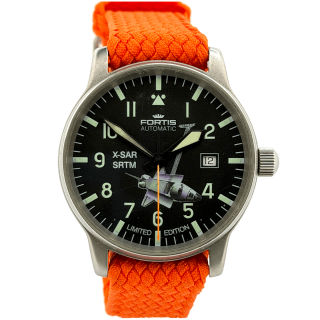
russian fed space military control

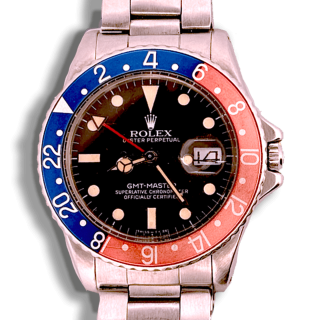
gmt master pepsi mat dial crown guards
british army royal academy fullset

chronographe pilote raf

navigator watch type 3

pulsar royal air force military watch

us military seal team type 1

casm commando hubert

navigator type 3 class 1

pro-diver 200 fluo arsenal de toulon

captain wilhard

Superocean Porsche Design Bund 3529 Military Combat Diver

rn-300 diver

w-10 fat-automatic

rolex gmt master II pepsi full set

navitimer patrouille de france bracelet cuir

us navy pilot h-3 no radiation

armée de terre 1994 luminova

resa

x-33 speedmaster fly to mars

Spationaute III

chronographe navitimer avions pierre robin

Speedmaster Apollo 15 Full-set Anniversary Unworn

Desert Shield Meca Official Issue
WRV Marine Nationale Squad

navigation watch h3 usnavy pilot

br-03 black matte chronograf aviation mil spec

cockpit galactic chronograph

w-10 royal air force military
chronospace automatic milanese

super avenger automatic chronograph

rolex gmt master II night-flight full set

Speedmaster Apollo 17 Last Man on Moon Limited Edition

Speedmaster Professional 145.02 Cal 861

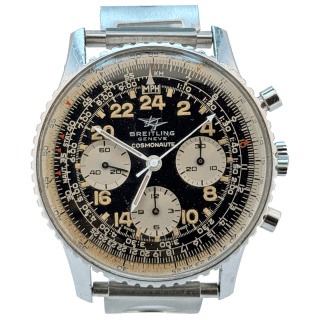
Cosmonaute navitimer

Share this content