Should you have your watch polished? Scratches, finishes and collector value
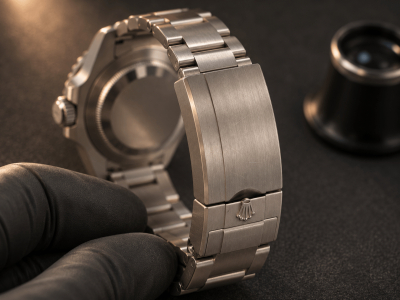
A scratch on the clasp, a dent on a lug or a scuffed acrylic crystal can all make you think about having your watch polished. Each calls for a different decision. On a collector’s watch, removing a mark can also soften an edge or change a finish that matters to its value. Here’s how to decide...
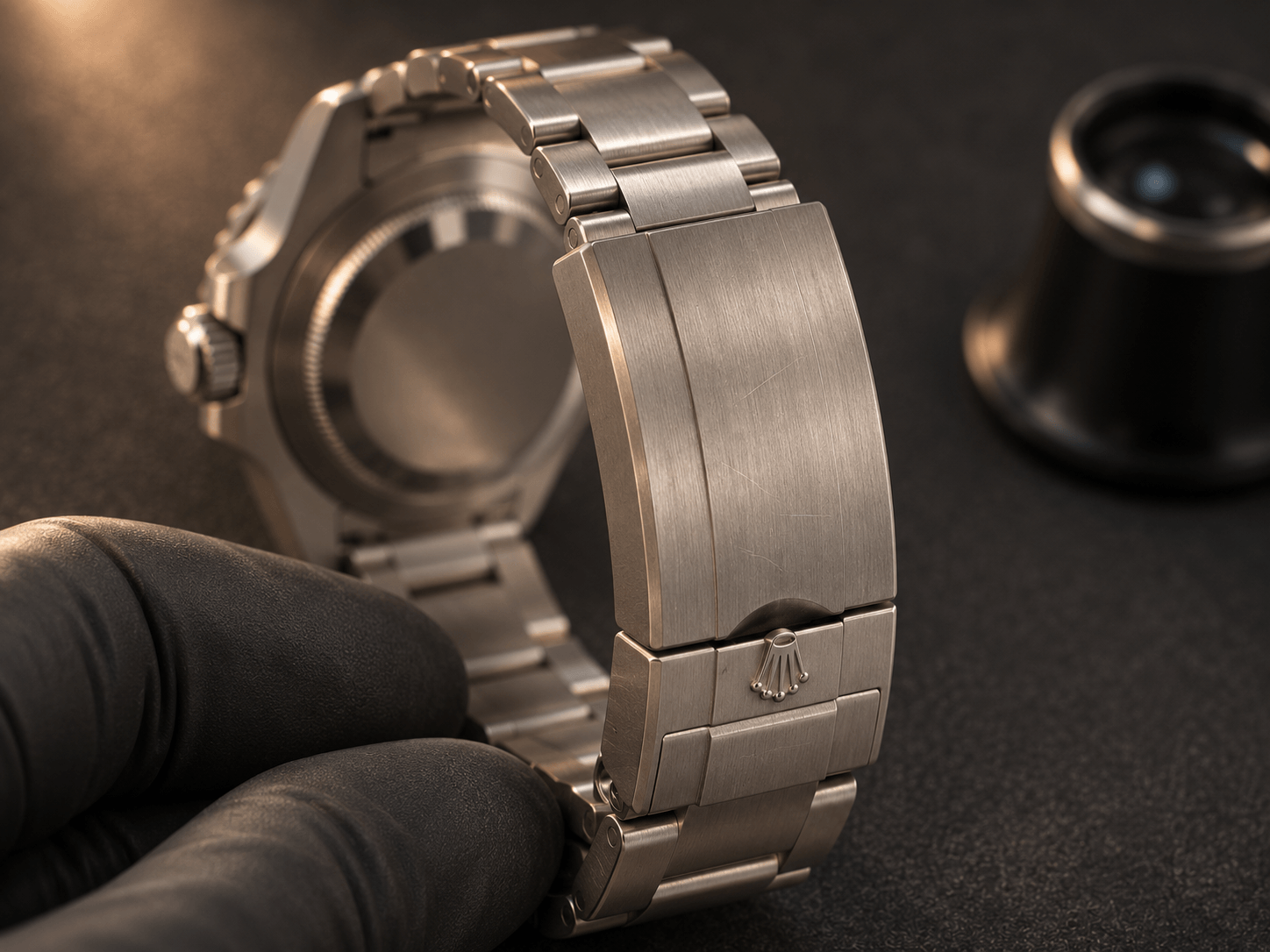
Polishing can make sense when the marks are superficial and the finish lends itself to a light touch-up. If a vintage case still has crisp lines, or a deep mark sits close to an edge, have the watch examined before deciding. Ask what the work would improve and which details it might change.
- Cleaning, polishing and brushed finishes
- Which marks to reduce and which to keep
- How polishing can affect value
- A Speedmaster examined by Mostra
- What to ask before accepting a quote
What is the difference between cleaning a watch, polishing its case and polishing its crystal?
Cleaning removes the residue that dulls the case or builds up between bracelet links. This can make a watch look sharper and reveal which marks are actually in the surface. The method depends on the materials and condition of the watch, especially if its water resistance is unknown.
Polishing metal reduces the appearance of some marks by removing material. On a case that combines polished and brushed surfaces, the boundary between the two is part of the design. Refinishing a brushed surface means recreating its texture and following the original direction of the grain. Plated or coated finishes need particular care because refinishing can alter or remove part of the coating.
Polishing an acrylic crystal is a separate operation. It can make the dial easier to read when shallow scratches obscure it. Mineral glass and sapphire require a different approach. First identify the material and check whether the mark is a scratch, a chip or a crack.
Which scratches can be reduced, and which marks are best left alone?
Look at where the mark sits, how deep it is and what finish surrounds it. A fine scratch in the middle of a polished clasp and a dent on the edge of a lug call for different decisions. The deeper the mark or the closer it is to a detail that defines the shape of the case, the more carefully you should weigh what it would take to remove it.
What should you do about the mark on your watch?
| What you see | What to consider first | What affects the decision |
|---|---|---|
| Build-up between links or a dull bracelet | Cleaning suited to the bracelet | The material, the condition of the bracelet and the marks that remain after cleaning. |
| Fine scratches on a polished surface | A light touch-up if the finish allows it | How close the mark is to an edge, an engraving or a brushed surface. |
| Deep scratch or dent on a lug | An inspection before any refinishing | How much material would need to come off and how that would affect the profile of the lug. |
| Scratched acrylic crystal | Assess whether work on the crystal alone is enough | The crystal material, the depth of the scratch and any signs of cracking. |
| Marked vintage case with crisp contours | Consider leaving the case as it is | The definition of the edges, the condition of the finishes and signs of previous refinishing. |
Before using an abrasive at home, make sure you can identify the material and finish. On a plated case or a watch with both polished and brushed surfaces, a local touch-up can leave a patch that stands out more than the original scratch.
Can polishing reduce the value of a watch?
Yes, if it alters details that buyers value. On some collector’s watches, the shape of the lugs, the definition of the bevels and the transitions between polished and brushed surfaces all matter when assessing condition. Repeated refinishing can round the edges, soften an engraving or change the profile of the case.
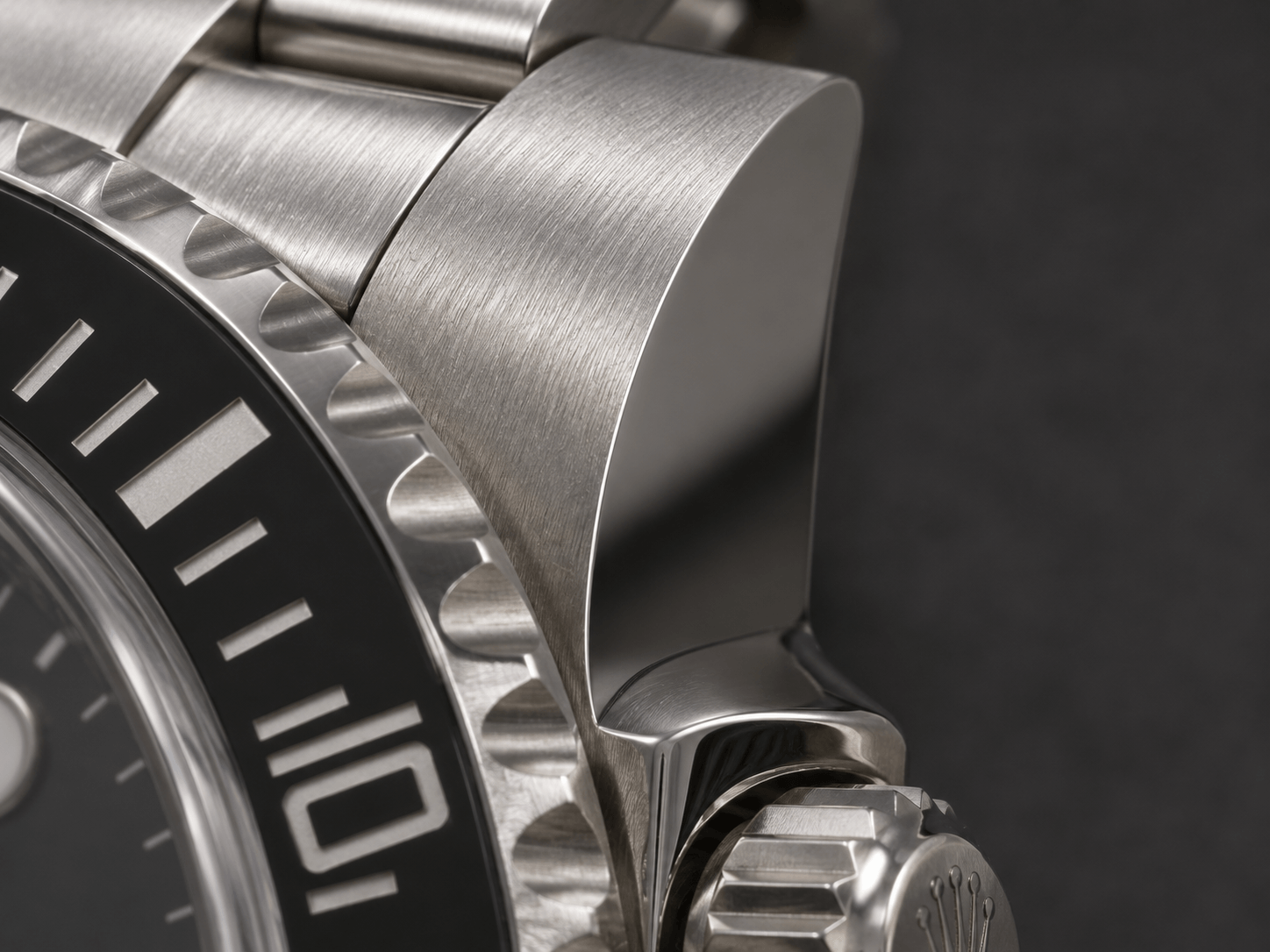
The impact depends on the reference, its starting condition and the work done. On a modern watch worn every day, a light touch-up to the clasp may address the one mark that bothers you. On a vintage watch with well-preserved lines, signs of wear may be preferable to a brighter finish that comes at the cost of changing the case. Read more about the precautions to take before working on a vintage watch.
Photographs taken at an angle can show softened edges or uneven finishes. Assessing originality also requires knowing what the reference should look like and what is documented about previous work. If you plan to sell and the condition of the case matters to the valuation, consider having the watch appraised in its current condition before arranging any refinishing.
A Mostra case study: making a Speedmaster easier to read while preserving the case
The Mostra workshop examined an Omega Speedmaster with a scratched acrylic crystal, a bezel that had developed patina and a case that showed signs of wear. The inspection found that the movement needed servicing. The case, dial, bezel and tritium hands were still consistent with one another.

Mostra recommended servicing the movement, cleaning the watch with care and polishing the acrylic crystal, while preserving the wear marks on the case. Each part of the recommendation served a purpose: caring for the movement, making the dial easier to read and preserving the character of the watch. See this case in the Mostra Observatory report.
In its study of 100 pre-owned watches, the workshop recommended limited cosmetic work or advised against polishing in 17 cases. For guidance on documenting a watch’s condition and recording the checks carried out, see the Mostra Watch Health Record guide.
What should you ask before agreeing to a polish?
Show the watchmaker the mark that bothers you and explain what you want to achieve. If you want certain finishes preserved, say so before accepting the quote. These four questions help define the work:
- Which areas will be worked on? Ask whether the quote covers the clasp, bracelet, case or crystal.
- Which finishes will be preserved? Point out the edges, bevels, engravings or brushed surfaces you want to keep.
- Which marks will remain visible? Ask what can be reduced while preserving the lines of the watch.
- Does the quote list mechanical and cosmetic work separately? This lets you make a separate decision about servicing and refinishing.
If you want to keep the case and bracelet as they are, ask for the quote to state: “Please leave the case and bracelet finishes as they are unless I approve further work.”
Can you ask for a watch service without polishing?
Yes. Ask for the mechanical service to be quoted separately and make clear that you want to keep the case and bracelet finishes as they are. Have the workshop confirm your instructions on the quote before any work begins.
How much does watch polishing cost?
The quote depends on the areas involved, the materials, the finish and the depth of the marks. A light touch-up to the clasp and refinishing the case and bracelet require different amounts of work. An inspection helps the watchmaker determine what is appropriate and price it accordingly.
In Aix-en-Provence, the Mostra watchmaking workshop can examine your watch and advise whether cleaning, a light touch-up or leaving the finish as it is makes sense for your piece.
Share this content