


Longines
Marine Nationale extrait archives - Indochine
| Case | Steel |
|---|---|
| Diameter | 33,5 mm |
| Strap | Leather Strap |
| Movement | Hand-wound |
|---|---|
| Caliber | Longines 12.68N |
| Content | Mostra Travel Pouch |
-
Diameter33,5 mm
-
MovementHand-wound
-
CaseSteel
-
StrapLeather Strap
-
ContentMostra Travel Pouch
-
GenderMan
-
Gender for GoogleMan
-
AgeAdult
-
WaterproofingNot waterproof
-
Year1948
-
ModelMilitaire reglementaire
-
VersionIndochine
-
Manufacturer reference5774
-
Certificate of authenticityYes
-
Mostra referenceMT1121296
-
CaliberLongines 12.68N
-
Number of rubies17
-
Lug Width (mm)16 mm
-
Glass typeMineral
-
DialCdran Blanc avec quelques traces dues au temps
-
LoopArdillon
-
Strap typeBracelet de remplacement type Pilote
-
Mini Bracelet Length (cm)17 cms
-
Maxi Bracelet Length (cm)26 cms
-
Strap colorNoir
-
SpecificitiesMontre militaire de marine dotation règlementaire indochine avec extrait d'archives Longines
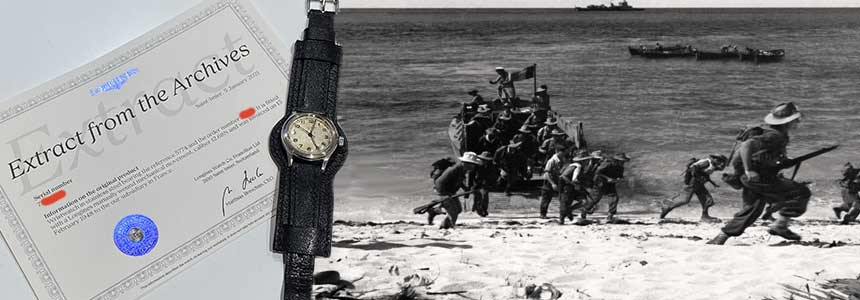
Longines 5774 military watch, delivered to the French Navy in 1948, with original Longines extract from the archives.
Mechanical watch with manual winding movement, powered by the Longines calibre 12.68N. This 17-jewel movement, produced by the manufacture’s workshops since the 1940s, was used during WWII in both American and British military timepieces. Operating at 18,000 vibrations per hour, it is highly shock- and vibration-resistant thanks to its Incabloc shock protection system, flat hairspring, and a power reserve of approximately 42 hours after full winding — a particularly valuable feature during wartime operations.
Stainless steel case measuring 33.5 mm in diameter, protected from humidity by a gasket under the screw-down caseback. The outer caseback features star-shaped notches, inherited from Longines’ WWII-era production for Axis and Allied forces alike. The engraved “MN XXXX” is an official military issue number for the French Marine Nationale. Manufactured in 1947 and officially issued in February 1948 (as confirmed by the Longines archive extract included with the watch), this model was part of a government contract covering around 4,000 units, plus spare parts for maintenance. The 18 mm lug width was designed to accommodate fabric straps in sand or black nylon, with some brown leather straps issued to distinguished users or naval aviators — as with the replacement strap included here.
The inside of the caseback is engraved with case numbers. The movement is signed and numbered. The original white dial has aged to a natural eggshell patina, bearing the “Fab. Suisse” marking, in the spirit of U.S. Navy pilot watches. The oversized crown allows for operation with gloves. The white dial offers superior legibility in low light or during high sun glare over water, contrasted with blued steel hands enhanced with tritium (as was standard for naval aviation). The numerals — some of which show signs of humidity damage due to tropical deployment in Indochina — are also tritium-coated, arranged in a 12-hour format around a detailed minute track graduated to 1/20th of a second.
This model was issued at the start of the First Indochina War to the naval and air-naval forces of the French expeditionary corps (see our article about Eric Tabarly's watches on the Mostra-Mag Blog). Due to its robustness and resistance to humidity, the watch remained in service until 1954, when it was replaced by the Type 20 chronographs for pilots. This emblematic timepiece is featured in the special edition No. 9 of *La Revue des Montres*, published in December 2020 and titled *Legendary Watches – Horological Icons* (pages 38–39).
You will also like
-
-
-
-
-
-
-
-


