


Junghans
Pilote BundesMarine - Bundeseiggentum J-88 Flieger
| Case | Steel |
|---|---|
| Diameter | 39 mm |
| Strap | Leather Strap |
| Movement | Hand-wound |
|---|---|
| Caliber | Junghans J-88 |
| Content | Mostra case |
-
Diameter39 mm
-
MovementHand-wound
-
CaseSteel
-
StrapLeather Strap
-
ContentMostra case
-
GenderMan
-
Gender for GoogleMan
-
AgeAdult
-
WaterproofingNot waterproof
-
Year1954
-
ModelMeister Chronograph
-
VersionBundeseiggentum J-88 Flieger
-
Manufacturer referenceJ88.001
-
Certificate of authenticityYes
-
Mostra referenceMS0619099
-
CaliberJunghans J-88
-
Glass typePlexiglass
-
DialNoir, deux compteurs
-
LoopArdillon
-
Strap typeBracelet de remplacement
-
Strap colorNoir
-
SpecificitiesLunette de forme caractéristique, Water Résistant 3 ATM, état d'origine, pièces originales.
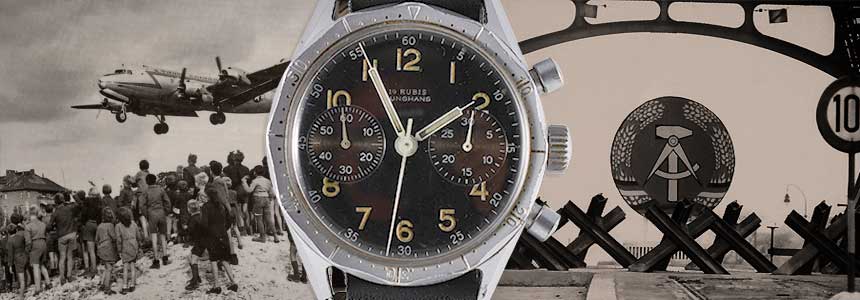
Vintage military pilot watch Junghans J88 from the Bundesmarine (West Germany), a two-register chronograph from 1954 with black dial, stop function, 38mm case, and hesalite (plexiglass) crystal. This military-issued J88 chronograph was supplied to fighter pilots of the newly established Federal German Air Force (Bundeswehr) and is in excellent condition and full working order. Numerous archival photographs show this chronograph worn by Sea Hawk pilots of the Marinefliegergeschwader 1 and 2 squadrons of the young Bundesmarine. These units formed NATO’s first line of defense against Warsaw Pact forces massed behind the Iron Curtain throughout the Cold War. On the front lines, their mission was to counter units of the East German Nationale Volksarmee, which, under the command of Soviet Armed Forces in Germany, constituted the border troops and potential first wave of any incursion into West Germany. In August 1962, during a brief and possibly "accidental" airspace violation near Eisenach, a Sea Hawk was attacked by MiG-21s and had to make an emergency landing southeast of Bremen. The aircraft was so damaged it could not fly again and was ultimately destroyed.
This 38mm chronograph features two sub-dials and distinct military markings, along with a unique rotating bezel design inspired by WWII-era Kriegsmarine watches. As a collectible timepiece, it holds a central place in any Cold War-era military watch collection. Its robust Junghans J88 movement features a 14-ligne hand-wound chronoscope with 19 jewels, a column wheel, and a Breguet overcoil. This movement, famed during WWII for its reliability, beats at 18,000 vibrations per hour and provides a power reserve of approximately 36 hours. The screw-down case back and anti-magnetic construction were rated for 3 ATM water resistance—offering basic protection against splashes. Owing to this model’s military reputation, Junghans eventually released civilian versions. Today, this historic legacy is central to Junghans’ ongoing commitment to quality watchmaking.
Frequently spotted on the wrists of military personnel, pilots, and even race car drivers, this chronograph also appears in numerous films portraying the Berlin Wall era. It met the NATO post-war specifications just like the Breguet Type XX or the Vixa Type 20 chronograph, Dodane, or Auricoste, although it lacked the flyback function. At the time, all flyback-equipped movements—whether newly produced or existing stock—were reportedly reserved for the armies of Allied nations who had emerged victorious in WWII.
You can find articles and stories about the history of watch brands on our Watch History page.
You will also like
-
-
-
-
-
-
-
-


