Buying a vintage men’s watch in 2026 in Aix-en-Provence
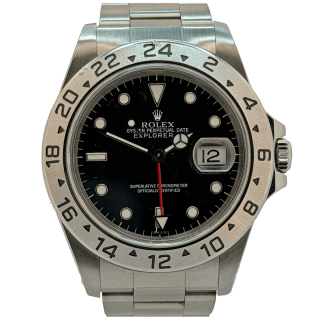
In Aix-en-Provence, buying a vintage men's watch in 2026 is no longer about choosing something merely old. It is about finding a watch that feels right: in proportion, in presence, and in the way it settles on the wrist. From classic Rolex Datejust references to an Explorer II 16570.
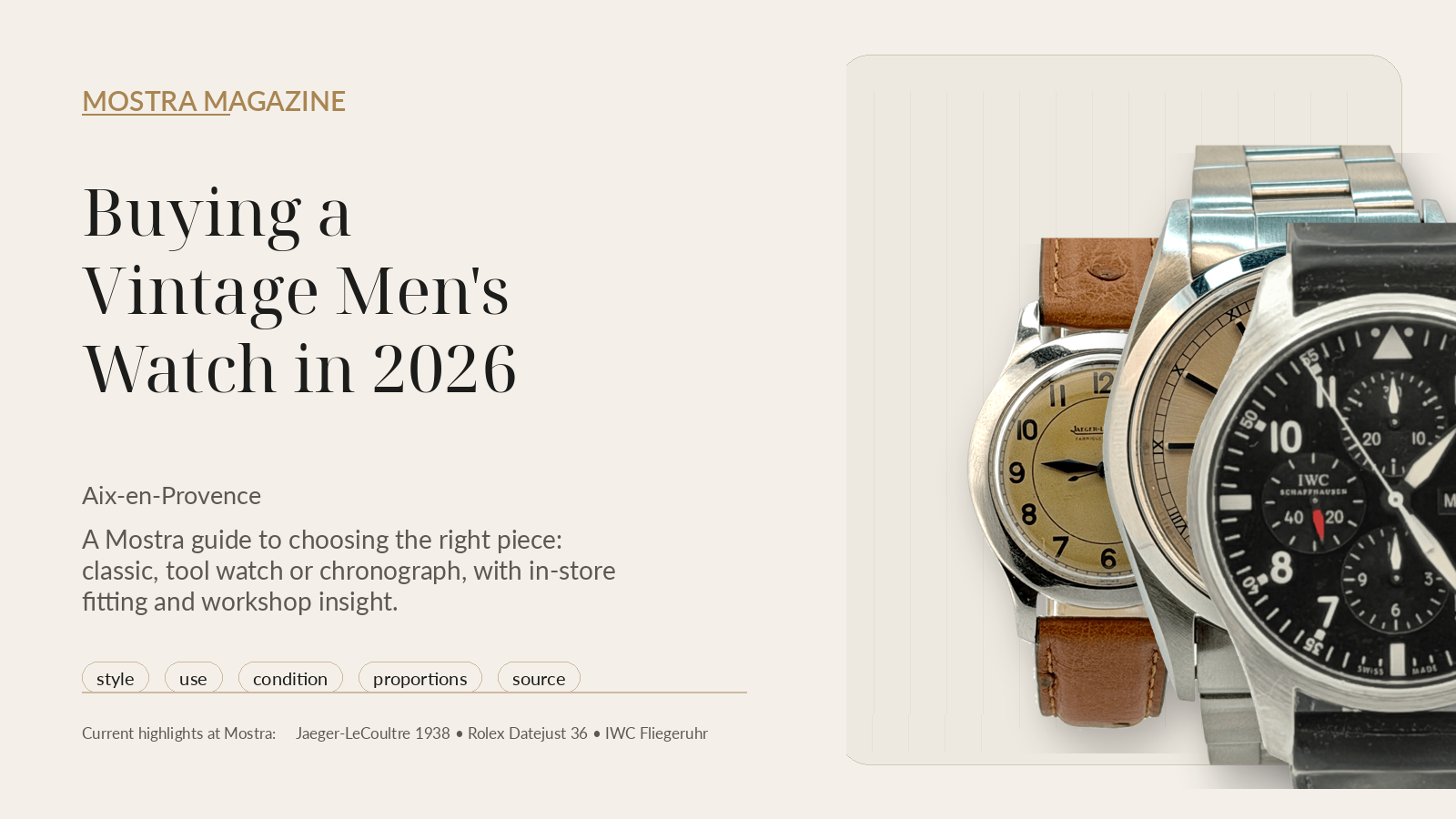
Buying a vintage men’s watch in 2026 is not just about choosing a famous reference. The right purchase is about finding the right balance between style, proportions, real-life use, condition, budget and trust in the source. In Aix-en-Provence, trying watches on in store allows you to compare volumes, eras and wrist presence before choosing a pre-owned watch that will truly accompany you over time.
In Aix-en-Provence, watch shopping still has something rare about it: a watch can be chosen with the eyes, the hand and the time you are willing to give it. Buying a vintage men’s watch in 2026 is therefore not about chasing a reference simply because it is fashionable, nor about looking for a piece that is merely “a little old” to tick a box.
It is more about finding a watch that feels right: right in its diameter, right in its presence on the wrist, right in its condition, right for its intended use, and right in the way it will accompany both ordinary days and more deliberate moments.
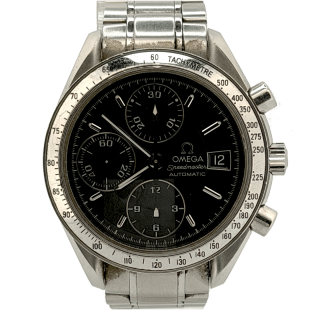
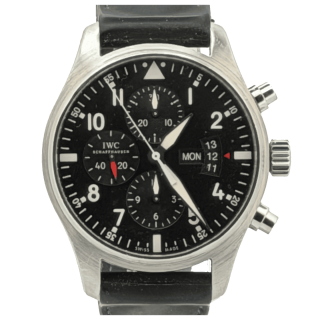
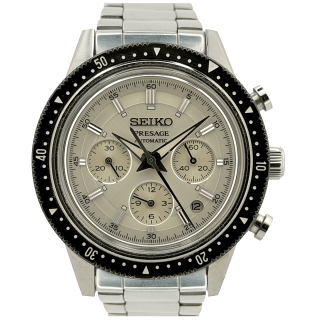
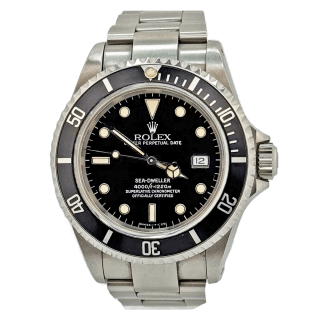
The masculine vintage watch world is not a miniature museum. It is a living territory, where a restrained Rolex, a well-balanced Omega chronograph, an IWC pilot’s watch or a more confidential Japanese piece can express very different styles. Before looking at market value or rarity, it is better to look at appearance, use and coherence.
Discover the selection: pre-owned men’s watches – vintage pre-owned watches – all our pre-owned watches
What you are really buying when choosing a vintage watch in 2026
A vintage men’s watch is not worth buying simply because it is more than twenty years old. It becomes interesting when it has retained coherence. A case that has not been distorted. A dial that still has presence. A size that occupies the wrist without excess. A movement, architecture and overall condition that are compatible with the life you actually lead.
The right purchase rarely begins with the question: “What is the best brand?” It begins with a simpler and often more useful one: what kind of watch are you looking for, and for what purpose? A discreet dress piece? A sports watch with character? A chronograph that adds depth without weighing down the wrist? A robust, legible and easy-to-wear tool watch?
This is the kind of reflection that helps avoid overly theoretical purchases: the ones that look appealing in photos, but never really find their place once on the wrist.
Start with use rather than prestige
The prestige of a brand matters, of course. But in the world of vintage watches, it is never enough. A widely discussed watch can feel cold on the wrist. A more discreet reference can, on the contrary, become immediately obvious. Use should therefore guide the choice before reputation.
For an everyday watch
If you are looking for a watch to wear often, balance should come first. A contained diameter, a legible dial, a construction that is easy to live with and a personality that does not tire the eye. The great classics of men’s watchmaking work very well in this register, because they know how to be noticed without ever forcing the point.
An everyday watch should be able to accompany a shirt, a jumper, a jacket, a weekend, a working day or a dinner without ever feeling out of place. This versatility is often where the best vintage men’s watches reveal their strength.
For a sportier look
If you prefer more assertive watches, the right reflex is to look at legibility, case balance, how the bracelet sits on the wrist and, if the watch is going to be exposed to water, the actual state of its water resistance. A successful sports watch is not simply more robust in appearance; it must remain comfortable on the wrist, even outside a purely sporting context.
To explore this specific point further, you can read our article dedicated to watch water-resistance testing and pressure testing. This is a subject that calls for real caution, especially for older watches or pieces whose service history is not perfectly known.
For a first vintage purchase
A first vintage purchase does not need to be the rarest one. It should above all be the most appropriate. A coherent, well-maintained, easy-to-wear watch suited to your style will create a far more lasting relationship than a spectacular piece that is difficult to live with.
Rarity can come later, once the eye becomes more confident. To begin with, it is better to choose a watch whose proportions, condition, movement and use are clear. This is often the best way to enter the vintage world without frustration.
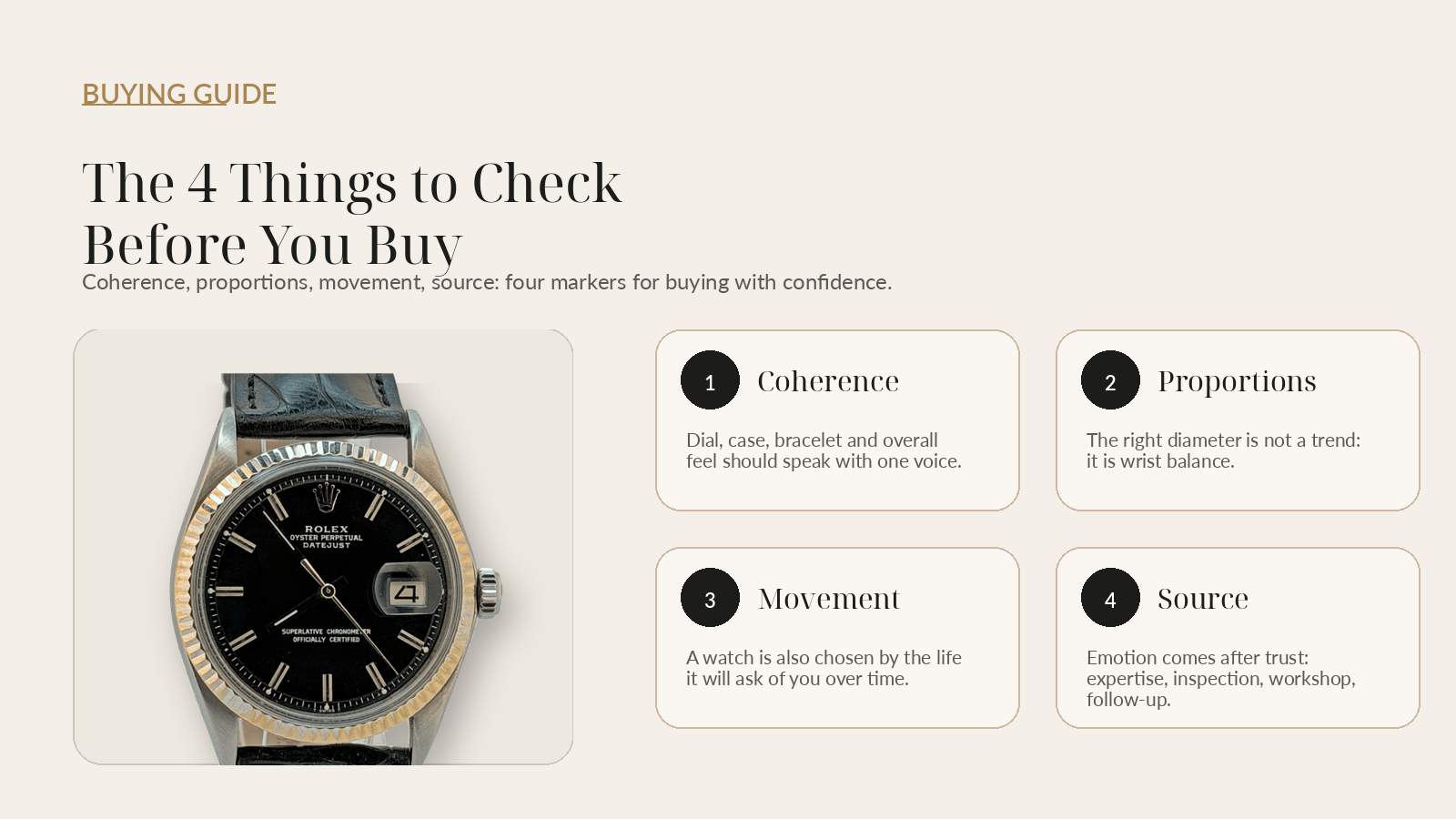
The four points to check before buying a vintage men’s watch
A vintage watch is not a new watch. That is precisely what gives it its charm, but also what makes it necessary to examine it methodically. Before buying, four points deserve particular attention.
1. The overall coherence of the watch
A vintage watch does not need to be perfect to be beautiful. However, it must tell a coherent story. The dial, case, hands, crown, bracelet and overall feeling should form a credible whole.
A light patina can add charm. A restoration that is too visible, an incoherent dial or an excessively polished case can, on the other hand, weaken the interest of the piece. The aim is not to seek a frozen watch, but an honest watch in what it shows.
2. Diameter and wrist presence
A watch is judged on the wrist, not only on a product sheet. Some 34 to 36 mm pieces have surprising presence, while other larger models may ultimately feel less balanced. The relationship between dial opening, lug shape, case thickness and bracelet length changes everything.
This is one of the reasons why trying a watch on physically remains essential. A watch may look too small in photos and become perfect on the wrist. Conversely, a piece that looks very appealing on screen may lose its balance as soon as it is actually worn.
3. The movement and long-term maintenance
Mechanical charm matters, of course. But the reality of maintenance must also be considered. An older or vintage watch is better chosen when you understand what it may require over time: regulation, checks, servicing, possible component availability and watchmaking follow-up.
This should not be a cause for concern. It simply allows you to buy with clarity. A well-chosen and well-maintained vintage watch can be perfectly enjoyable every day. But it does not follow the same logic as a new watch straight from the display case.
4. Trust in the source
In the pre-owned market, the quality of the source is an integral part of the quality of the watch. A piece supported by a genuine watchmaking eye, serious checks, a clear guarantee and a proper framework of guidance entirely changes the buying experience.
At Mostra Store, pre-owned watches are selected, checked and supported with a logic of transparency. To better understand this environment, you can visit the page dedicated to the Mostra boutique in Aix-en-Provence, as well as the page presenting the Mostra Store watchmaking workshop.
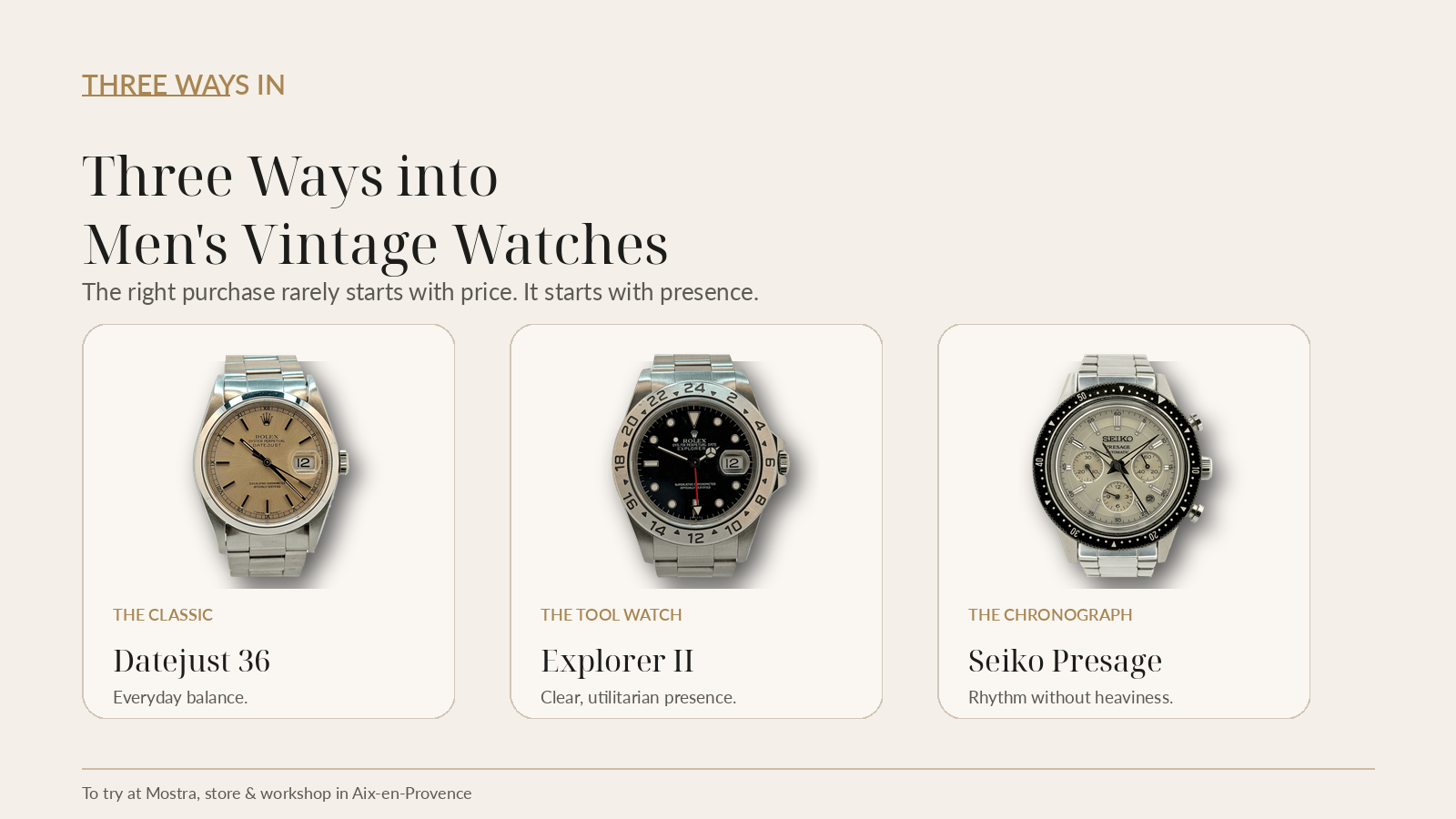
Three families of vintage men’s watches to consider
To choose more simply, it can be useful to think in broad families rather than by brand alone. Each family responds to a different use, look and way of wearing a watch.
Dress classics
These are watches that pass through the years quietly. They suit someone looking for stable elegance, a piece capable of moving from office to dinner without changing register. Their strength often lies in restraint: a legible dial, a balanced case, relative thinness and discreet presence.
These watches are particularly interesting for a first vintage purchase, because they allow you to wear a piece with history without falling into an overly marked collector’s effect.
Sports watches with character
They speak a little louder, but when well chosen, they retain real visual discipline. A good vintage sports watch does not overwhelm the wrist; it structures it. It may evoke the sea, aviation, exploration, racing or the military world, while remaining wearable in contemporary life.
This is the family in which actual condition becomes particularly important. A sports watch may have lived a more active life. It is therefore essential to look at the coherence of the case, bracelet, crown, legibility and, where use requires it, recent technical checks.
Chronographs and tool watches
Chronographs, pilot’s watches and instrument-inspired pieces bring rhythm, depth and sometimes a genuine memory of use. But they should never be chosen only for their complication or image.
A good vintage chronograph is chosen for its balance: dial legibility, comfort on the wrist, movement interest, pusher condition, overall coherence and ease of maintenance. It is often a fascinating family, but one that requires a more attentive eye.
Budget, rarity and value: keeping a clear-headed approach
In 2026, the vintage watch market is more informed than it was a few years ago. Major references are better identified, prices more visible and comparisons easier. But this transparency should not make us forget the essential point: two watches bearing the same reference can be very different.
The condition of the dial, the quality of the case, the service history, the presence of accessories, the coherence of components and the desirability of the configuration can strongly influence the interest of a piece. Budget should therefore not be seen only as a ceiling, but as a selection tool.
It is sometimes better to buy a simpler but more coherent watch than a more ambitious reference whose condition or history creates too much uncertainty. In vintage, a good deal is not always the lowest price. It is often the clearest watch.
Vintage, antique or neo-vintage: do not confuse the intentions
Not all watches that are no longer recent tell the same story. An antique watch, a vintage watch and a neo-vintage watch do not always meet the same expectations. Some pieces appeal through their heritage charm, others through their wearability, and others again through their balance between retro style and modern comfort.
To explore this distinction further, you can read our guide to the differences between antique and vintage watches. And if you are particularly interested in models from the 1990s to 2005, our article dedicated to neo-vintage watches explains why this period is attracting more and more enthusiasts.
Here, the key is above all to keep the right angle: choosing a vintage men’s watch according to your use, your style and your relationship with time, rather than according to an overly rigid definition.
Why buying in Aix-en-Provence changes the decision
Some watches can be understood in photos, while others only reveal themselves on the wrist. A very understated piece on screen can become obvious once tried on. A watch you believed to be ideal can lose its balance as soon as you actually wear it.
This is where the in-store fitting becomes decisive. You compare volumes, dials, bracelets, eras and sensations. You measure what feels right and what remains theoretical. In Aix-en-Provence, this makes it possible to move from an abstract desire to a much safer decision.
The boutique also allows you to compare several directions: a dress watch, a sports watch, a chronograph, a more discreet vintage piece, a more recent watch or a more iconic reference. Direct comparison often sharpens taste faster than hours of online research.
Mostra guides you in choosing a vintage men’s watch
Do not buy a vintage men’s watch simply to tick off a reference. Buy it for the way it will accompany you. The right watch is not necessarily the most discussed, nor the most spectacular. It is often the one whose appropriateness becomes obvious after a few minutes, then even more so after a few days.
If you are just starting out, begin with a legible, balanced, wearable and coherent piece. If you are already a collector, you can then move towards quieter, rarer or more demanding watches. The important thing is not to confuse immediate desire with lasting pleasure.
Mostra’s role is precisely to help make this distinction: understand your use, compare the possibilities, explain differences in condition, proportions, movement and precautions for maintenance of vintage watches, then guide you towards a watch that makes sense for you.
Prepare your visit to Mostra in Aix-en-Provence
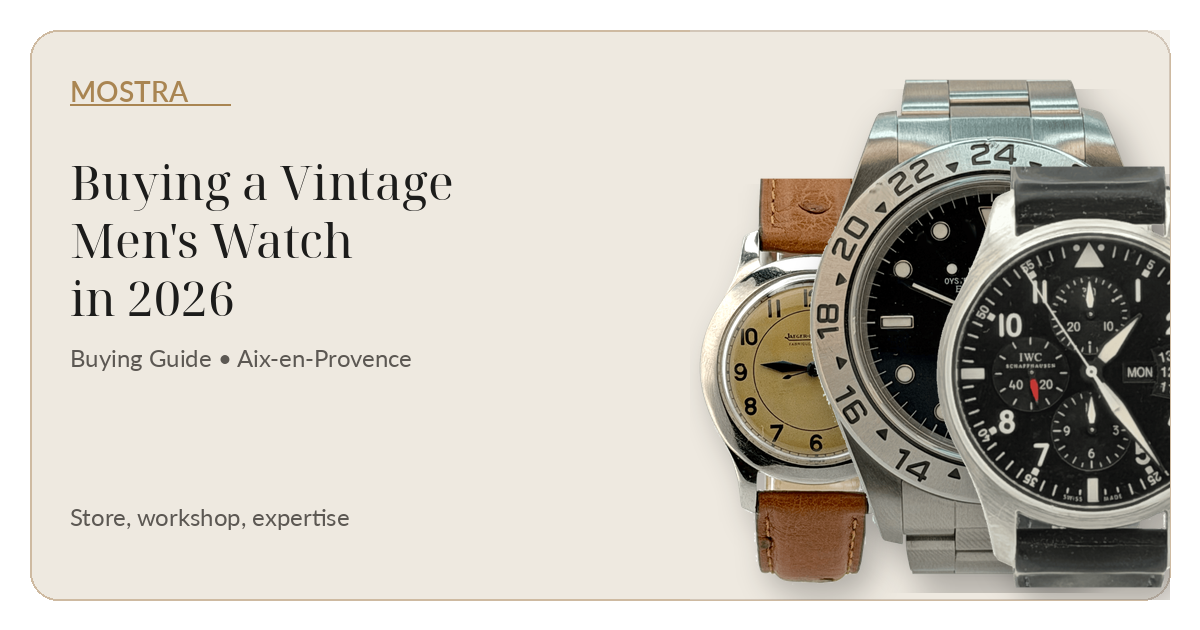
The simplest approach is often to prepare a visit around just three directions: a great classic, a sports watch with character, and an older or more singular piece. The comparison then becomes immediate, and the choice much more personal.
In 2026, a vintage men’s watch is no longer bought as a simple external sign. It is bought as a form of loyalty: loyalty to a look, to an era, to a very personal way of wearing time.
Related products

Share this content