Neo-vintage (1990–2005): why these watches are making a comeback, and which ones to buy pre-owned
Neo-vintage refers to watches produced between the early 1990s and the mid-2000s. Long overlooked, they are now returning to the spotlight for a simple reason: they offer a rare balance between style, reliability and price on the pre-owned market...
Neo-vintage refers to watches produced between the early 1990s and the mid-2000s. Long overlooked, they are now returning to the spotlight for a simple reason: they offer a rare balance between style, reliability and price on the pre-owned market.
Less fragile than older vintage watches, yet more distinctive than many recent models, neo-vintage watches embody a pivotal period in watchmaking, before today’s standardisation and the explosion of luxury prices.
In this article, we explain what truly defines neo-vintage, why these watches are appealing again, and above all which models deserve attention today on the pre-owned market, depending on your use and personal style.
Neo-vintage: what does it actually mean?
The term neo-vintage generally refers to watches manufactured between the early 1990s and the mid-2000s. They are neither “classic” vintage watches in the strict sense, nor truly modern pieces, but an intermediate category that is often poorly defined.
These watches belong to a key transitional period in watchmaking. They were designed after the quartz crisis, at a time when watch brands were regaining stability, but before the rise of oversized collections, heavy marketing and large-scale speculation that has shaped the industry since the 2010s.
In practical terms, a neo-vintage watch can usually be identified by several features:
-
proportions that are often more restrained than current models,
-
clear, coherent designs with little excess,
-
reliable automatic or quartz movements that are still widely serviceable,
-
a construction intended for everyday wear.
Unlike older vintage watches, neo-vintage does not seek to recreate distant nostalgia. It reflects a relatively recent era whose aesthetic codes resonate strongly with today’s trends: sobriety, functional elegance and a rejection of unnecessary excess.
This in-between position is precisely what explains the renewed interest in these watches. They provide access to characterful pieces with history, without sacrificing comfort, reliability or ease of use.
Why neo-vintage watches (1990–2005) are making a strong comeback
If neo-vintage watches are attracting renewed interest today, it is not merely a passing trend. Their return is driven by a convergence of aesthetic, economic and cultural factors that closely match current expectations in the pre-owned market.
Between saturation of contemporary designs, soaring prices for older vintage pieces and a growing desire for authenticity, neo-vintage has emerged as a credible and rational alternative.
An aesthetic that feels relevant again
Watches produced in the 1990s and early 2000s were long considered too “recent” to be vintage and too distinctive to be truly modern. Today, their aesthetic has come back into alignment with current tastes.
More compact cases, legible layouts, integrated bracelets, restrained dials and the absence of visual overload all echo the return of quiet luxury and a more refined vision of watchmaking elegance.
What once seemed ordinary fifteen years ago now appears balanced, timeless and well-judged, especially when compared with some contemporary models that are larger or more demonstrative.
A strong compromise between vintage and modern
Neo-vintage occupies a particularly attractive middle ground. These watches are old enough to tell a story, yet recent enough to be worn daily without excessive constraints.
Compared with older vintage watches:
-
movements are generally more robust,
-
spare parts are still available,
-
mechanical tolerances are closer to modern standards.
At the same time, unlike many modern watches, they retain a strong identity linked to a defining era in brand history, before industrial and marketing standardisation.
Prices that remain coherent on the pre-owned market
One of the most obvious drivers behind the neo-vintage revival is value for money. While prices for vintage watches from the 1950s–1970s have surged, neo-vintage watches remain relatively accessible.
On the pre-owned market, they allow buyers to:
-
access prestigious brands with controlled budgets,
-
prioritise condition and coherence over speculation,
-
buy a watch intended to be worn, not stored away.
This relative accessibility explains why many buyers, including first-time collectors, are turning to this period for a characterful first pre-owned watch.
A generation rediscovering its own references
Neo-vintage also benefits from a strong generational factor. Watches from the 1990s–2000s correspond to a familiar era for many buyers: watches seen on adult wrists, childhood memories, cultural references that remain vivid.
This temporal proximity creates a particular emotional connection. Neo-vintage is not perceived as distant or museum-like, but as desirable, wearable and emotionally accessible.
This blend of soft nostalgia, aesthetic relevance and pragmatism explains why these watches, long underestimated, are now becoming one of the most compelling segments of the pre-owned market.
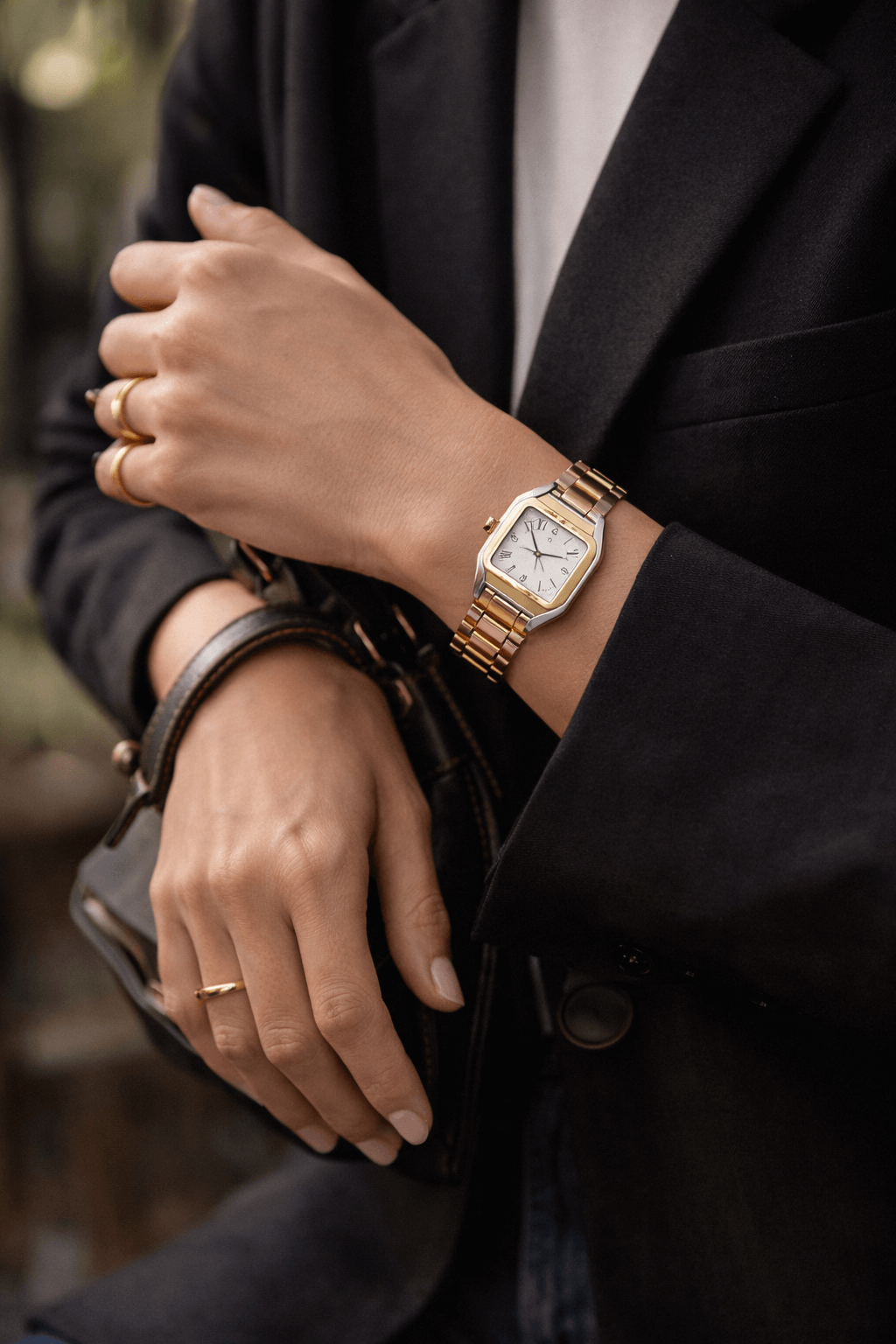
Neo-vintage vs classic vintage: what are the real differences?
The term neo-vintage is often used as a simple extension of vintage. In reality, it refers to a distinct category with its own codes, advantages and limitations. Understanding the differences between a neo-vintage watch (1990–2005) and an older vintage piece helps avoid many misunderstandings at the time of purchase.
The distinction is not only about age, but about design, use and market logic.
Age and production context
The most obvious difference lies in the production period.
-
Classic vintage watches: generally produced between the 1930s and the late 1980s.
-
Neo-vintage watches: produced between the early 1990s and the mid-2000s.
This gap of one or two decades corresponds to a major industrial and horological shift. The 1990s marked the move toward more rationalised production, with modern tools, stricter quality control and increasing standardisation.
As a result, neo-vintage watches are often more consistent in manufacturing quality while retaining a strong identity tied to their era.
Movement design and reliability
Mechanically, the difference is often very tangible.
Older vintage watches may feature:
-
calibres designed before modern robustness standards,
-
finer tolerances,
-
architectures that can be sensitive to intensive use.
By contrast, neo-vintage watches generally benefit from:
-
movements proven over long production runs,
-
improved resistance to shocks and variations,
-
easier maintenance today.
For regular or daily wear, this distinction is significant. Neo-vintage offers a more modern experience without falling into today’s uniformity.
Design: evolution rather than rupture
Aesthetically, neo-vintage represents continuity.
Where some older vintage watches may have:
-
very small diameters,
-
highly specific dials,
-
codes that can feel distant from contemporary tastes,
neo-vintage watches tend to offer:
-
proportions closer to current standards,
-
improved legibility,
-
restrained, versatile designs.
They sit naturally on the wrist, without requiring stylistic adjustment, a key factor for buyers seeking character without compromise.
Real-world use and everyday constraints
Usage is often where the difference becomes most apparent.
A classic vintage watch can certainly be wearable, but it often involves:
-
greater caution,
-
limited tolerance to moisture or shocks,
-
closer attention to maintenance.
Neo-vintage watches, on the other hand, generally allow:
-
more freedom of wear,
-
better compatibility with modern lifestyles,
-
greater peace of mind for a first acquisition.
This is precisely why neo-vintage is so appealing today: it offers the charm of the past without the heaviest constraints.

Why neo-vintage is particularly compelling on the pre-owned market
If neo-vintage watches (1990–2005) are gaining momentum, it is because supply, usability and market perception align particularly well in the pre-owned segment.
For many buyers, especially those seeking a first characterful watch, neo-vintage often represents a balance that is hard to find elsewhere.
A very coherent age-to-reliability ratio
The first strength of neo-vintage lies in its “just right” age.
These watches are old enough to:
-
have proven the reliability of their movements,
-
belong to a clearly identifiable horological era,
-
stand apart from contemporary production.
At the same time, they are recent enough to:
-
use well-documented calibres,
-
be serviced without major difficulty,
-
support regular wear without excessive constraints.
This positioning makes neo-vintage particularly relevant in pre-owned: you acquire a watch with history, without the fragility of older pieces.
Still comfortable availability on the market
Another major advantage is availability.
Unlike some older vintage watches produced in limited numbers or rendered rare over time, many neo-vintage models:
-
were produced in significant volumes,
-
still circulate regularly on the market,
-
allow comparison of condition, configuration and price.
This relative abundance makes it easier to:
-
find a coherent example,
-
negotiate,
-
identify fair market value.
For buyers, this reduces pressure and avoids the “once-in-a-lifetime opportunity” mindset often associated with rarer vintage pieces.
Prices that remain accessible (but evolving)
From a budget perspective, neo-vintage still holds an attractive position.
Many watches from the 1990s–2000s remain:
-
cheaper than their older vintage counterparts,
-
undervalued relative to their intrinsic quality,
-
accessible without major compromise on brand or design.
This is partly due to a generational lag: these watches were long seen as neither “old enough” for traditional collectors nor “new enough” for novelty seekers.
That perception is now changing. Some neo-vintage references are already being revalued, driven by:
-
generational nostalgia,
-
the return of certain designs,
-
growing recognition of their quality.
In pre-owned terms, this creates an interesting window: watches that remain affordable, yet increasingly appreciated.
An ideal compromise for a first character watch
Ultimately, neo-vintage aligns perfectly with many modern buyer expectations:
-
a watch with genuine identity,
-
reassuring, simple use,
-
manageable maintenance,
-
an aesthetic already rich with meaning.
It appeals both to those hesitant about older vintage and to buyers tired of overly standardised contemporary production.
In this sense, neo-vintage is not a default “in-between”, but a category in its own right, with a clear and coherent purchase logic.
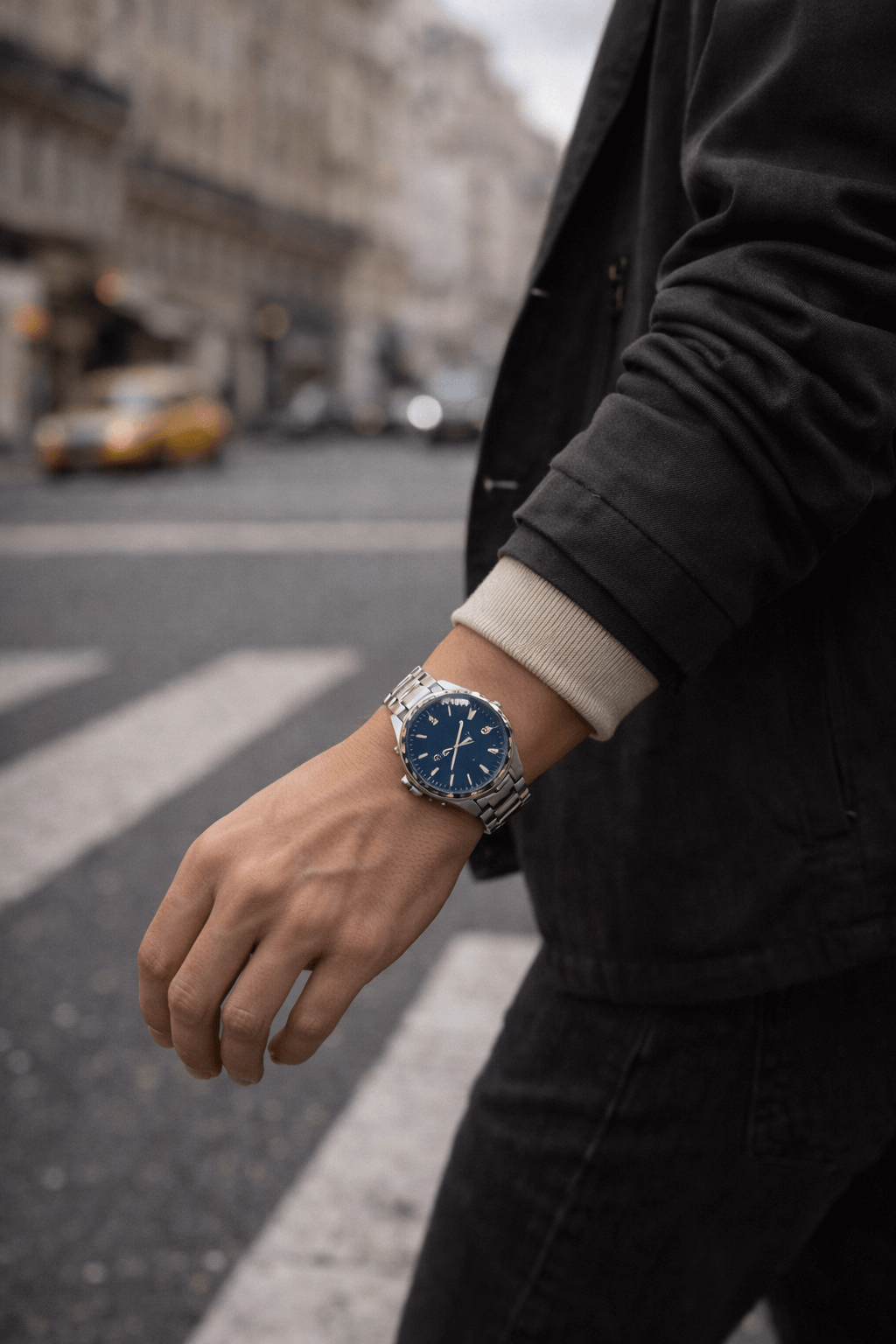
Which neo-vintage watches should you buy pre-owned today?
Neo-vintage attracts growing interest in part because it offers a very readable selection of models. Certain references from the 1990–2005 period now concentrate most of the appeal: they embody their era, remain easy to wear and strike an excellent balance between image, quality and price.
At Mostra, these watches stand out for their overall coherence: identifiable design, proven movements and genuine everyday wear potential.
Established neo-vintage icons
Some 1990s–2000s models have already become obvious neo-vintage references, thanks to their strong design continuity and market recognition.
-
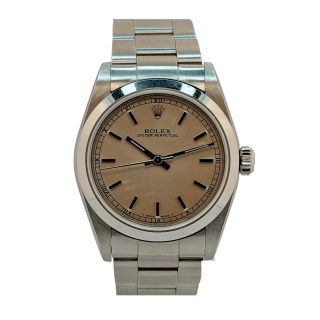
Rolex Oyster Perpetual (1990s–2000s)
Perfect examples of “wearable” neo-vintage Rolex: restrained proportions, sober or lightly textured dials and excellent build quality. On the pre-owned market, they are easy to evaluate and maintain. -
Omega Speedmaster and Seamaster (1990s)
This period marks a turning point for Omega, with stronger identity and robust movements. These watches retain strong wrist presence while remaining faithful to the brand’s heritage. -
Cartier Santos, Tank and Panthère (post-1980 versions)
Neo-vintage versions of these Cartier icons are particularly compelling pre-owned. They combine timeless design, improved reliability (quartz or mechanical depending on reference) and elegant proportions, especially for women’s watches.
All of these pieces share immediate legibility: you understand what you’re wearing, where it comes from and why it transcends trends.
Underrated models with strong potential
Beyond established icons, neo-vintage includes many underappreciated references that offer exceptional value on the pre-owned market.
-
Jaeger-LeCoultre Reverso (1990s)
Often overlooked in favour of older versions, these Reversos offer excellent build quality, reliable movements and refined elegance, still at accessible prices. -
1990s sport-chic watches
Integrated bracelet models or clean designs from well-regarded but less fashionable brands are gaining attention. They strongly reflect their era and are now being rediscovered like the Rolex Oyster Perpetual 6740. -
High-end quartz watches from the 1990s
Long neglected, these are making a comeback, particularly in women’s collections. Their slimness, precision and low maintenance make them highly coherent pre-owned choices.
These models illustrate one of neo-vintage’s main strengths: access to high-quality watches from prestigious brands without the price inflation seen in older vintage segments.
Neo-vintage for women: balanced proportions and confident elegance
Neo-vintage is particularly relevant for women’s watches.
During this period, many brands offered:
-
slimmer cases,
-
balanced dimensions,
-
designs conceived as true style objects.
Neo-vintage women’s watches often avoid two extremes:
-
very small or fragile older vintage pieces,
-
oversized or overly standardised contemporary models.
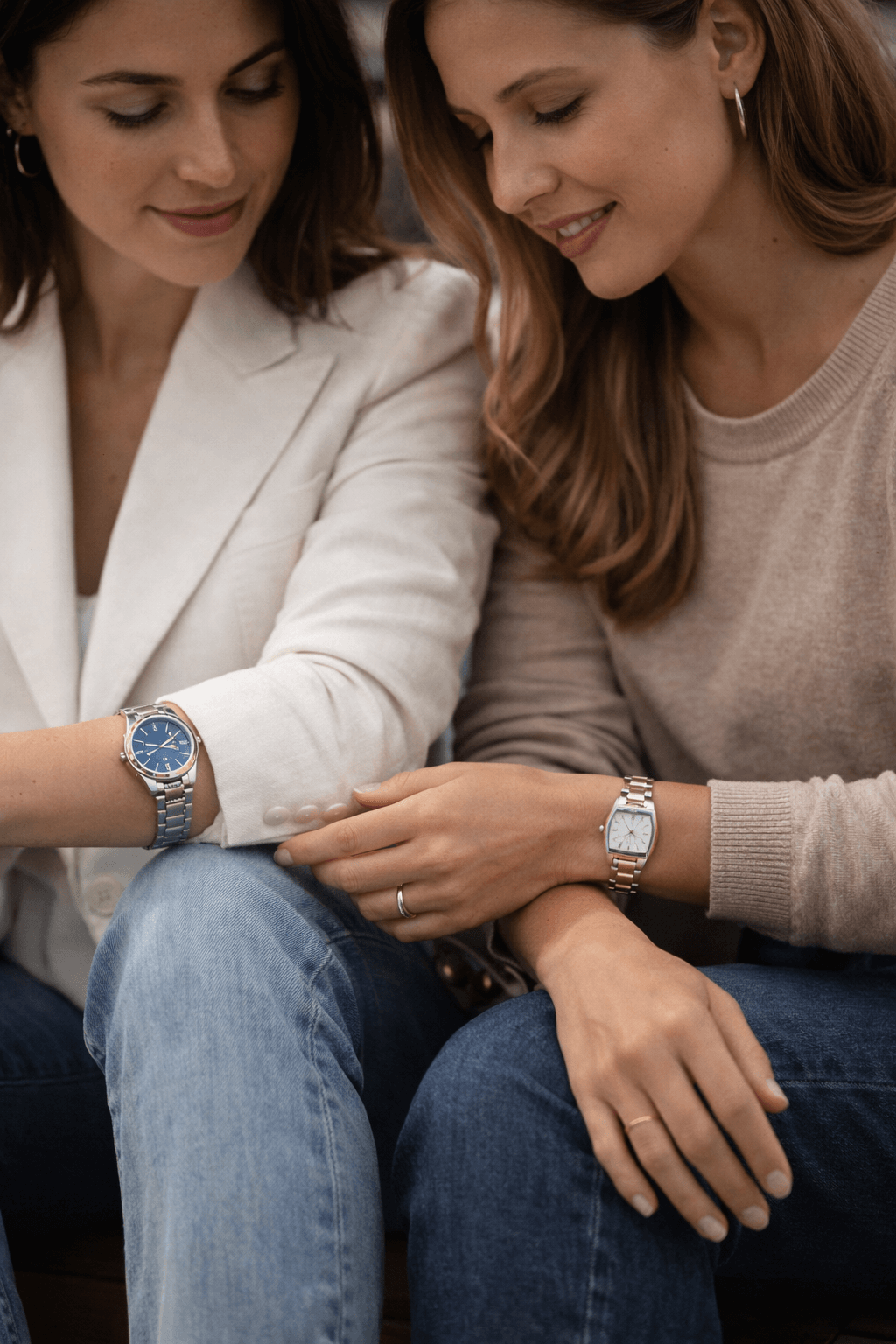
Whether jewellery watches, rectangular designs or sport-chic pieces, neo-vintage offers a wide range of elegant, coherent and easy-to-wear options.
Neo-vintage: mistakes to avoid when buying pre-owned
Neo-vintage offers many advantages, but also has its own pitfalls. Positioned between recent watches and collectible pieces, it is sometimes misunderstood, and therefore misjudged, by buyers.
Here are the main mistakes to avoid when buying a neo-vintage watch pre-owned.
Confusing neo-vintage with any recent pre-owned watch
This is the most common mistake.
A watch produced between 1990 and 2005 is not automatically neo-vintage. The term implies coherence between age, design and identity.
A true neo-vintage watch should:
-
embody a clearly identifiable aesthetic of its era,
-
fit within the historical continuity of the brand,
-
offer genuine stylistic or horological interest.
By contrast, some highly standardised 2000s watches are simply recent pre-owned pieces, reliable, but lacking long-term desirability.
Paying a “trend premium” for such watches is a common error.
Underestimating real condition because of relative modernity
Being more recent than classic vintage can create a false sense of security.
A 25- or 30-year-old watch may still show:
-
mechanical wear,
-
ageing gaskets,
-
ageing electronic components (for quartz),
-
stretched bracelets.
Neo-vintage still requires careful inspection. A watch that “works” is not necessarily reliable long-term. Service history, movement condition and overall coherence remain essential.
In particular, some 1990s quartz watches may have suffered from:
-
batteries left in too long,
-
early oxidation invisible at first glance.
These points must always be checked.
Underestimating aesthetic coherence
During the neo-vintage era, watches sometimes underwent:
-
dial changes,
-
bracelet variations,
-
reference evolutions over several years.
It is therefore common to encounter watches with:
-
replacement dials from later periods,
-
non-period bracelets,
-
mixed components from different generations.
These configurations do not make a watch unusable, but they can:
-
undermine historical coherence,
-
reduce appeal for knowledgeable buyers,
-
affect long-term value.
In neo-vintage, overall consistency often matters more than isolated originality.
Neo-vintage: maintenance, reliability and everyday use
One of neo-vintage’s greatest strengths lies in its balance between modern standards and character. Produced between the 1990s and early 2000s, these watches benefit from technical standards close to contemporary models, while retaining strong horological identity.
This balance translates into better everyday reliability than older vintage watches, provided a few basic principles are respected.
Often more reliable than classic vintage
Neo-vintage watches generally benefit from:
-
better-industrialised movements,
-
more stable mechanical tolerances,
-
more resistant materials (gaskets, alloys, treatments).
Whether automatic or quartz, they are usually easier to regulate, more consistent in operation and less sensitive to daily wear.
This explains why many buyers choose neo-vintage as their main watch, worn several days a week without the psychological burden of older pieces.
Maintenance: what to realistically expect
Neo-vintage is more forgiving than 1950s–60s vintage, but it is not maintenance-free.
For automatic neo-vintage watches, it is advisable to:
-
plan periodic servicing (every 5–7 years depending on use),
-
monitor power reserve and accuracy,
-
avoid shocks and prolonged magnetic exposure.
For quartz neo-vintage watches, vigilance focuses on:
-
regular battery replacement,
-
water-resistance checks,
-
ensuring no oxidation inside the case.
In all cases, a prior inspection by a specialised workshop prevents most issues.
The true advantage of neo-vintage: everyday comfort
Neo-vintage truly stands out in daily comfort.
Watches from this period often feature:
-
more ergonomic cases,
-
improved legibility,
-
sturdier, more comfortable bracelets.
Case sizes once considered “small” now align perfectly with modern expectations, particularly for women’s wrists or those seeking discreet elegance.
A well-chosen neo-vintage watch can easily serve as a primary watch, without major compromise between style, reliability and horological pleasure.
Mostra advises you
Neo-vintage often suits those who are looking for a watch with presence, without immediately stepping into the demands of an older piece. We recommend starting from how it will be used rather than from the name: an everyday watch, an office watch, a first collector’s piece, or a more emotional purchase.
Visit Mostra in Aix
At the Mostra boutique in Aix-en-Provence, we can help you compare several generations of watches in person: proportions, legibility, bracelet comfort, the true condition of the case, and overall coherence. Neo-vintage often reveals its full character once on the wrist.
Neo-vintage: which buyer profiles does it suit?
Neo-vintage appeals to a wide audience because it meets very diverse expectations. Unlike older vintage watches, often associated with collectors, neo-vintage addresses practical, contemporary use cases.
Identifying your buyer profile helps determine whether this category truly fits your needs.
Profile 1: “I want a character watch that’s easy to live with”
This is the most common profile.
These buyers seek:
-
a watch with real identity,
-
a design less standardised than new models,
-
simple, reassuring daily use.
For them, neo-vintage is often ideal: access to recognised brands with elegant proportions, proven reliability and manageable maintenance.
Profile 2: “I want a high-quality first pre-owned watch”
Neo-vintage is often the perfect entry point into pre-owned watchmaking.
It offers:
-
fewer constraints than older vintage,
-
more character than recent pre-owned watches,
-
clearer market reading (prices, references, condition).
It allows buyers to learn how to assess watches without immediately facing complex restoration issues.
Profile 3: “I want an elegant watch, not a tool watch”
Neo-vintage particularly appeals to design-sensitive buyers, especially in women’s pre-owned watches.
1990s–2000s models often feature:
-
slimmer cases,
-
balanced dimensions,
-
a jewellery-oriented approach.
Neo-vintage thus combines elegance, history and comfort without ostentation or constraint.
Neo-vintage myths: what to forget in 2026
Neo-vintage’s growing success comes with shortcuts and misconceptions. In 2026, several deserve reconsideration.
“Neo-vintage isn’t really old or interesting”
Probably the most common, and unfair, belief.
Long seen as too recent for collectors and too dated for modern buyers, this period is now being reinterpreted as a key transition in watch design.
Neo-vintage is not an identity-less in-between, but a fully fledged era with its own icons.
“These watches are too modern to be collectible”
Collecting today often means building coherent, wearable collections anchored in a specific era.
In that sense, neo-vintage has full legitimacy, and some references are already gaining historical recognition.
“Neo-vintage is automatically more reliable than older vintage”
Partly true, but conditional.
Reliability depends less on age than on service history, actual condition and seller transparency.
“Neo-vintage has no value potential”
While not all neo-vintage watches will rise in value, some already show stabilisation or gradual appreciation.
Their appeal lies less in speculation than in long-term desirability, perfectly aligned with thoughtful pre-owned watch collecting.
FAQ: neo-vintage 1990–2005 and pre-owned watches
What exactly is a neo-vintage watch?
A neo-vintage watch is generally produced between the early 1990s and mid-2000s, combining identifiable design, modern technical standards and everyday wearability.
Is a 1990s watch already vintage?
Chronologically, yes, but horologically, neo-vintage better reflects its transitional identity.
Why is neo-vintage so popular in 2026?
Generational nostalgia, renewed aesthetics, better value and saturation of contemporary designs.
Are neo-vintage watches suitable for daily wear?
In most cases, yes, provided they are properly checked and maintained.
What should you check when buying pre-owned?
Service history, movement condition, component coherence and seller transparency.
Conclusion: neo-vintage, a now-obvious balance
Neo-vintage (1990–2005) is no longer a grey area between two worlds. It has become a fully recognised horological period with its own codes, references and market logic.
These watches offer a rare balance: identifiable design, modern wearability and rational access to characterful models.
The real question is not whether they are “old enough”, but whether they match your lifestyle, aesthetic sensitivity and desire to wear a watch that tells a story.
And that is precisely where neo-vintage finds its strength: watches designed yesterday, fully relevant today, and already meaningful for tomorrow.
Related products




Share this content