Buying a women's vintage watch: 12 checks (dial, case, crown, service...)
Buying a women’s vintage watch can be as exciting as it is confusing. Between the aesthetics, the story behind the piece, and the mechanical realities, a vintage watch isn’t purchased like a simple accessory. It has to be chosen methodically...
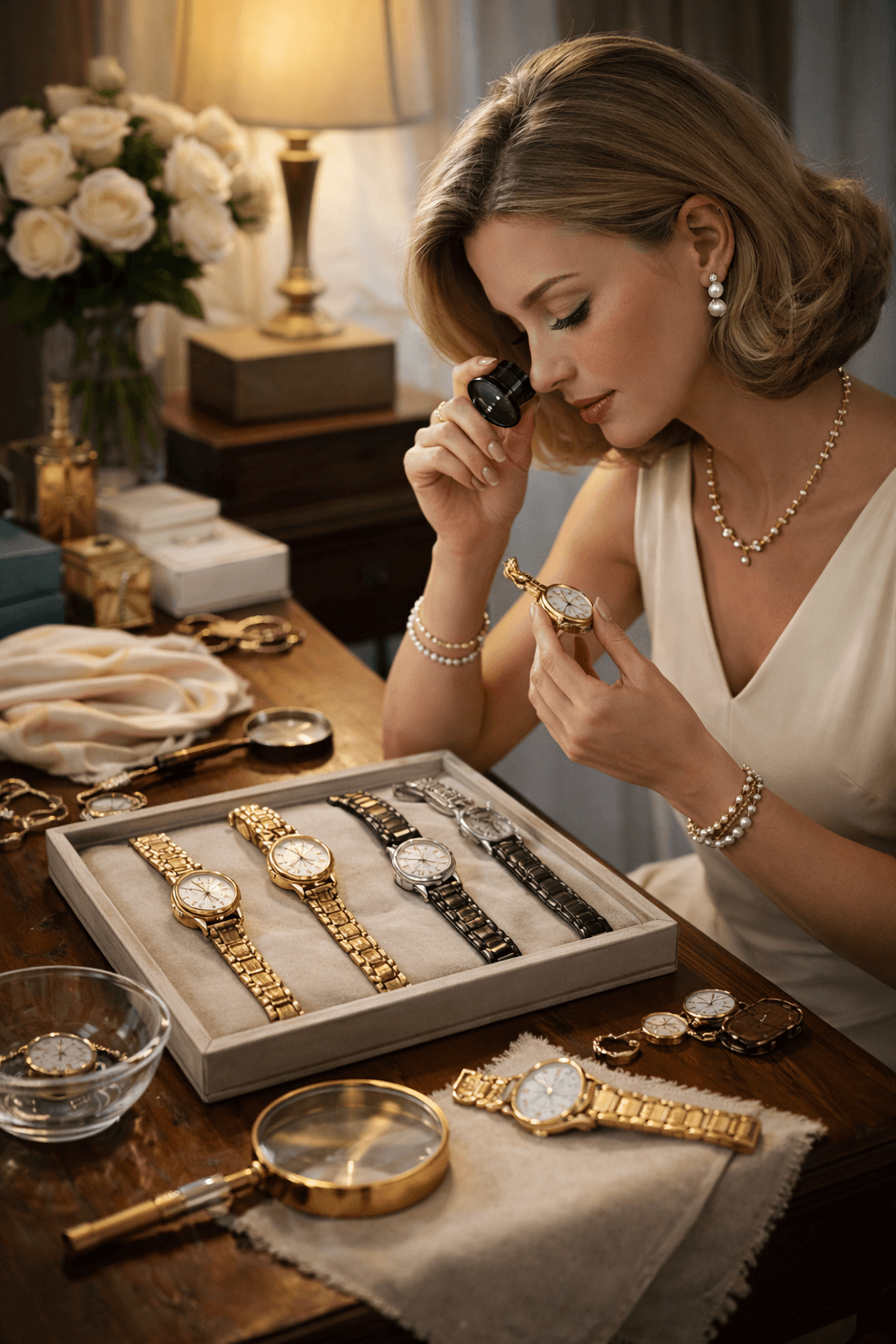
Buying a women’s vintage watch can be as exciting as it is confusing. Between the aesthetics, the story behind the piece, and the mechanical realities, a vintage watch isn’t purchased like a simple accessory. It has to be chosen methodically. Dial, bracelet, case, crown, servicing: every detail matters, and some points can make all the difference between a beautiful, long-lasting purchase and a costly disappointment.
Unlike a new watch, a vintage watch has lived. It carries the marks of time, sometimes desirable, sometimes problematic. That is why it’s essential to know how to distinguish natural patina from a defect, consistent wear from poor maintenance, or a properly serviced watch from a piece that has simply been “cleaned.”
In this guide, we review 12 essential points to check before buying a women’s vintage watch, to help you make an informed decision suited to your use (daily wear, office, watch-as-jewelry) and your style. The goal isn’t to become a watchmaker, but to build the right reflexes to buy a reliable, elegant, and durable pre-owned watch.
Why choose a women’s vintage watch (and not just a pre-owned watch)
Vintage watch and pre-owned watch are often used interchangeably, even though they don’t mean exactly the same thing. A pre-owned watch can be recent, simply worn and resold. A vintage watch, on the other hand, belongs to an era, with its own aesthetic codes, proportions, and technical choices.
A style and proportions that are hard to find today
One of the biggest strengths of women’s vintage watches lies in their proportions. Thinner cases, more compact diameters, integrated or finely crafted bracelets: many older models were designed as true watch-jewelry pieces, able to disappear on the wrist while still delivering strong visual presence.
At a time when many modern watches lean toward larger formats, vintage offers an elegant alternative, often more flattering on a woman’s wrist, and easier to wear every day.
A more sustainable, more personal approach to luxury
Choosing a vintage watch also means adopting a different vision of luxury: more responsible, more durable, and less standardized. Each piece has a story, a patina, sometimes slight imperfections that make it unique. Where new watches offer very uniform models, vintage lets you stand out without chasing eccentricity.
In a context where quiet luxury and timeless pieces are increasingly sought after, a women’s vintage watch becomes a choice that is both aesthetic and thoughtful.
A purchase that requires method and vigilance
In return, vintage requires a few precautions. Wear, past repairs, replaced parts, missing history: these factors can impact both reliability and value. That’s exactly why a structured checklist is essential.
Chosen well, a women’s vintage watch becomes a lasting source of pleasure. Chosen poorly, it can quickly lead to frustration and unexpected costs. The rest of this guide has one simple purpose: to give you the keys to recognize a healthy, coherent watch that fits your intended use.

Before even looking at the watch: 3 rules to secure the purchase
Before examining the dial, bracelet, or movement, there are three fundamental rules to follow if you want to buy a women’s pre-owned watch. They’re not about the watch itself, but about the purchase context. Ignoring them means taking an unnecessary risk, even if the piece looks appealing.
1) Buy from the right place: understand who you’re buying from
The first safety factor isn’t the watch, it’s the seller. Broadly speaking, there are three main channels:
- The specialized professional: the most reassuring option. A serious seller offers checked watches, describes condition precisely, and takes responsibility for what they sell.
- General marketplaces: they offer huge selection, but quality depends entirely on the seller. The level of control varies widely.
- Private sellers: sometimes attractive on price, but also the riskiest. No warranty, little to no history, and it’s hard to resolve issues after the purchase.
For a first vintage watch, or for a purchase meant to be worn regularly, buying from a professional seller, such as Mostra Store, generally remains the safest option.
2) What a serious seller should always provide
A good seller has nothing to hide. Some elements should be considered non-negotiable:
- Sharp, detailed photos: dial, case, bracelet, caseback, clasp, and ideally the movement.
- A precise condition description: visible wear, any repairs, replaced parts.
- A clear return policy: essential for buying confidently from a distance.
- Consistent answers to questions: a seller who dodges or stays vague is a red flag.
Original box and papers are a plus, but their absence isn’t a deal-breaker for a vintage watch. On the other hand, a total lack of reliable information about condition or history should call for caution.
3) Anticipate the true budget: beyond the listed price
The purchase price of a women’s vintage watch isn’t always the final cost. You often need to factor in:
- a mechanical service if it hasn’t been done recently,
- a bracelet adjustment or replacement, especially on older models,
- sometimes minor cosmetic work (crystal, gaskets, cleaning).
Anticipating these costs helps avoid unpleasant surprises and allows a fairer comparison between two watches listed at different prices. A slightly more expensive watch that’s already serviced and ready to wear is often a better choice than a cheaper piece requiring quick interventions.
Once these basics are set, you can examine the watch itself with a more objective eye. That’s where the detailed checklist comes in, point by point.
The checklist: 12 points to check on a women’s vintage watch
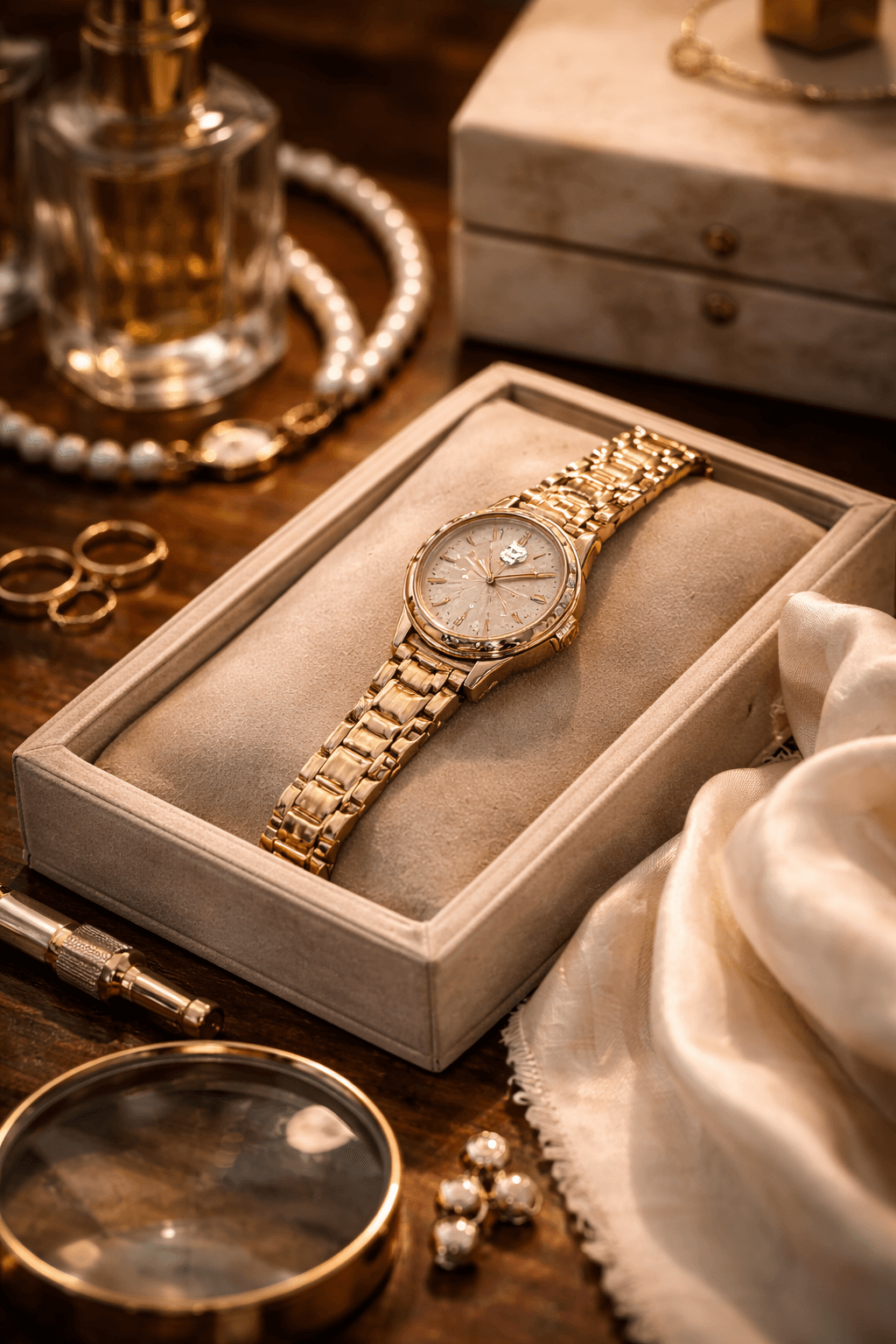
This is the core of the guide. These 12 checkpoints help you evaluate a women’s vintage watch objectively, beyond the aesthetic “love at first sight.” Not all points carry the same weight depending on your intended use, but together they offer a clear view of quality, coherence, and reliability.
1) Size and wrist presence (before the numbers)
On a vintage watch, the stated diameter isn’t enough. Older proportions, case shape, and bracelet width strongly influence the real on-wrist look. A 28 or 30 mm watch can feel very present if the bracelet is wide or the bezel is pronounced.
The goal is simple: the watch should follow the wrist, not dominate it. For a women’s vintage watch intended for daily wear, aim for a natural, comfortable balance, easy to forget.
2) The dial: natural patina or defect?
The dial is the most sensitive, and most decisive, element. On a vintage watch, light patina is normal, and sometimes even desired. However, certain signs should raise concern:
- significant moisture spots,
- inconsistent discoloration,
- a repainted dial without disclosure (redial).
An original dial, even imperfect, is almost always better than a restored dial with no transparency.
3) Indexes and numerals
Indexes should be consistent with the model and properly aligned. On a vintage watch, light aging is normal, but indexes should not come loose or show crude repairs.
Visual regularity is key: a bent or poorly positioned index immediately breaks the watch’s harmony.
4) Hands
The hands should match the model and the era. Light oxidation can be acceptable, but they should remain legible, straight, and coherent with one another.
Replaced hands aren’t necessarily a deal-breaker, provided it’s clearly stated and the style remains faithful to the original.
5) The case: lines, edges, and polishing
The case reveals a lot about the watch’s life. Over-polishing is one of the most frequent issues in vintage:
- rounded edges,
- loss of lug definition,
- “soft” shapes.
A well-preserved watch keeps readable lines, even with normal micro-scratches.
6) The caseback
The caseback often helps verify the reference, material, and sometimes original water resistance. It should be:
- consistent with the brand and model,
- not excessively marked by repeated openings,
- legible in terms of engravings.
7) The crown
The crown is a functional part often replaced over time. That’s not necessarily an issue, but you should check:
- that it fits the case correctly,
- that it allows smooth operation,
- that it’s neither too small nor too large.
An original crown is a plus, but a well-chosen service crown is perfectly acceptable.
8) The crystal
Vintage watches are often fitted with plexiglass crystals. They can show micro-scratches that are easy to polish out. Cracks or chips, however, should be avoided.
A replaced crystal is common and rarely problematic, as long as it respects the original shape and height.
9) The movement
Without being a watchmaker, you can still check a few things:
- a clean movement with no obvious oxidation,
- regular operation,
- no abnormal noise.
A properly maintained movement matters far more than the exact caliber reference.
10) Servicing: when and by whom?
A vintage watch should ideally have been serviced recently, or be sold with full transparency about its mechanical condition.
Without a recent service, you should anticipate that cost. A watch that “runs” isn’t necessarily reliable over time.
11) The bracelet
The bracelet heavily affects comfort and aesthetics. On a women’s vintage watch, check:
- the condition of links (excessive play, stretch),
- clasp solidity,
- coherence with the case.
A leather strap can be replaced easily. A specific metal bracelet is much harder.
12) Overall coherence
The last point, arguably the most important: the whole must be coherent. Dial, hands, case, bracelet should tell the same story.
A successful vintage watch is one where no single element “shouts” louder than the others.
10 warning signs that should make you walk away
Even with a detailed checklist, some situations should immediately trigger caution. In the world of women’s vintage watches, there are clear red flags indicating it’s better to pass, even if the watch looks attractive or is priced aggressively.
Here are 10 red flags you absolutely need to know before buying a vintage watch.
1) Blurry, incomplete, or intentionally vague photos
An ad without sharp photos of the dial, case, bracelet, and caseback is a bad sign. With vintage, the devil is in the details. A serious seller has no reason to hide the watch’s real condition.
2) A description that’s too short or too enthusiastic
Vague lines like “very good condition for its age,” “runs perfectly,” or “rare” without concrete explanation should raise suspicion. A vintage watch should be described precisely, not with superlatives.
3) No information at all about servicing
If the seller can’t say when the watch was last serviced, or answers evasively (“it runs fine”), you should expect to visit a watchmaker soon. Without transparency here, the risk is real.
4) A dial that looks too “new” for the stated age
A perfectly white dial with zero patina on a watch claimed to be 40 or 50 years old is often suspicious. Repainted dials (redials) are common and rarely disclosed clearly.
5) Visual inconsistencies between parts
Hands, indexes, dial, and case should belong to the same design language. If certain elements look too modern or inconsistent, parts may have been swapped without regard for authenticity.
6) An overly polished case
Completely rounded edges, soft shapes, or major loss of relief indicate excessive polishing. This affects aesthetics, value, and the watch’s vintage charm.
7) A metal bracelet that’s too “stretched”
On older bracelets, excessive link stretch is a sign of advanced wear. A very loose bracelet can be expensive to repair, or impossible to restore properly.
8) A crown that doesn’t fit or is hard to operate
A crown that’s too small, too large, or poorly fitted can indicate a non-conforming part. If winding feels rough or irregular, it may also signal an underlying mechanical issue.
9) An abnormally low price with no clear explanation
A vintage watch priced far below market should always raise questions. Good deals exist, but an incoherent price often hides a defect, major work to expect, or authenticity issues.
10) A seller who refuses dialogue or returns
Refusal to answer questions, pressure to buy quickly, no return policy: these are very clear signals. A calm vintage purchase is built on transparency and exchange.
If you see one or more of these signs, the best decision is often to walk away. The vintage watch market is vast—and a great opportunity is never the last one.
3 buyer profiles: which women’s vintage watch for which use?
Before running through a technical checklist, it helps to ask a simple question: why do you want a vintage watch? A watch for everyday wear doesn’t call for the same choices as a “jewelry watch” for occasions, or a first vintage bought to learn without stress.
Here are three very common buyer profiles, with the right criteria to prioritize for each.
Profile 1: “I want an easy vintage watch I can wear every day”
You’re looking for a watch that fits your daily life—at the office and on weekends—without constraints. In that case, the goal is clear: reliability + comfort + versatility.
- Size: rather compact (often 26–34 mm) to remain elegant and wearable in all settings.
- Legibility: a clear dial, visible indexes, no overly “busy” design.
- Bracelet: steel or an easy-to-replace leather strap; avoid very specific bracelets that are hard to source.
- Movement: quartz can be an excellent “zero-hassle” choice (thinness, precision, simplified maintenance). Automatic is possible, but requires more follow-up and, when necessary, an automatic's watch servicing.
- Overall condition: prioritize a watch that has already been serviced and is ready to wear rather than a “deal” that will require quick spending.
This type of women’s vintage watch should stay easy to live with. If every detail demands caution, you’ll likely wear it less.
Profile 2: “I want a jewelry watch—elegant, to elevate my outfits”
Here, the vintage watch is as much an accessory as it is a timepiece. You want wrist presence, style, a signature. Priorities become: design + proportions + aesthetic coherence.
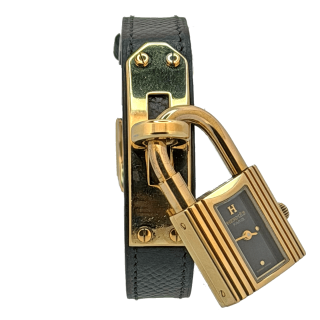
- Shapes: oval, rectangular, cushion, sometimes asymmetric—these lines often create the “jewelry” effect.
- Bracelet: integrated, crafted, chain, bangle, or fine links; it’s often half the watch’s charm.
- Finishes: polished/brushed, gold-tone, steel, two-tone—overall harmony matters more than technical performance.
- Movement: on this segment, quartz often makes sense (thinner cases, more elegant lines). “Mechanical at all costs” isn’t a rule.
- Key point: watch out for excessive polishing and overly worn bracelets—on a jewelry watch, it shows immediately.
For this profile, the key question is simple: does this watch “dress” the wrist even when you’re not checking the time?
Profile 3: “It’s my first vintage: I want a reassuring, smart purchase”
If you’re starting out, the goal isn’t to chase the rarest or most “niche” piece. The best choice is the one that lets you learn, wear the watch, and understand your tastes without stress. Priorities: transparency + coherence + low risk.
- Pick a common model: the more common it is, the easier it is to compare prices and versions—and spot inconsistencies.
- Choose a reliable seller: clear information, detailed photos, return policy, invoice, and ideally a recent service.
- Avoid heavily modified watches: repainted dials, undocumented replaced parts, mixed components.
- Budget: keep a margin for servicing or a strap rather than spending everything on the purchase and being hit with an unexpected service.
- Goal: a watch you like and will actually wear—not a piece that’s “too precious to take out.”
For a first women’s vintage watch, the best choice is often a simple, legible, wearable piece—one that makes you want to put it on every morning.
Now that the intended use is clarified, we can move on to the most useful part: the 12-point checklist, point by point (dial, case, crown, bracelet, service history, etc.).
Care and long-term: how to keep a vintage watch reliable
Buying a women’s vintage watch isn’t only about selecting a beautiful piece—it also means adopting a few good habits so it stays reliable, comfortable to wear, and coherent over time. The good news: maintenance isn’t complicated. It’s mostly about consistency, prevention, and a healthy relationship with a watchmaker.
1) Servicing: how often, and why it’s non-negotiable
A vintage watch—even in “good condition”—is still a living mechanism: oils dry out, gaskets age, micro-wear happens naturally. In the long run, the simplest rule is: better to service slightly too early than too late.
- Mechanical / automatic: generally plan a service every 4 to 6 years depending on use (daily vs occasional).
- Quartz: fewer constraints, but regular checks still help (water resistance, gaskets, oxidation, battery condition).
A service isn’t a “bonus”—it prevents accelerated wear and more expensive repairs. It also secures accuracy and on-wrist performance.
2) Water resistance: the #1 vintage trap
Many vintage watches should not be considered water-resistant in daily life, even if they were originally rated. Gaskets age, crowns wear down, and some cases lose part of their protection over time.
- If you plan to wear your watch daily, get a water-resistance test (not just a “gut feeling”).
- Avoid water “by default”: shower, dishes, pool, sea… especially without a recent test.
- Beware temperature swings: steam, sauna, hot bath = a bad combo for gaskets.
The simple reflex: a vintage watch can be “sturdy,” but avoid treating it like a modern sports watch.
3) Everyday habits (the ones that truly extend lifespan)
A reliable vintage watch is often a well-worn vintage watch. A few habits are enough:
- Avoid shocks: rigid bracelets, door handles, bags, desks… most marks come from these.
- Remove the watch for cleaning, intense sport, DIY work—anything combining vibration and impacts.
- Wind properly (manual): gently, without forcing. If you feel abnormal resistance, stop.
- Replace the battery on time (quartz): a leaking battery can do more damage than you think.
They’re simple gestures, but on a vintage watch they make a huge difference over 5 or 10 years.
4) The bracelet: leather, metal, and smart choices for a women’s vintage watch
On a women’s vintage watch, the bracelet does more than “hold” the watch: it determines comfort, aesthetics, and sometimes safety. Two key points:
- Leather strap: the easiest to replace and adapt to your style (office, casual chic, evening). Treat it as a “consumable”: replace it when it wears out.
- Metal bracelet: beautiful when in good shape, but more sensitive to play, link wear, and tired clasps. A bracelet that’s too loose can ruin the look and increase the risk of dropping the watch.
The best reflex: if you want to wear your vintage often, choose a simple, solid configuration—then keep a more “jewelry” bracelet for special occasions.
5) Storage: the golden rule to avoid unpleasant surprises
A vintage watch stores best when kept carefully:
- away from humidity (bathroom: no),
- away from magnetic sources (speakers, magnetic bags, chargers),
- in a box or pouch that prevents rubbing.
If you own several watches, avoid them touching each other: micro-scratches appear quickly, especially on polished cases.
6) Find “your” watchmaker: the essential long-term ally
To keep a vintage watch reliable, the best investment isn’t an accessory, it’s a trusted relationship with a watchmaker. Ideally someone who explains, documents what they do, and respects the vintage logic (not replacing parts “just because,” not over-polishing).
A good sign: the watchmaker talks about preservation (keeping authenticity and lines) as much as function.
7) When to consult: signals you shouldn’t ignore
Finally, don’t wait until “it breaks.” Consult quickly if you notice:
- a sudden loss of accuracy or frequent stopping,
- a crown that catches, spins freely, or requires abnormal force,
- fog under the crystal (urgent),
- a bracelet that develops too much play or a clasp that closes poorly,
- on quartz: a battery that lasts abnormally little (can signal excessive consumption or an internal issue).
With a vintage watch, acting early often costs less and avoids heavy repairs. And above all, it preserves what you’re really looking for when you buy a women’s vintage watch: the pleasure of wearing it—without stress.
Budget and hidden costs: what you really need to anticipate
When you’re considering buying a women’s vintage watch, the listed price is never the only factor. Unlike a new watch, the true cost of a vintage piece is planned over time: servicing, adjustments, possible catch-up work. Anticipating these items helps avoid unpleasant surprises and, above all, helps you choose a watch you can wear confidently.
1) The purchase price is only the starting point
Two vintage watches can be priced similarly while representing very different realities. A “cheaper” watch that quickly needs a full service will often end up costing more than a watch that’s already checked and ready to wear.
Before buying, always ask yourself: what’s included in the price?
- Has the watch been serviced recently?
- Is there an invoice or proof of that service?
- Does the seller guarantee basic performance (accuracy, power reserve)?
A vintage watch that’s slightly more expensive but serviced is often a better choice than a “deal” that needs a full refresh.
2) The cost of servicing: include it from the start
Servicing is the main cost item to anticipate with a vintage watch. The price depends on several factors: movement type, complexity, parts availability, and overall condition.
- Simple mechanical / automatic watch: generally plan €300 to €600.
- More specific or older movements: the budget can go higher.
- Vintage quartz: more moderate costs, but be cautious with older electronic parts.
This budget shouldn’t be seen as a constraint, but as long-term insurance: a properly serviced watch is often worry-free for several years.
3) Bracelet and adjustments: often underestimated costs
On a women’s vintage watch, the bracelet plays a central role—both aesthetically and functionally. Yet it’s one of the elements most often replaced or adjusted after purchase.
- New leather strap: depending on quality, plan €50 to €150.
- Metal bracelet resizing: sometimes simple, sometimes more complex if links are missing.
- Replacing a tired clasp: to anticipate on certain vintage models.
These are reasonable costs, but they should be included so your sense of the total budget isn’t distorted.
4) “Invisible” but real costs
Some costs aren’t immediate, but appear with use:
- regular water-resistance tests,
- battery changes (quartz),
- minor adjustments (fast/slow regulation),
- gasket replacements.
Individually, these costs remain modest. But cumulatively over several years, they’re part of the true cost of owning a vintage watch.
5) Tight budget vs comfortable budget: how to arbitrate smartly
With a limited budget, it’s often wiser to:
- choose a simple, proven model,
- prioritize mechanical condition over rarity,
- avoid overly complicated or fragile watches.
With a more comfortable budget, you can allow yourself:
- more elaborate bracelets,
- iconic models,
- a more demanding selection on aesthetic condition and authenticity.
In all cases, the goal stays the same: buy a watch you can wear without apprehension, not a piece that becomes a source of stress or unexpected expenses.
6) The right mindset: think “cost of use,” not just “price”
The best way to approach the budget for a women’s vintage watch is to reason in terms of cost of use. A watch worn regularly, well maintained, and kept for several years often “costs” less than an impulsive purchase that wasn’t planned properly.
By including servicing, maintenance, and potential adjustments from the outset, you make a calmer, more durable choice—more aligned with the very spirit of vintage watches.
FAQ: buying a women’s vintage watch with confidence
How can you tell if a vintage watch is authentic?
To assess the authenticity of a women’s vintage watch, think in terms of overall coherence rather than a single “reassuring detail.” The most useful points to check are:
- consistency between reference, numbers (case / movement) and the stated period,
- alignment of visible elements: dial, indexes, hands, crown, bracelet, clasp,
- finish condition: a very “new-looking” watch can hide over-polishing or replaced parts,
- the presence of traceability: invoice, service history, or a watchmaker’s inspection.
In practice, authenticity is often judged from the whole: a coherent watch “tells” the same story on every level. As soon as one element feels out of era (typography, lume, crown, bracelet), you should investigate further.
Do you absolutely need the box and papers?
No, it’s not mandatory. Many vintage watches—especially women’s watches—were worn as jewelry, passed on, or kept without packaging. That said, box and papers can add comfort: they strengthen traceability and may make resale easier later.
What matters most is:
- a serious inspection of the watch (authenticity + condition),
- a documented watch service when possible,
- a seller who’s transparent about what is original, replaced, or restored.
Is it risky to buy a vintage watch online?
It isn’t “risky” in itself, but it requires more method. The main challenge is to compensate for not trying it on by carefully reading the information provided:
- sharp, multiple photos (case, lugs, dial, caseback, bracelet, clasp),
- clear mention of size, reference, and condition,
- return policy and guarantees,
- proof of service or inspection.
If the listing stays vague, if photos are insufficient, or if the seller avoids questions, that’s a warning sign.
Women’s vintage watch: quartz or mechanical—what should you choose?
Both are good choices, but for different reasons. Quartz is often easier to live with daily: accuracy, generally lighter maintenance, thinner cases. Mechanical (manual or automatic) brings a more “watchmaking” pleasure, but requires regular servicing and a bit more attention.
For daily wear with minimal constraints, vintage quartz is often a very coherent option. For a “ritual” watch or a passion piece, mechanical keeps a unique charm.
How much does it cost to maintain a vintage watch?
The main cost item is servicing. Depending on movement type and overall condition, you can generally expect:
- simple mechanical / automatic: around €300 to €600,
- more specific or very old movements: sometimes more,
- quartz: often more moderate, but be mindful of hard-to-find electronic parts.
Additional occasional costs may apply: battery change (quartz), gaskets, water-resistance test, bracelet.
Is a vintage watch fragile for everyday wear?
Not necessarily. A reliable vintage watch exists—provided you choose a healthy piece and follow a few rules: avoid water if water resistance isn’t guaranteed, limit shocks, service regularly, and avoid extreme temperature swings.
Many vintage watches, well maintained, can be worn every day. The real risk usually comes from a watch that hasn’t been serviced or was poorly restored.
What are the red flags that should make you walk away?
Among the most common warning signs:
- blurry or “artsy” photos that avoid key details,
- missing reference, size, or a vague description,
- a dial that’s too “new” without explanation (possible redial),
- over-polishing that erases edges,
- a very loose bracelet, tired clasp, missing links,
- a seller who refuses to answer clearly about history.
How can you tell if the dial has been restored (redial)?
A restored dial can be very hard to detect, but a few clues are common:
- irregular typography, approximate alignments,
- markings that are too “perfect” or too modern for the period,
- lume that’s too white, too uniform, or inconsistent with the hands,
- no patina at all while the rest of the watch clearly shows age.
The best reflex is to compare with known references from the same period and choose a seller who can document condition and history.
Should you require a recent service?
Ideally, yes—especially if you plan to wear the watch often. A recent service performed by a professional brings real peace of mind. If the watch hasn’t been serviced, it isn’t necessarily a deal-breaker, but you should then include that cost in your budget and avoid overestimating the “good deal.”
Is a women’s vintage watch a good investment?
The best “return” on a vintage watch is often stylistic: a singular, durable piece that outlasts trends. Some references can also hold or gain value, but you shouldn’t buy a vintage watch only to speculate. A watch chosen to be worn and loved is almost always a better purchase than one bought for a hypothetical profit.
What size should you choose for a women’s vintage watch?
Many vintage watches have smaller diameters than recent standards. For women’s watches, that isn’t a flaw—it’s often what creates elegance. What matters most is the on-wrist look: case shape, bracelet width, proportions. At the same stated size, two watches can wear very differently.
When is the best time to buy a vintage watch?
The best time is often when you’ve clearly defined your intended use: daily wear, office, evening, “jewelry” piece, first vintage, etc. Once your use is clear, you buy better, avoid incoherent impulse buys, and spot a great opportunity more easily when it appears.
Conclusion: a women’s vintage watch is chosen with your head… so you can wear it with your heart
Buying a women’s vintage watch isn’t just about falling for a design or a brand—it’s about choosing a piece that already has a story, and ensuring it can keep living on your wrist. In 2026, vintage is more desirable than ever as an alternative to new: more singular, often more elegant in its proportions, and capable of delivering that extra soul no overly perfect modern watch can truly replicate.
But that elegance comes with a counterpart: method. Learning to spot red flags, understanding what creates value in a dial, case, or bracelet, anticipating a service, and thinking in real-life use rather than listing fantasy. A well-chosen vintage isn’t harder to live with—it’s simply more demanding at the time of purchase, because details matter more.
Once you’ve built these reflexes, the pre-owned market becomes a fascinating playground. You can aim for a discreet jewelry watch for daily wear, a stronger piece for special moments, or a reliable first vintage that matches your pace without stress. And above all: you buy a watch that looks like you, not a model dictated by a trend.
In short: take the time to check, ask, compare… then enjoy fully. Because a well-selected pre-owned watch or vintage watch isn’t an impulse buy—it’s a lasting style piece, made to be worn, loved, and sometimes passed on.
These products might interest you



Share this content