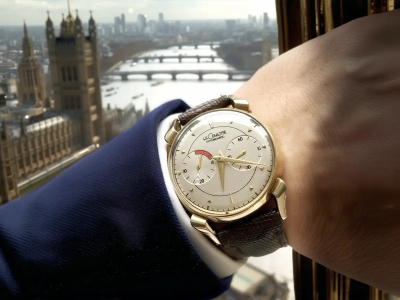
Servicing an automatic watch in Aix-en-Provence: steps, lead times, and price ranges
An automatic watch is designed to last, but it cannot function properly indefinitely without maintenance. Behind the apparent smoothness of its movement lie many mechanical components that are subject to friction, changes in lubrication, and gradual wear over the years...
An automatic watch is designed to last, but it cannot function properly indefinitely without maintenance. Behind the apparent smoothness of its movement lie many mechanical components that are subject to friction, changes in lubrication, and gradual wear over the years.
In Aix-en-Provence, having an automatic watch serviced is not simply a matter of “having it checked.” A proper service involves an accurate diagnosis, methodical disassembly, thorough cleaning, and adjustments suited to the movement. For the owner of the watch, the questions are often the same: what are the steps, how much time should be expected, and what budget should be considered?
In this article, we will look at why an automatic watch should be serviced regularly, how a service is actually carried out, what lead times are generally observed, and what price ranges may apply depending on the type of watch and the nature of the intervention.
Why should an automatic watch be serviced regularly?
An automatic watch is often seen as a reliable object, capable of running for a long time without intervention. This is true to a certain extent, but that robustness does not remove the need for regular maintenance. Like any mechanical movement, an automatic calibre changes over time, even when the watch still seems to be functioning normally.
An automatic watch is not a “perpetual” movement
Automatic winding relies on wrist movements, which allow the mainspring to be wound without daily manual winding. That does not mean the watch is self-sufficient for life. Internal components remain subject to constant mechanical stress, and watch oils naturally degrade or lose effectiveness over time.
Over the years, this evolution can lead to reduced performance, less consistent accuracy, or progressive wear of certain parts. A service makes it possible to intervene before these imbalances lead to more significant consequences for the movement.
The signs that show a service is becoming necessary
Several warning signs may indicate that an automatic watch needs servicing. Unusual loss of accuracy, reduced power reserve, less smooth winding, or unexplained stoppages should all draw attention. In some cases, the watch continues to run, but in a less stable way than before.
You should not wait for an obvious breakdown before considering intervention. A watch that “still runs” may already show insufficient lubrication or signs of internal wear that justify preventive servicing.
Why waiting too long can cost more
Postponing a service may seem economical in the short term, but the opposite often happens over time. An insufficiently maintained automatic watch may continue to run while certain internal frictions increase. In that case, wear no longer affects only the lubricants, but may eventually directly affect certain movement components.
A service carried out at the right time therefore not only helps preserve the watch’s accuracy and reliability, but also limits the risk of heavier, longer, and more expensive interventions in the future.
How is an automatic watch service carried out?
Servicing an automatic watch follows a precise process. The goal is not simply to get the watch running again, but to inspect the entire movement, identify signs of wear, and restore reliable, long-lasting operating conditions. Depending on the condition of the watch, certain steps may vary, but the overall logic remains the same.
Diagnosis before intervention
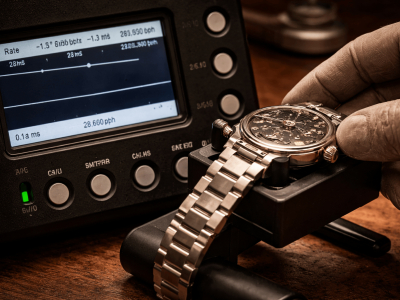
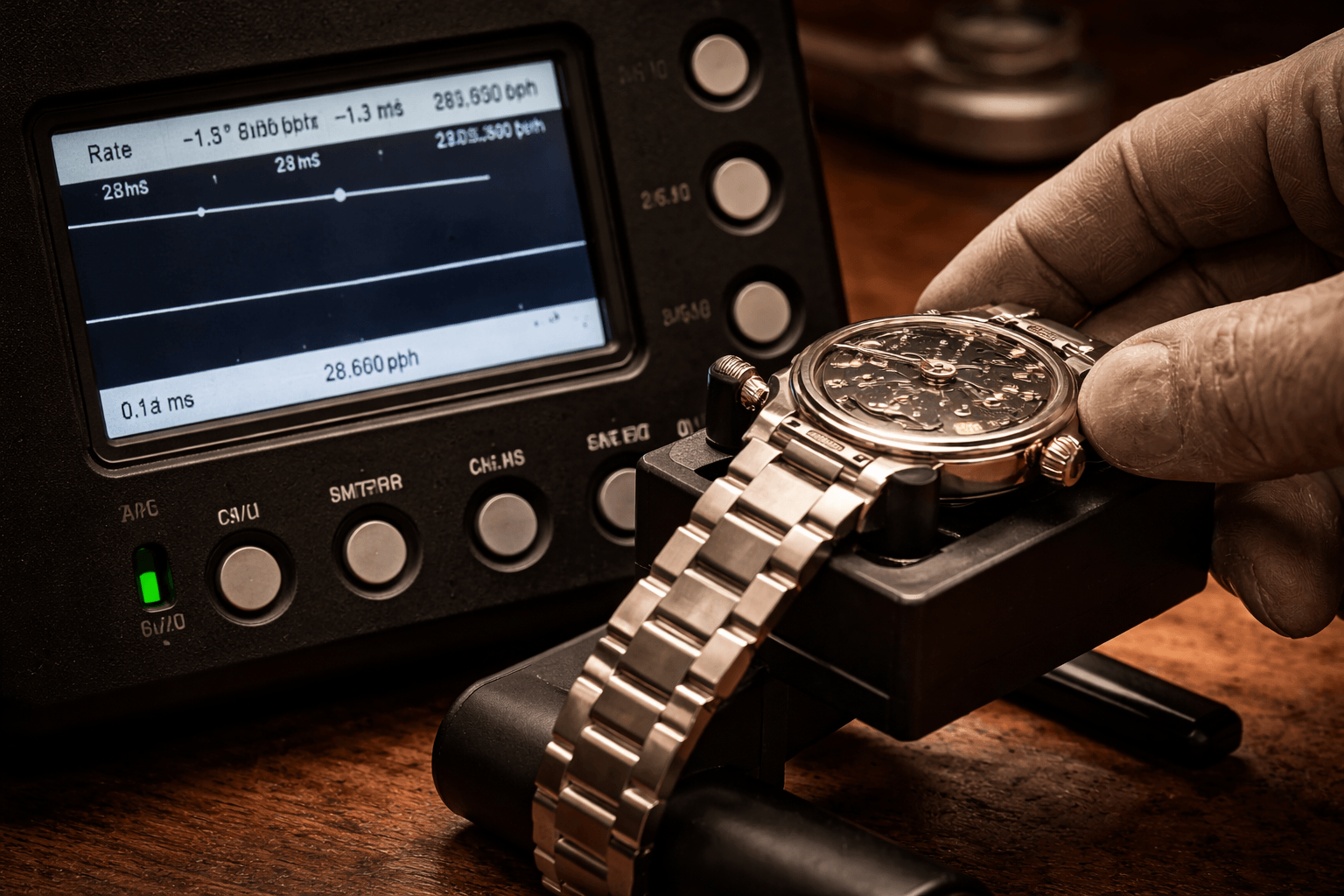
Before any work is carried out, the watch undergoes a full diagnosis. This first step makes it possible to assess its overall condition, identify any malfunctions, and observe the behavior of the movement. The watchmaker checks accuracy, power reserve, winding, and the external condition of the watch.
This diagnosis is essential because it determines the next stages of the intervention. It makes it possible to establish whether a full service is necessary, anticipate any parts that may need replacing, and define a clear framework for handling the watch.
Complete disassembly of the movement
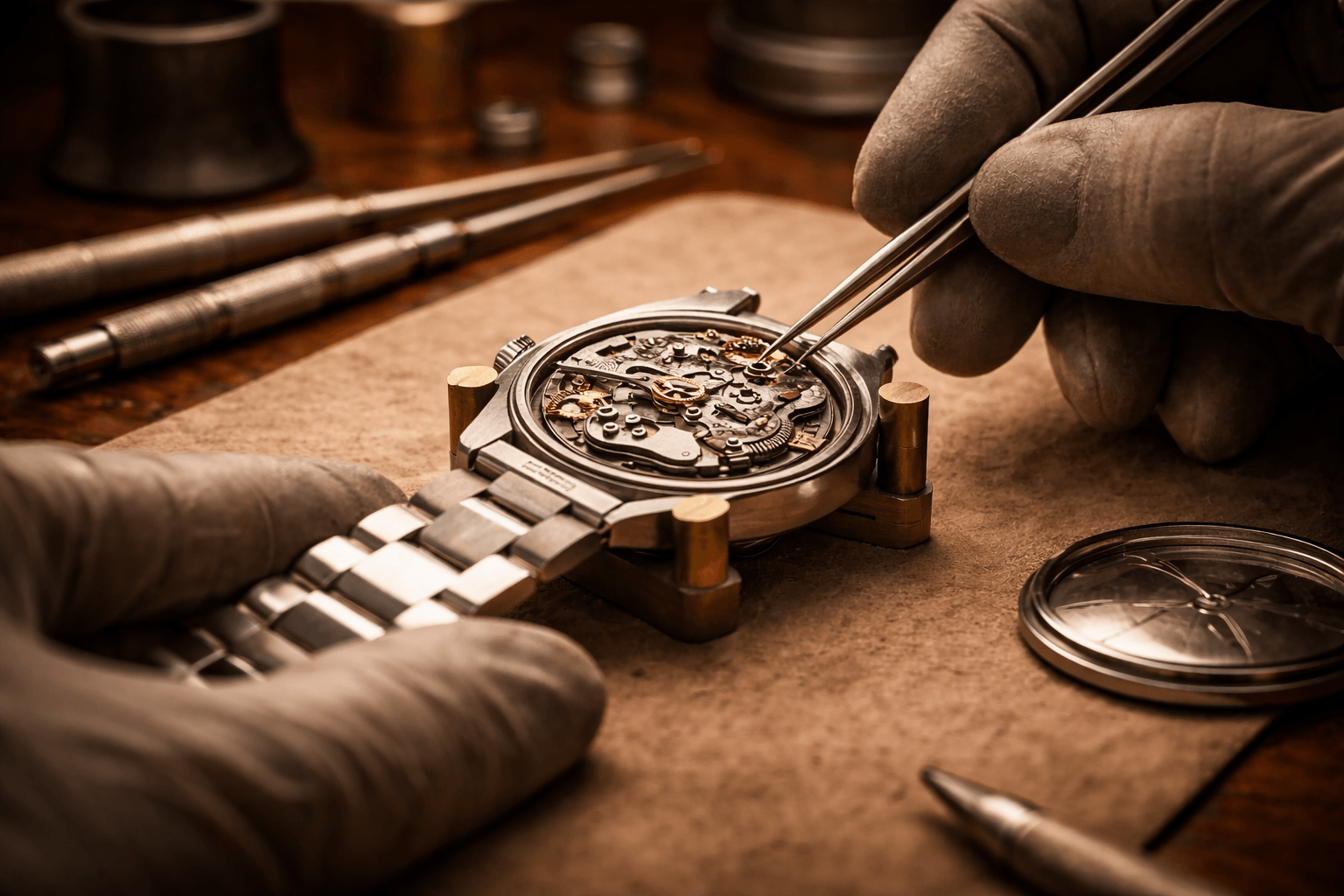
When a full service is undertaken, the movement is completely disassembled. This step provides access to each component, allows its condition to be checked, and helps identify any areas of friction, wear, or residue. On an automatic watch, this also includes the elements specific to the automatic winding system.
Complete disassembly is a central phase because it determines the quality of the work carried out afterwards. A serious service is not limited to a superficial intervention: it requires a methodical inspection of all movement parts.
Cleaning, inspection, and lubrication
Once disassembled, the components are cleaned in order to remove old oils, impurities, and residues that have built up over time. Each part is then carefully inspected to assess its condition and identify any anomalies. If some parts show excessive wear, their replacement may be considered depending on the diagnosis.
After cleaning, the friction points are lubricated with precision. This step is essential to the proper functioning of an automatic watch because it helps limit wear, preserve the smoothness of the movement, and ensure more stable performance over time.
Reassembly, adjustment, and testing
Once the movement has been inspected, cleaned, and lubricated, it is reassembled with care. The watchmaker then carries out the adjustments required to optimize the watch’s accuracy. On an automatic watch, this stage also makes it possible to check the correct functioning of the winding system and the overall consistency of the rate.
The service ends with a series of tests, which may concern accuracy, movement stability, power reserve, or even water resistance depending on the model. These checks make it possible to ensure that the watch can be returned in proper working condition.
How long does it take to service an automatic watch in Aix-en-Provence?
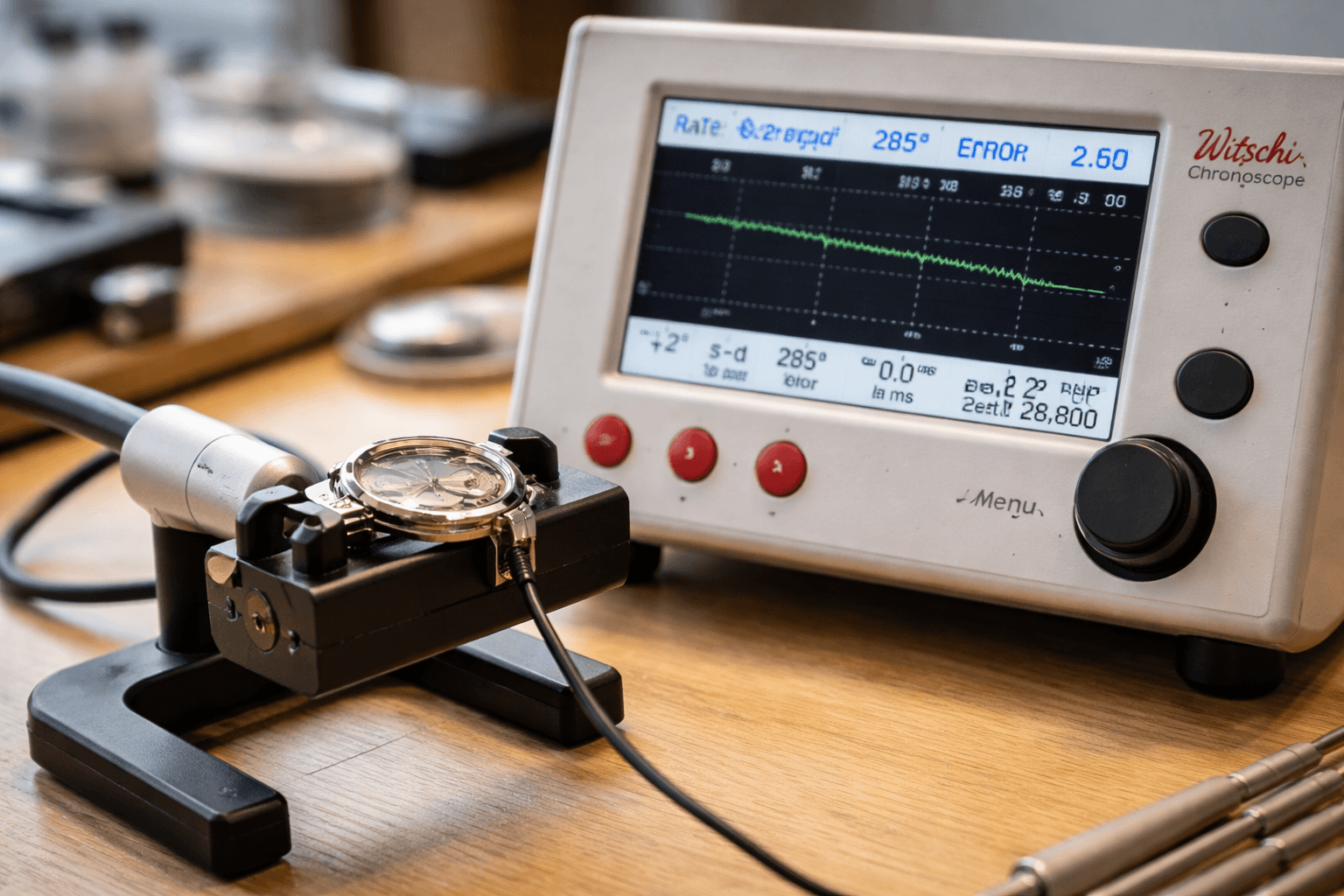
The time required to service an automatic watch varies depending on several factors. It depends, of course, on the workshop’s workload, but above all on the actual condition of the watch, the complexity of the movement, and the possible availability of certain parts. That is why a single lead time can never apply to every situation.
The average lead time for a straightforward service
For an automatic watch with no particular issue, a full service generally takes several weeks. This lead time includes the initial diagnosis, disassembly of the movement, cleaning, reassembly, adjustments, and then final inspection tests before the watch is returned.
In a watchmaking workshop, that amount of time is normal. A proper service requires method, precision, and verification phases that cannot be compressed without reducing the quality of the intervention.
Why some watches require more time
Not all automatic watches are serviced under the same conditions. A complex movement, a watch that has received little or no maintenance for many years, or the presence of worn components can all extend the lead time. In that case, the intervention is no longer limited to servicing, but also involves correcting certain imbalances or addressing problems that have appeared over time.
In this type of case, the time required depends as much on the watchmaking work to be carried out as on the ability to properly verify the result once the watch has been reassembled.
The case of older, vintage, or rare-part watches
Older or vintage automatic watches often require special attention. The condition of the components, the rarity of certain parts, and the need to preserve the original balance of the movement call for a more cautious approach. An intervention on this type of watch may therefore require more time than a standard service on a more recent piece.
In Aix-en-Provence as elsewhere, it is therefore preferable to see the service lead time as an indicator of seriousness rather than a simple inconvenience. A workshop that takes the time to diagnose, intervene, and test the watch properly generally offers better guarantees regarding the quality of the work performed.
What budget should you expect for servicing an automatic watch?
The price of servicing an automatic watch can vary significantly from one watch to another. There is no universal rate, because the cost depends on the movement, the condition of the watch, the level of intervention required, and the workshop’s pricing policy. For the owner, what matters most is understanding what justifies the proposed price range.
Why there is no single fixed price
Two automatic watches may seem similar in appearance and yet involve very different levels of work. The type of calibre, ease of access to components, time required for disassembly, or the presence of wear all directly influence the service. That is why a single fixed price is rarely relevant for this kind of work.
A serious watchmaker will generally prefer to establish a coherent pricing framework, then adjust it according to the actual diagnosis of the watch.
Observed price ranges depending on the type of watch
For a standard automatic watch, a full service generally falls within an intermediate range that may go from a few hundred euros to a higher level depending on the movement and the watch’s segment. As soon as you move into the world of luxury watches, automatic chronographs, or older pieces, the budget can increase more significantly.
The objective is therefore not simply to compare raw prices, but to understand what the proposed service actually covers.
What can influence the price
Several factors influence the cost of servicing an automatic watch: the overall condition of the movement, the need to replace certain parts, the complexity of the model, any additional tests to be carried out, or even the nature of the watch itself. A vintage piece, for example, may require a more meticulous intervention than a recent watch in good condition.
In some cases, the price of the service also reflects the time devoted to diagnosis, inspections, and adjustments, which are essential steps but sometimes underestimated by watch owners.
Why prices that are too low should raise concerns
Servicing an automatic watch requires time, technical expertise, and appropriate tools. An abnormally low price may indicate an incomplete intervention, an insufficient level of control, or an overly rushed approach. In the short term, this may seem attractive, but the consequences can be more expensive if the watch has to be worked on again shortly afterwards.
In Aix-en-Provence, as with any watchmaking service, the most important factors therefore remain the clarity of the quote, the quality of the explanation provided, and the consistency between the proposed price and the actual level of intervention, especially for a Rolex service, for example.
Where should you have an automatic watch serviced in Aix-en-Provence?
In Aix-en-Provence, having an automatic watch serviced first and foremost means choosing a professional capable of understanding the movement, identifying the right level of intervention, and clearly explaining what will be done. Between brand-linked service networks, independent watchmakers, and specialized workshops, not all solutions meet the same needs.
Brand service center, independent watchmaker, specialized workshop: what are the differences?
A service center linked to a brand generally follows a highly standardized intervention framework, particularly suited to recent models or very standardized requests. By contrast, an independent watchmaker or a specialized workshop may offer a more flexible, more personalized approach that is better suited to certain older, vintage, or collectible watches.
The right choice therefore depends on the watch itself, but also on your expectations. Some people are primarily looking for an official framework, while others prioritize proximity, direct exchange with the watchmaker, or an approach that pays closer attention to the consistency of an older piece.
Why the approach matters just as much as the price
Having an automatic watch serviced is not only a matter of comparing prices. The quality of the diagnosis, the method used, the time devoted to adjustments and testing, as well as transparency regarding the operations performed, matter at least as much as the final price.
A well-conducted service makes it possible to restore healthy, long-lasting functioning. By contrast, an intervention that is too rushed or insufficiently explained may leave problems unresolved or lead to the watch needing to be worked on again prematurely. In this context, the quality of the watchmaking approach is a key criterion.
The Mostra Store workshop in Aix-en-Provence
In Aix-en-Provence, the Mostra Store watchmaking workshop handles the servicing of automatic watches with an approach based on diagnosis, complete disassembly of the movement, inspection of components, and transparency regarding the interventions carried out. This method makes it possible to adapt the work to the watch entrusted to the workshop, whether it is a recent model, an older piece, or a collectible watch.
To find out more about how the workshop operates and the services offered, you can consult our article about the know-how and methods of Mostra Store watchmaking workshop in Aix-en-Provence.
FAQ - Servicing an automatic watch in Aix-en-Provence
How often should an automatic watch be serviced?
As a general rule, an automatic watch should be serviced every 5 to 10 years depending on the model, its use, and its condition. This frequency may be adjusted if the watch shows signs of fatigue or if it has gone a long time without maintenance.
Should an automatic watch that still runs be serviced?
Yes, because a watch can continue to run while already showing degraded lubrication or progressive wear of certain components. Preventive servicing makes it possible to intervene before a more serious breakdown occurs.
How much does servicing an automatic watch cost?
The price depends on the movement, the condition of the watch, and the level of intervention required. A simple automatic watch will not require the same work as a more complex, older, or luxury model. The most important thing remains obtaining a clear quote after diagnosis.
How long does the watch need to be immobilized?
A full service generally takes several weeks. This timeframe includes diagnosis, disassembly, cleaning, reassembly, adjustments, and final inspections. Some watches may require more time depending on their condition or the availability of parts.
Is a vintage automatic watch serviced differently?
Yes, a vintage automatic watch often requires greater care. The condition of the components, the possible rarity of certain parts, and the need to preserve the watch’s consistency call for a more attentive approach than a standard service on a recent watch.
Related products
Académie Aéro Automatic Pilot watch
Academy Black Aero Automatic
Superocean Porsche Design Bund 3529 Military Combat Diver

Academie Veteran Bronze
Airking 34 Blue 3 6 9 Dial Sapphire Glass

Airking 34 Engine turned bezel black tritium dial

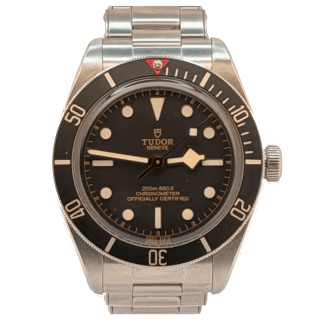
Black Bay 58 Stainless-Steel Black Dial
Big-Block Chronotime Panda Oysterdate Automatic

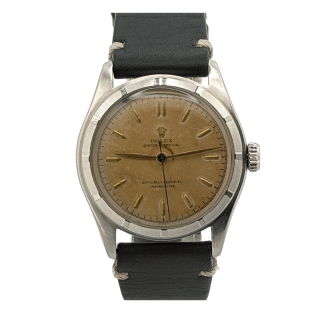
Oyster Perpetual Bubbleback
Chronomat Frecce Tricolori

Share this content