Bumper-wound watches: when automatic winding had a heartbeat
There is a generation of calibres you can actually feel on the wrist: the bumper. The modern rotor glides by in silence. The bumper, by contrast, makes itself known. A muffled rebound, a mechanical presence—like a heart beating inside the case. In Mostra’s vintage pieces, that gentle “tap” tells the
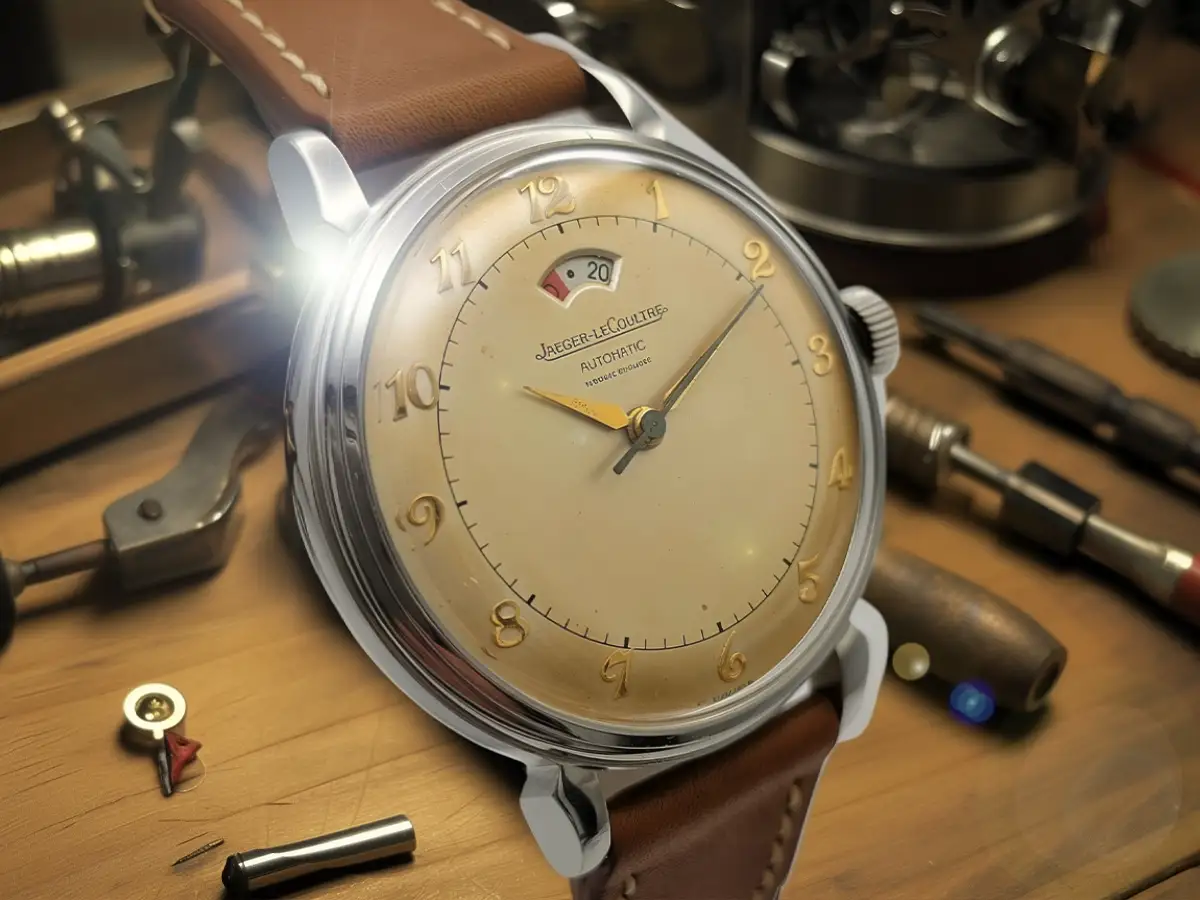
“Bumper” winding refers to an early form of vintage automatic watch in which the oscillating weight does not rotate freely through 360°, but instead moves back and forth between two stops. This architecture sometimes creates a noticeable sensation on the wrist. Used notably by Omega and Jaeger-LeCoultre, bumper systems are now sought after for their mechanical charm, historical importance, and unique feel.
Bumper winding: the beating heart of vintage automatic watchmaking
In watchmaking, some innovations do more than improve performance: they change our relationship with time. The automatic “bumper” winding system belongs to that family. Before the 360° rotor became the industrial standard, automatic watches went through a phase that was as ingenious as it was sensual: an oscillating weight that does not spin freely, but rebounds. That slight damped “bump,” sometimes perceptible on the wrist, is not a flaw: it is the signature of an era when mechanics openly expressed their presence.
In practical terms, a bumper watch is an early automatic watch whose oscillating weight does not complete a full rotation. It moves across a limited arc, then reverses direction. This is precisely why some vintage watches feel as if the rotor is alive on the wrist, as though the watch were truly working with each of your movements.
At Mostra, this sensation appears very concretely through several iconic pieces. One of the best examples is the Jaeger-LeCoultre Memovox E-855 (1965 example). Its alarm movement, the 825/4 Dato calibre, is explicitly associated with the bumper system on the Mostra listing: here, you find this “hammer” architecture beating at 18,000 vibrations per hour, with date and 17 jewels. And because watchmaking is also about wrist presence, the 1969 Memovox E-855, shown in 39 mm, extends the same philosophy in a more contemporary size, still based on the K-825/4.
What is a bumper watch?
A bumper watch is an early-generation automatic watch whose oscillating weight does not rotate freely through 360°. Instead of making a full turn around the movement, it travels across a limited arc, then strikes damping elements before reversing direction. This principle is at the root of the distinctive mechanical feel that sets these watches apart from modern automatics.
In other words, the bumper belongs to the history of the rotor in the automatic watch, at a time when watchmaking was still searching for its ideal formula. That transitional stage is exactly what makes it such a fascinating subject today for lovers of vintage watches.
How does a bumper automatic winding system work?
The intimate mechanics of the bumper: a rotor that “walks” instead of turning
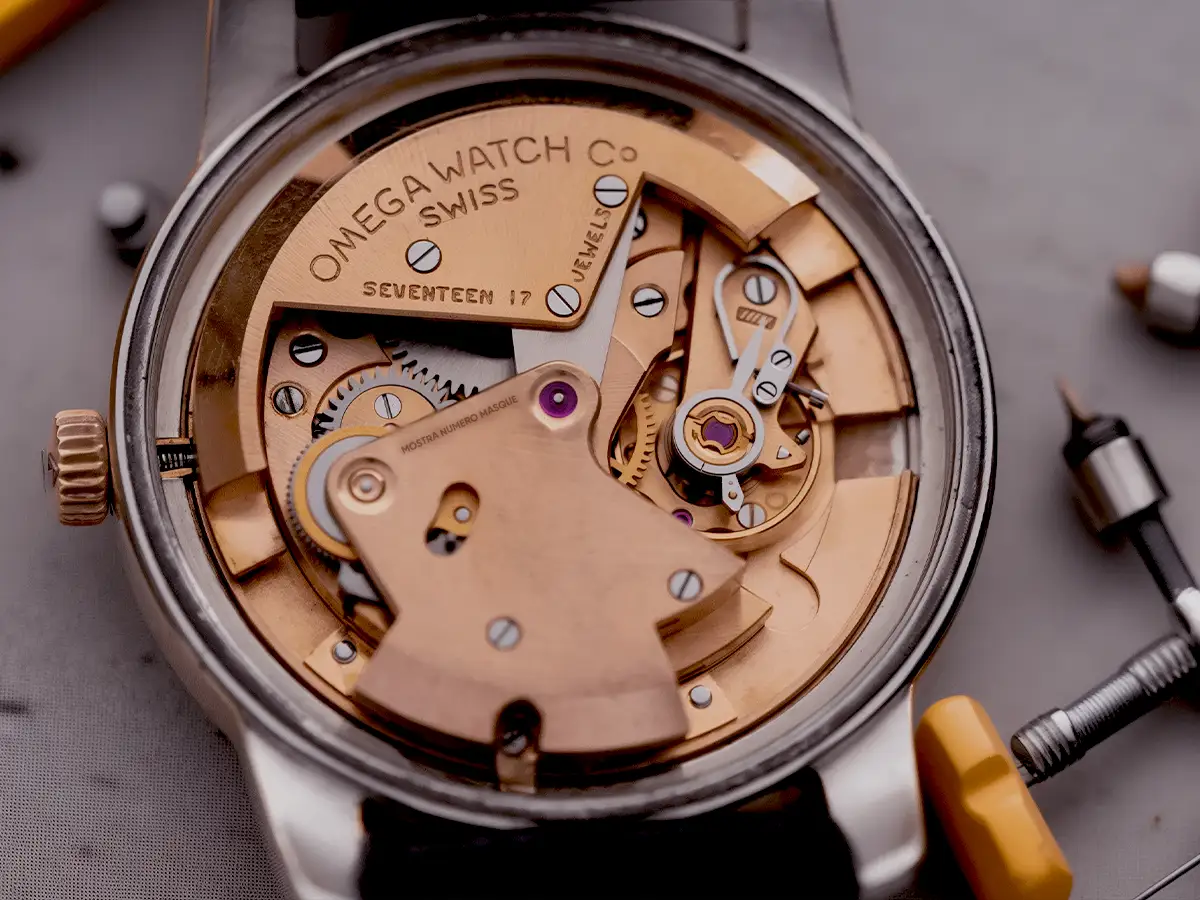
Technically, the bumper is an automatic movement with an oscillating weight, but from a generation in which the mass does not yet make a full rotation. Instead of circling the movement completely, it moves back and forth over a limited angle and reverses direction at each end of its travel. That travel is deliberately stopped by damping elements, springs, buffers, or stops, and it is precisely this controlled end-of-travel that creates the sensation on the wrist. Depending on the architecture and the brand, one may speak of an arc of around 130° in the earliest systems, then broader amplitudes in later generations; but the principle remains the same: an interrupted oscillation that rebounds against stops instead of rotating continuously.
How the bumper actually winds the mainspring barrel
The interest of the bumper is not only kinetic, it is deeply horological: this alternating motion must be converted into useful winding. Most historical bumper systems use unidirectional winding: when the mass moves in one direction, a set of clicks and ratchets transmits force to the winding train; when it returns, the mechanism disengages or freewheels so as not to undo what has just been gained. It is a simple and robust logic: fewer transmission parts, not yet the sophisticated reversers of modern automatic systems, but enough efficiency for a watch worn every day.
The role of the stops: cushioning, protecting, and defining the calibre
The springs or stop buffers are not a minor detail. They protect the mechanism from end-of-travel shocks, limit stress on the weight’s axis, and make the movement durable despite thousands of rebounds. They also determine the sensation: the sharper the stops, the more noticeable the rebound; the softer they are, the more muted the bumper feels. This is one of the reasons why a well-adjusted and well-maintained bumper watch can offer a very refined experience: you feel the mechanism, but without harshness, like a controlled presence.
Efficiency: why the bumper winds less quickly than a 360° rotor
The bumper works, but its winding efficiency is naturally lower than that of a modern central rotor. First, because the weight does not exploit a full rotation: part of the energy is lost in stopping, damping, and restarting. Second, because the winding is often unidirectional: part of the wrist’s movement is mainly used to reposition the weight rather than wind the watch. It is precisely this limitation that pushed the industry to develop 360° rotors and then bidirectional systems with reversers, capable of capturing energy regardless of the direction of rotation.
The origins of the bumper: Harwood, Rolex, Felsa
The founding patents: Harwood, bumper before its time
The bumper was not born by chance: it belongs to a line of patents that made the automatic wristwatch possible. The cornerstone is John Harwood, often credited with the first serially produced automatic wristwatch. His system uses a pivoting weight that oscillates and rests against stops, with click-and-ratchet winding in a single direction. The British patent GB218487A explicitly describes a watch “wound automatically by a weight” with spring buffers: the bumper DNA is already there.
Harwood also obtained a Swiss patent, often cited as Patent No. 106 583 (granted in 1924), and this protection is frequently mentioned in literature devoted to the origins of the automatic watch.
The patent that changed everything: Rolex and the 360° Perpetual rotor
The major turning point came in 1931: Rolex developed and patented a central rotor capable of rotating through 360°, which the brand presented as the invention of the Perpetual rotor. In practice, it quickly became the most desirable solution: smoother, more efficient, and quieter on the wrist. Rolex still presents this milestone today as a key step in the history of the automatic watch.
Working around a technical monopoly, inventing differently: this is where the bumper takes on a fascinating historical dimension. For a long period, the 360° rotor was a protected solution. Several horological analyses explain that the broad adoption of bumper systems by non-Rolex manufactures was also part of a workaround strategy: entering the world of automatic winding without reproducing exactly the patented free 360° rotor principle. The bumper was therefore not simply a primitive stage: it was also an intelligent response to a highly structuring landscape of industrial property.
1942: Felsa and the breach in history
The lock began to loosen when alternative solutions appeared that could provide an efficient central rotor in another way. Horological literature regularly cites Felsa and its Bidynator (1942) as a decisive step, notably because it introduced a free rotor with bidirectional winding via a reverser system: energy is captured regardless of the direction. This was one of the technical steps that accelerated the end of the bumper as the industrial standard from the mid-1950s onward.
Why the bumper truly matters in the history of the automatic watch
The bumper is often described as a stage “between two worlds.” That is true, but reductive. It was a technological bridge: it made the automatic watch viable, wearable, and industrially producible, while retaining a robust and intelligible construction. Its principle is simple to understand, but delicate to master: the oscillating weight travels across a limited arc, then strikes springs or buffers that send it back in the other direction. This back-and-forth movement is precisely what one sometimes feels: the watch does not hide its mechanics, it expresses them.
In the years when the Memovox established itself as a city tool-watch, with mechanical alarm, everyday practicality, and efficiency, this type of winding made perfect sense: it favored sturdiness, legibility of construction, and a very characteristic mechanical behavior, entirely consistent with the Memovox’s instrumental spirit. That logic also connects with today’s interest in pre-owned vintage watches that still reveal a real mechanical architecture.
Wearing a bumper watch is not simply owning an automatic. It means living with a wrist experience that no modern rotor truly reproduces. The modern rotor was designed to become neutral: silent, fluid, invisible. The bumper claims a different luxury: the luxury of sensation. It is not a gimmick, but a kind of intimate pedagogy. You feel that energy is being produced, that the movement is responding, that the case houses a machine that is working.
Bumper watches at Mostra: a few telling examples
Rather than listing abstract names, the most meaningful approach is to follow the watches themselves, as they exist, or have existed, in Mostra’s selections.
Jaeger-LeCoultre Memovox ref. 900462 (1964)
First comes the Jaeger-LeCoultre Memovox ref. 900462 (1964), listed as “Automatic bumper” on its page, with a Jaeger-LeCoultre Dato 825 calibre, 17 jewels, and all the typical sixties aesthetics, now marked as sold. This is the bumper in its most civil and elegant register, with that rare combination of useful complication, the alarm, and the vintage softness of plexiglass.
Jaeger-LeCoultre Memovox E-855 (1965)
Then comes the Memovox E-855 (1965), which pushes the idea further by embodying the “big city” Memovox: clear dial, central alarm disc, and bumper architecture noted in the specifications, with date, at the service of everyday use.
Omega Seamaster Automatic Bumper ref. 2577
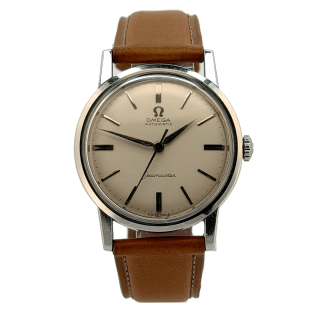
In another register, the Omega Seamaster Automatic Bumper ref. 2577, fitted with calibre 351, perfectly illustrates how Omega used this architecture in watches that were elegant, highly legible, and deeply rooted in the history of automatic watchmaking. To go further, you can also explore our world of vintage Omega watches and the culture of historic mechanical pieces.
Memovox E-855 (1969, 39 mm)
Finally, the 1969 Memovox E-855, in 39 mm, shows how this architecture can still wear with a more contemporary presence, without losing the mechanical DNA of the rebound.
Why the bumper disappeared… and why it returns today
The bumper had its limits: lower winding efficiency than a 360° rotor, possible wear on stop elements if maintenance was neglected, and a more present sensation that did not always appeal to the wider public. The industry therefore naturally shifted toward central rotors that were more efficient, quieter, and more universal.
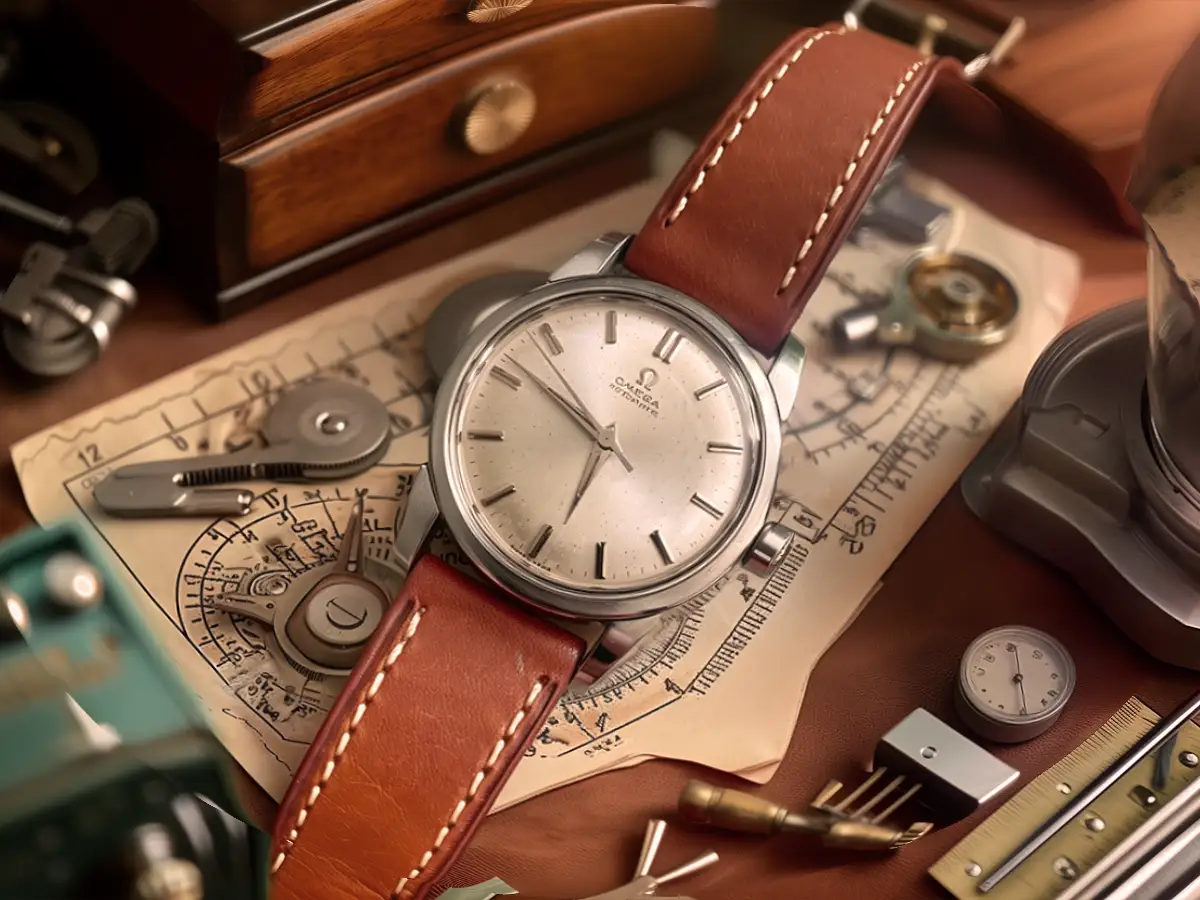
Mostra illustrates this transition very well in its content dedicated to Omega: the maison explains, in relation to the earliest Constellation models, the shift from bumper automatic calibres 352/354 to more modern central rotors in the mid-1950s. It was a logical evolution in the history of the automatic watch.
And among the watches that passed through Mostra, the Omega Seamaster CK14729 (1958) precisely embodies the post-bumper generation, when the brand relied on central-rotor movements such as calibre 501, often presented as a signature of that transition period.
Today, the bumper is no longer judged by the standards of pure efficiency applied to a contemporary calibre. It is seen as horological heritage: the testimony of a watchmaking era still searching for its formula, and one that allowed mechanics the right to remain sensitive. It is the missing link between the gesture of hand-winding and modern fluidity, but a link that has kept a rare magic: that of a movement one can almost “hear” without sound, simply by feeling it.
Wearing a bumper Memovox is wearing a very specific idea of watchmaking: a useful, living, and deeply human watch, because it does not seek to erase its mechanism. It embraces it.
Frequently asked questions about bumper watches
What is a bumper movement?
A bumper movement is an early automatic winding system in which the oscillating weight does not rotate freely through 360°, but instead moves back and forth between two stops. This operation sometimes creates a noticeable mechanical sensation on the wrist.
Why do you feel a bumper more on the wrist?
Because the oscillating weight reaches the end of its travel against springs or buffers, then reverses direction. This controlled rebound can be felt, especially on certain vintage watches that remain very mechanically alive.
Does a bumper wind less effectively than a modern rotor?
Generally speaking, yes. Its efficiency is often lower than that of a 360° central rotor, especially when the winding is unidirectional. That does not make it bad, only older in conception and less optimized than later automatic systems.
Which brands used bumper movements?
The bumper system was used or developed in related forms by several historic makers and movements, notably in the orbit of Harwood, then later by brands such as Omega or Jaeger-LeCoultre on certain vintage watches that are now highly sought after.
Is a bumper watch fragile?
Not necessarily. A well-maintained bumper watch can be very pleasant to wear and durable. However, like any older mechanical watch, it requires particular attention, especially regarding the condition of the stops, the oscillating weight, and the winding train. Inspection by a serious watchmaking workshop is always recommended.
At Mostra: finding and living with a bumper watch
At Mostra, we do not see these watches as simple technical curiosities, but as full pieces in the history of the pre-owned watch. A well-chosen bumper watch tells more than the story of a winding system: it tells the birth of a horological sensation.
Are you looking for a vintage watch with singular mechanical charm, a Memovox, an early automatic Seamaster, or a well-identified bumper piece? Let us help you find your ideal watch.
Related products


Share this content