Rolex Explorer: all references from 1953–2025 & pre-owned buying guide
From the Himalayas to the concourses of today’s international airports, the Explorer remains the understated tool watch that transcends eras. Here is its complete story—from its origins to the modern references—followed by a buyer’s guide to pre-owned models.
Born in 1953 in the wake of great mountaineering expeditions, the Rolex Explorer has stayed true to its tool-watch purpos, legible, robust, and water-resistant. From the early 6150/6350/6610 to the cult 1016, the sapphire-era 14270/114270, the 39 mm 214270, and the modern 36 mm 124270/124273 with the 40 mm option 224270, this guide maps the history and the key authenticity checks for a confident pre-owned purchase.
1953: the original concept, spirit of ascent
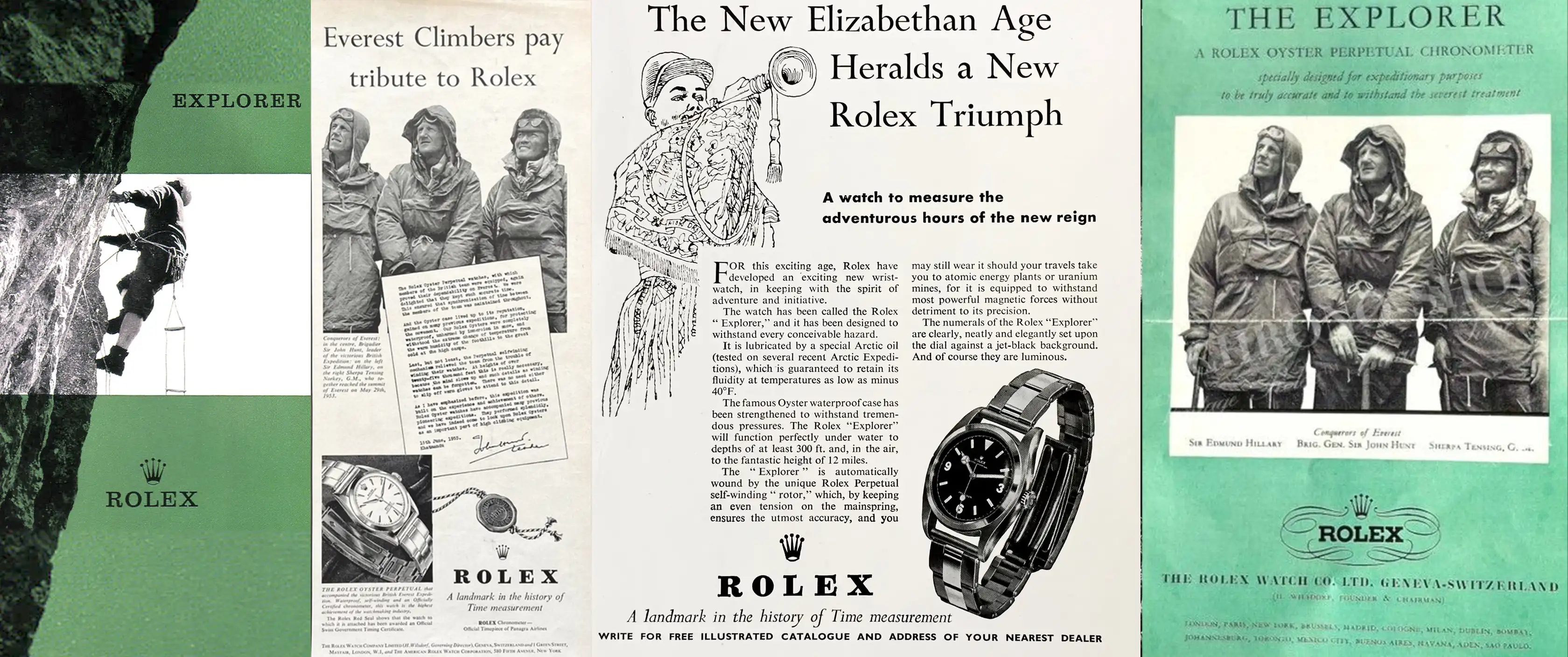
In the early 1950s, Rolex supplied Oyster Perpetual watches to high-altitude expeditions. In 1953, after the historic Everest ascent, the brand officially launched the Explorer: an ultra-legible black dial with 3-6-9 numerals, a water-resistant Oyster case, and a clear mission, accompany explorers. This was the starting point of an icon.
The Explorer’s genesis even takes shape a little earlier with the large Oyster Perpetuals 6098 and 6298, then the crucial milestone 6150, often seen as a “pre-Explorer” already featuring the 3-6-9 grammar. Debate remains over the first “true” Explorer, but the 6150 and 6350—both introduced in 1953—lay down the DNA.
1953–1958: the first models bearing the Explorer name (6150, 6350, 6610)
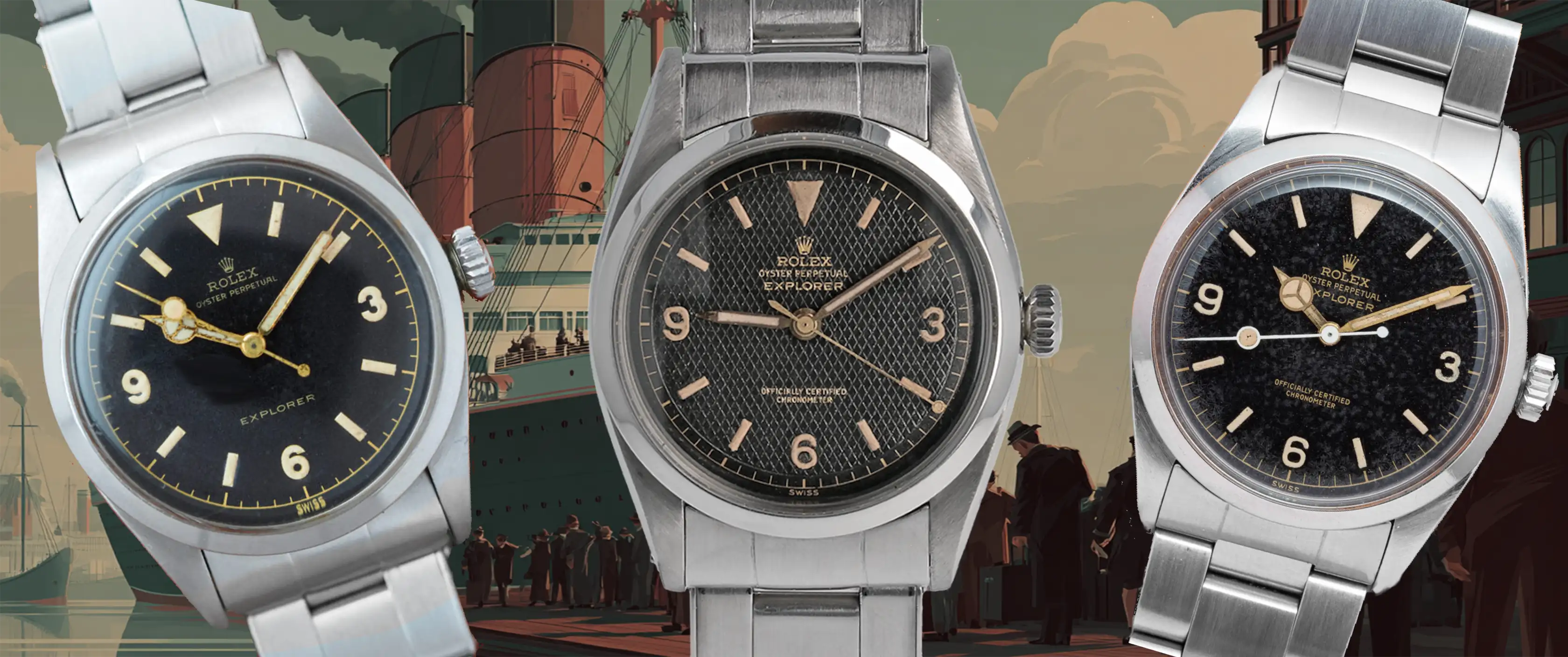
Reference 6150. Reprises the look of the large Oysters and initially appears without the “Explorer” wording—sometimes replaced by “Precision.” With its 36 mm size and black dial, it stands as the foundational archetype.
Reference 6350. Wears “Explorer” on all dials and is known for rare waffle/honeycomb variants that are highly sought after. The 6150 and 6350 share A296 movements; many 6350s are C.O.S.C. certified.
Reference 6610 (1955). Takes the watch out of its “prototype” phase with the thinner calibre 1030, allowing a slimmer caseback. Early series sometimes feature the water-resistance inscription in red. The 6610 closes the opening chapter and paves the way for the classic to follow.
1963–1989: the ultimate myth, Explorer 1016

Produced for over a quarter century, the 1016 sets the silhouette: 36 mm, black dial (matte or glossy depending on era), “Mercedes” hands, smooth bezel, 100 m water-resistance. It starts with calibre 1560, then moves to 1570 (hacking from 1971). Early years show gilt dials and the luminescent transition from radium to tritium—key tells for collectors. Quintessential vintage Explorer.
1960s curiosities: the 34 mm outliers (5500 & 6429 “Commando”)

On the fringes of the main line sit the 5500 (34 mm), essentially an Air-King with an Explorer dial, and the 6429 “Commando” (34 mm), retailed by general dealers. They borrow Explorer codes without being core models—pieces for connoisseurs.
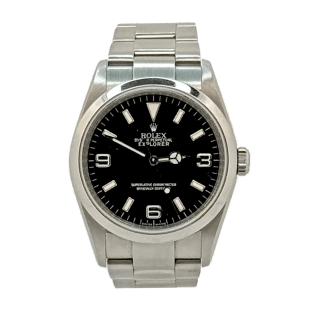
1989–2010: the modern (sapphire) era, 14270 & 114270
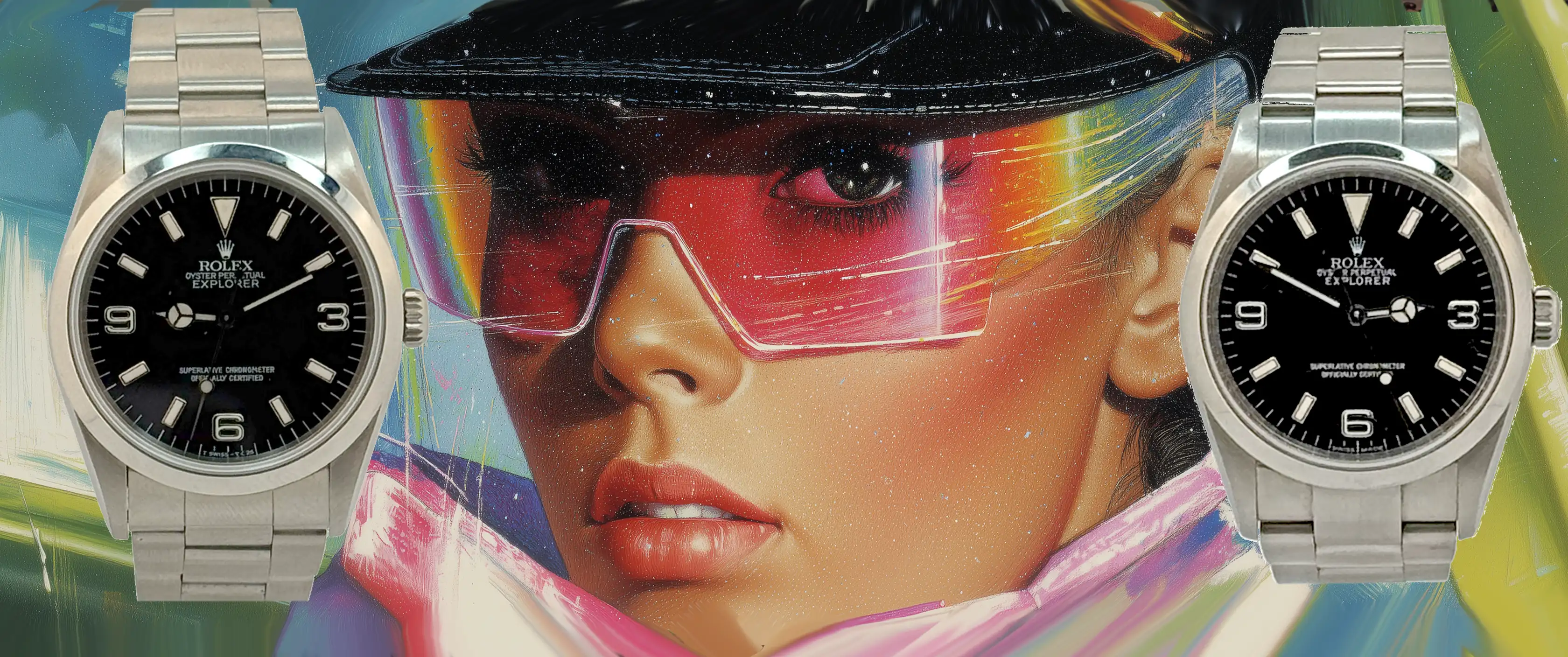
14270 (1989–2001). Introduces sapphire crystal, applied white-gold markers and numerals, glossy dial, and calibre 3000. Early Blackout (1989–1991) pieces have black-lacquered 3-6-9 numerals, followed by tritium “SWISS-T<25,” then “SWISS” (LumiNova) and “SWISS MADE” (Super-LumiNova).
114270 (2001–2010). Successor with calibre 3130, solid end-links, and clean continuity; late examples feature the ROLEX-engraved rehaut.
2010–2021: the bold jump to 39 mm, 214270
214270. Moves to 39 mm, powered by calibre 3132 with blue Parachrom hairspring and Paraflex. The early “Mark I” has hands considered too short and non-lumed 3-6-9; in 2016, “Mark II” lengthens the hands and fills the numerals for better night legibility.
2021–2025: nack to roots (36 mm) and a larger option, 124270, 124273 & 224270
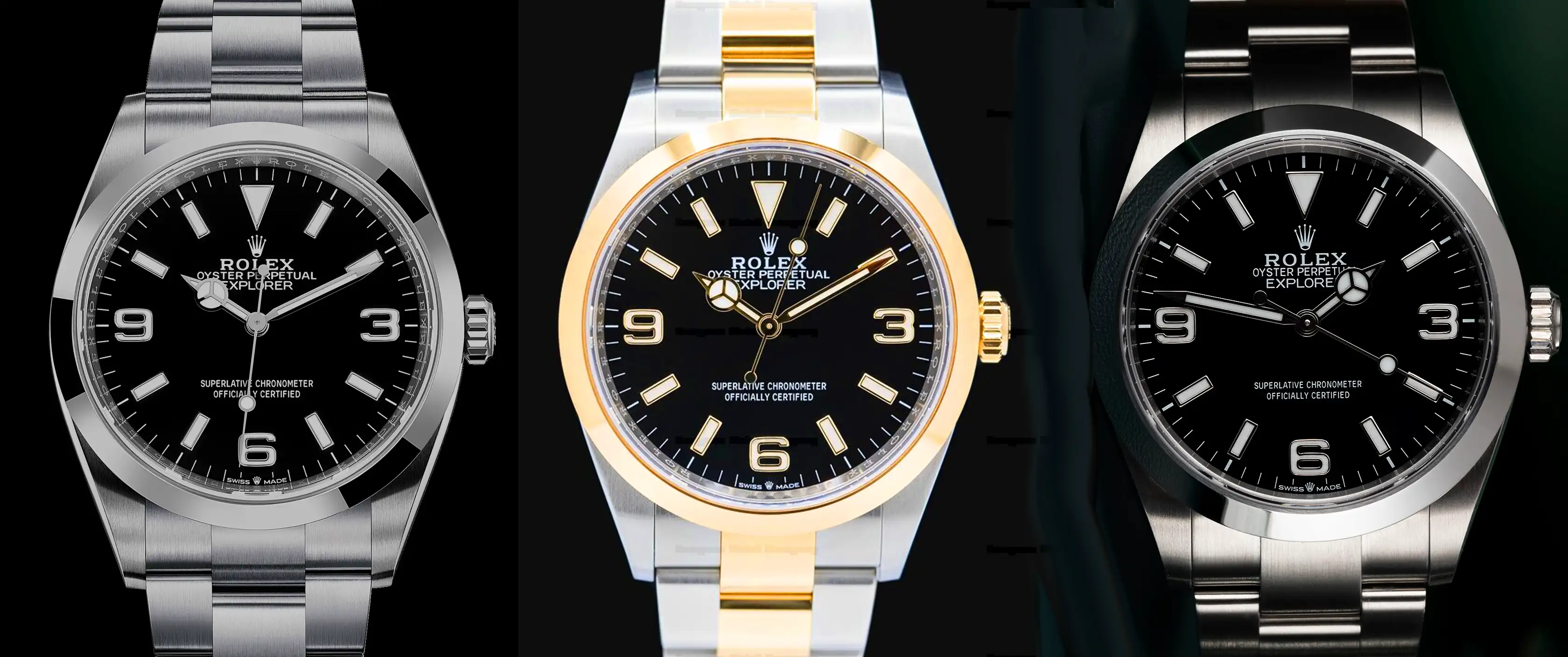
In 2021 the Explorer returns to 36 mm with the 124270, adopting calibre 3230 (Chronergy escapement, ~70 h power reserve, Parachrom, Paraflex). The same year, the yellow Rolesor 124273 nudges the Explorer toward urban elegance. In 2023 the 224270 adds a 40 mm option—two sizes, one pared-back tool-watch vocation.
Luminous compounds & legibility
From early radium to the gilt tritium years of the 1016, through LumiNova/Super-LumiNova on 14270/114270 and today’s Chromalight, the Explorer has consistently prioritized instant readability—day and night—without sacrificing the minimalist 3-6-9 and the 12 o’clock triangle.
1971–today: explorer II, the complementary “spelunker” version
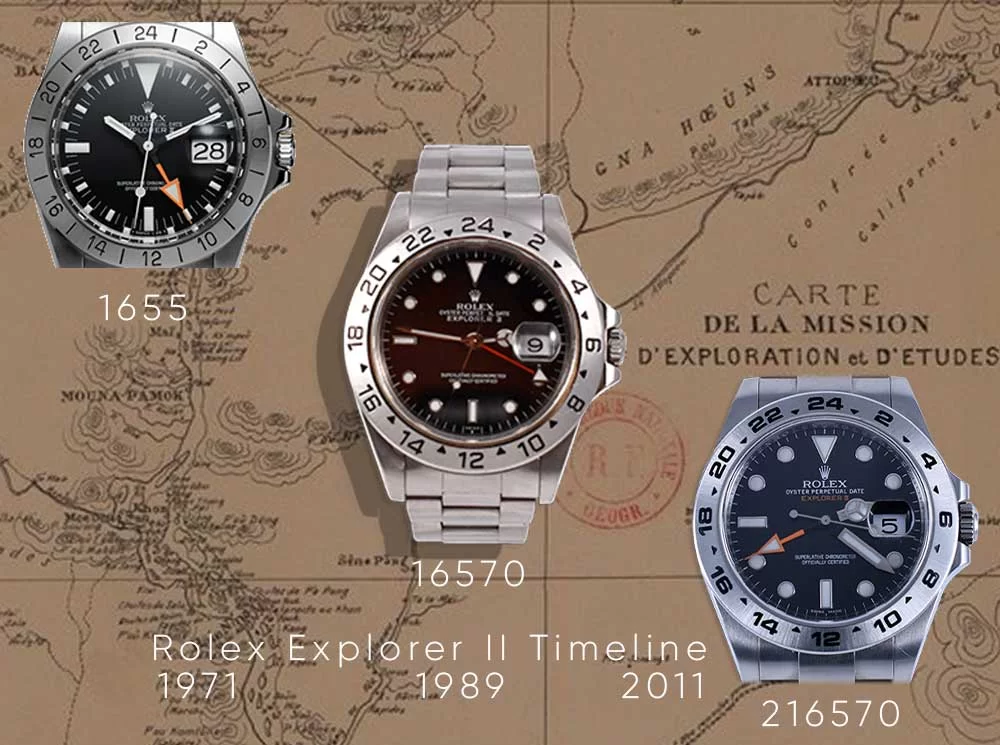
1655 (1971–1984). Fixed 24-hour bezel and large arrow hand; calibre 1575 with non-independent 24-hour hand (AM/PM indicator rather than a true GMT). Numerous dial and bezel “Mark” variations.
16550 (1985–1988) & 16570 (1989–2010). The 16550 evolves to 40 mm with sapphire, black or white “Polar” dials, Mercedes hands, and calibre 3085 with independently set 24-hour hand—now a true GMT. The 16570 follows with 3185 then 3186, a tritium → LumiNova → Super-LumiNova progression, Polar dials with black-outlined markers, and an engraved ROLEX rehaut at the end of its run.
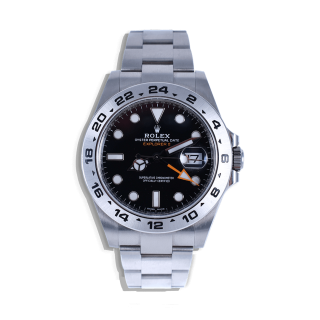
216570 (2011–2021) & 226570 (2021–…) move to 42 mm, revive the orange “Freccione” hand, and use calibres 3187 then 3285 (Chronergy, ~70 h). Learn more here: Mostra Magazine — The Secrets of the Explorer II.
A synthesized chronological thread
From 6150/6350 (1953) to 6610 (1955), the Explorer leaves the experimental stage, then becomes a universal icon with the 1016 (1963–1989). In the sapphire era, the 14270 (1989–2001) modernizes, the 114270 (2001–2010) consolidates, and the 214270 (2010–2021) explores 39 mm, before the return to 36 mm and calibre 3230 on 124270/124273 (from 2021) and the 40 mm 224270 (from 2023).

Why the Explorer still captivates in 2025
It avoids showy complication and forced nostalgia. At 36 mm it slips from formal to casual with ease; at 40 mm it adds presence without betraying the DNA. Immediate legibility, Oystersteel robustness, 100 m water-resistance, Superlative Chronometer precision—now with proportions back in natural balance. The 36 mm size wears beautifully on both women and men, strengthening pre-owned demand.
To go further with Mostra
Our watchmakers know the nuances that create value: a well-preserved gilt dial on a 1016, an early 14270 Blackout, a clearly identified lume transition, a correctly configured 214270 Mark II, a 124270 whose 3230 is finely regulated, or a beautifully creamy 16550 Polar. Every piece is authenticated and serviced in-house, and delivered with a 3-year Mostra warranty and service history.

Buyer’s guide & authenticity checkpoints: Rolex Explorer (I & II)
First, place each watch in its plausible year and original configuration. A coherent example aligns its dial, hands, bezel, bracelet, and movement with the production period—any discrepancy must be explained (documented factory service, acknowledged restoration… or a composite piece to avoid).
Explorer 1016 (1963–1989)
36 mm, T19 acrylic, calibres 1560 then 1570 (hacking after 1971), Oyster bracelets 7206/7836/78360 by era. Red flags: too-new “gilt-style” repaints, artificially “tropicalized” patina, over-polished cases (thinned lugs), hands mismatched to marker hue, soft/inconsistent engravings between the lugs and on the caseback.
Explorer 14270 (1989–2001)
Sapphire, calibre 3000, early Blackout (1989–1991). Transitions “SWISS-T<25” → “SWISS” → “SWISS MADE.” No solid end-links originally—finding SEL usually signals parts mixing. Watch for refaked Blackout dials, too-white service hands on tritium dials, and retro-fitted engraved rehauts (not present on original 14270).
Explorer 114270 (2001–2010)
36 mm, calibre 3130, solid end-links; late examples with ROLEX-engraved rehaut. Modern lume only (no tritium). Typical issues: service dials on older cases, anachronistic clasps—verify clasp codes, bracelet ref., and Easylink presence by period.
Explorer 214270 (2010–2021)
39 mm, calibre 3132. Mark I: short hands, non-lumed 3-6-9. Mark II (from 2016): longer hands, lumed numerals. Beware post-service mixes; demand dial/hand/year coherence and check bracelet 77200 with Oysterclasp.
Explorer 124270, 124273 & 224270 (2021–…)
Return to 36 mm (124270 with 3230), yellow Rolesor 124273 the same year, plus 40 mm 224270 (2023–). Focus on complete sets (card, box, full links), absence of knocks, and matching serials.
Explorer II 1655 (1971–1984)
Large 24-hour hand not independently set, fixed bezel, calibre 1575. Many “Mark” dial/bezel variants—look for natural patina harmony between markers and hands, a mellowed orange tone, period-correct bezel fonts and date wheel. Avoid freshly repainted orange hands, recent service bezels on early cases, and redone dials.
Explorer II 16550 (1985–1988) & 16570 (1989–2010)
16550 introduces true GMT (3085), Polar dials that can cream naturally; a perfectly white aged “Polar” needs explaining. 16570 continues with 3185 then 3186; late pieces have engraved rehaut—verify any “3186 inside” claim via serial and history.
Explorer II 216570 (2011–2021) & 226570 (2021–…)
42 mm, orange hand, calibres 3187 then 3285 (Chronergy, ~70 h). Contemporary checks: uniform Chromalight, crisp alignments, complete set, and unmolested bevels/edges.
Cross-checks to apply every time
Lume must match the era (tritium → LumiNova/Super-LumiNova → Chromalight). The laser-etched coronet at 6 on the crystal appears in the early 2000s—absent on earlier models. The ROLEX-engraved rehaut arrives late—never on an original 1990s 14270. Homogeneous patina between hands and markers is the rule. Oyster cases keep sharp geometry; soft/asymmetric lugs betray heavy polishing. Bracelets must “speak” the same year as the head (reference, end-links, clasp code, full links).
Papers, service & provenance
Warranty cards, service invoices, spare links and accessories don’t make the watch but secure the purchase—especially for modern references. For vintage, prioritize component coherence and authenticity; a watchmaker’s opening is essential to check the movement, case/caseback references, and water-resistance.
What we guarantee at Mostra
Every Explorer is opened, inspected and tested in our atelier, authenticated part by part and delivered with a 3-year Mostra warranty, a detailed condition report and, if needed, a photo file of key elements—so the watch is correct, coherent and ready for everyday life.
Related products




Share this content