


Bulova
accutron astronaut nasa - Space Apollo GMT
| Case | Steel |
|---|---|
| Diameter | 38 X 40 mm |
| Strap | Steel Strap |
| Movement | Hybrid |
|---|---|
| Caliber | Bullova 214 GMT |
| Content | Mostra case |
-
Diameter38 X 40 mm
-
MovementHybrid
-
CaseSteel
-
StrapSteel Strap
-
ContentMostra case
-
GenderMan
Woman -
Gender for GoogleUnisex
-
AgeAdult
-
WaterproofingNot waterproof
-
Year1963
-
ModelTransistor 374 Htz
-
VersionSpace Apollo GMT
-
Manufacturer reference63.366
-
Certificate of authenticityYes
-
Mostra referenceMS0619090
-
CaliberBullova 214 GMT
-
Glass typePlexiglass
-
DialNoir, index réhaussés Tritium
-
LoopSans boucle (bracelet extensible)
-
Strap typeBracelet d'origine
-
Strap colorAcier
-
SpecificitiesMontre GMT à système de réglage atypique (sous le boitier)
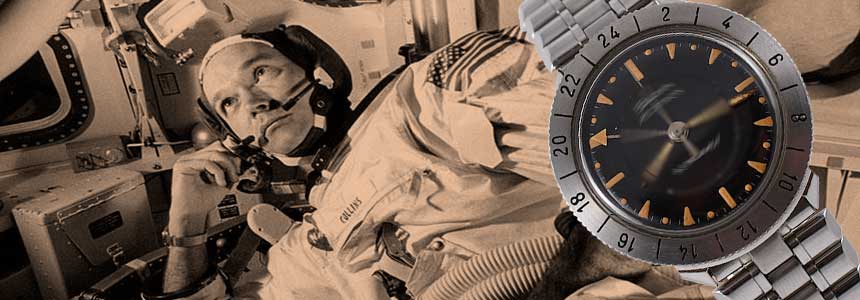
The Bulova Accutron Astronaut GMT vintage 1963 — the backup watch of the first Apollo mission crews, selected by NASA for its alternative technology. Bulova, the Swiss watch manufacturer based in New York, renowned for its extensive production of military watches for U.S. pilots and armed forces during World War II, revolutionized the watch industry of the 1960s with its Accutron model.
In the space-age era, technology was pushing the market toward greater modernity and performance. This quest for accuracy originated from the work of engineer Max Hetzel, who worked for Bulova from Basel, Switzerland. The Bulova Accutron, composed of 12 moving parts out of a total of 27 components, represented not only a technical feat but also a revolution worthy of any science fiction novel of the time. It was the superhero watch straight out of a Stan Lee comic, the holy grail of timekeeping, with its piezoelectric movement and electronic precision — a technology that would evolve into quartz a decade later.
At the heart of this innovation was a tuning fork vibrating at 360 times per second, driving a 320-tooth gear. The result: a visually continuous sweeping motion of the central seconds hand — a movement so fluid it earned the Accutron the title of the world’s most accurate watch, with a maximum deviation of just two seconds per day, according to Bulova's official guarantee. But the fame of this model also came from its visual and functional features:
First, its operating kinetics — a smooth, linear motion that stood in sharp contrast to the ticking “Flat Second” hand of the Omega Speedmaster. Second, the absence of a crown on the side of the case — relocated to the caseback, since the Accutron did not require manual winding or time correction due to its exceptional precision. This futuristic, robust, and reliable design helped the watch conquer the market and secure its place among NASA’s Apollo mission crews as the official backup timekeeper, selected precisely for its unique technology. In fact, an Accutron unit was integrated into a seismograph placed by Neil Armstrong, commander of Apollo 11, and still rests on the surface of the Moon in the Sea of Tranquility since July 1969...
Our "Watch History" page gives you access to fascinating stories about watch brands and their different models.
You’ll also find insights into watches worn by celebrities and public figures by following this link.
You will also like
-
-
-
-
-
-
-
-


