


Hanhart
F-84 pilot RFA mcqueen - Bund-Flieger Chronograph
| Case | Steel |
|---|---|
| Diameter | 39 mm |
| Strap | Leather Strap |
| Movement | Hand-wound Flyback |
|---|---|
| Caliber | Hanardt 17JW |
| Content | Mostra case |
-
Diameter39 mm
-
MovementHand-wound Flyback
-
CaseSteel
-
StrapLeather Strap
-
ContentMostra case
-
GenderMan
-
Gender for GoogleMan
-
AgeAdult
-
WaterproofingNot waterproof
-
Year1947
-
ModelBundeswehr Flyback
-
VersionBund-Flieger Chronograph
-
Manufacturer reference12-121
-
Certificate of authenticityYes
-
Mostra referenceMS0419049
-
CaliberHanardt 17JW
-
Glass typePlexiglass
-
DialNoir avec deux compteurs totalisateurs
-
LoopArdillon
-
Strap typeCuir type Steve McQueen
-
Strap colorMarron
-
SpecificitiesChronographe militaire à retour en Vol (Luftwaffe RFA) Marquages Bundeseigentum
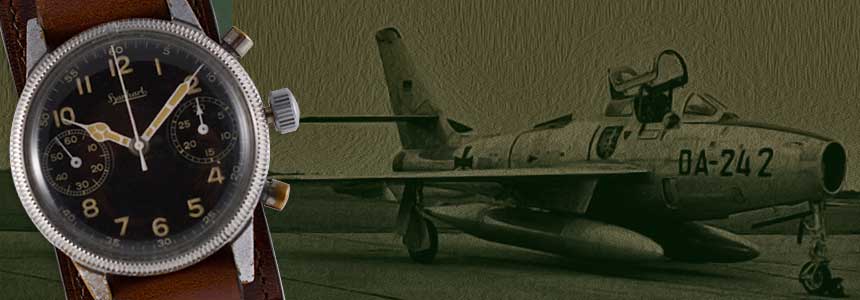
Military pilot chronograph by Hanhart with two counters, assembled in 1947 and marked with the Bundeswehr military property stamp on the case back (Bundeseigentum: meaning Federal Property of the FRG), featuring a flyback mechanism. One example of this postwar timepiece was worn by Steve McQueen before and after filming "The War Lover". This rare flyback Hanhart chronograph continued to be produced in West Germany after WWII, so appreciated was it by pilots for its robustness and reliability. It was issued to the new Luftwaffe squadrons starting in 1956, initially equipped with F-84 Thunderstreaks, then F-104G Starfighters.
Its reputation was such that many allied air forces adopted and further developed it throughout the 1950s. The Eastern Bloc, having used it in East German squadrons, later created the Sturmanskie aviation chronograph based on its movement. It is now widely acknowledged that the performance of the French Air Force Type 20 pilot chronographs from 1954 (Breguet, Auricoste, Dodane, and Airin) owes much to this model. The main differences lie in the rotating graduated bezel (absent from the Breguet and Vixa models) and the use of more cost-effective steel alloy cases.
This collectible watch houses the Hanhart 17-jewel mechanical hand-wound movement, running at 18,000 vibrations per hour, with a power reserve of 42 hours after full winding. The chronograph features two counters (30 and 60 minutes) with flyback functionality, allowing the wearer to reset and restart the chronograph instantly using the pusher at 4 o'clock—an essential feature for pilots navigating between waypoints.
Many Allied pilots brought these watches home after the war as trophies, further boosting their notoriety and visibility. This explains why so many aviation enthusiasts, actors, and public figures of the 1950s wore this chronograph. Alongside the Heuer chronographs produced in the 1960s, this Hanhart is now among the most sought-after Cold War-era military pilot watches. It frequently appears in archival photos on the wrists of aviators who took part in the Berlin Airlift during the rising East-West tensions and the construction of the Berlin Wall.
You’ll find more information and articles about historic watches and brands by following this link.
Explore our collection of Military and Aviation Watches.
Discover stories about iconic watch models and celebrity watches also available here.
You will also like
-
-
-
-
-
-
-
-


