Space conquest watches: from Mercury to Artemis, the epic seen by Mostra
From Gagarin to Artemis, the history of space is also written on the wrist. Between Sturmanskie, Heuer, Breitling, Omega, Yema and RALF TECH, Mostra retraces the watches of orbit, the Moon, Mir and the ISS, while highlighting the pieces currently available in Aix-en-Provence.
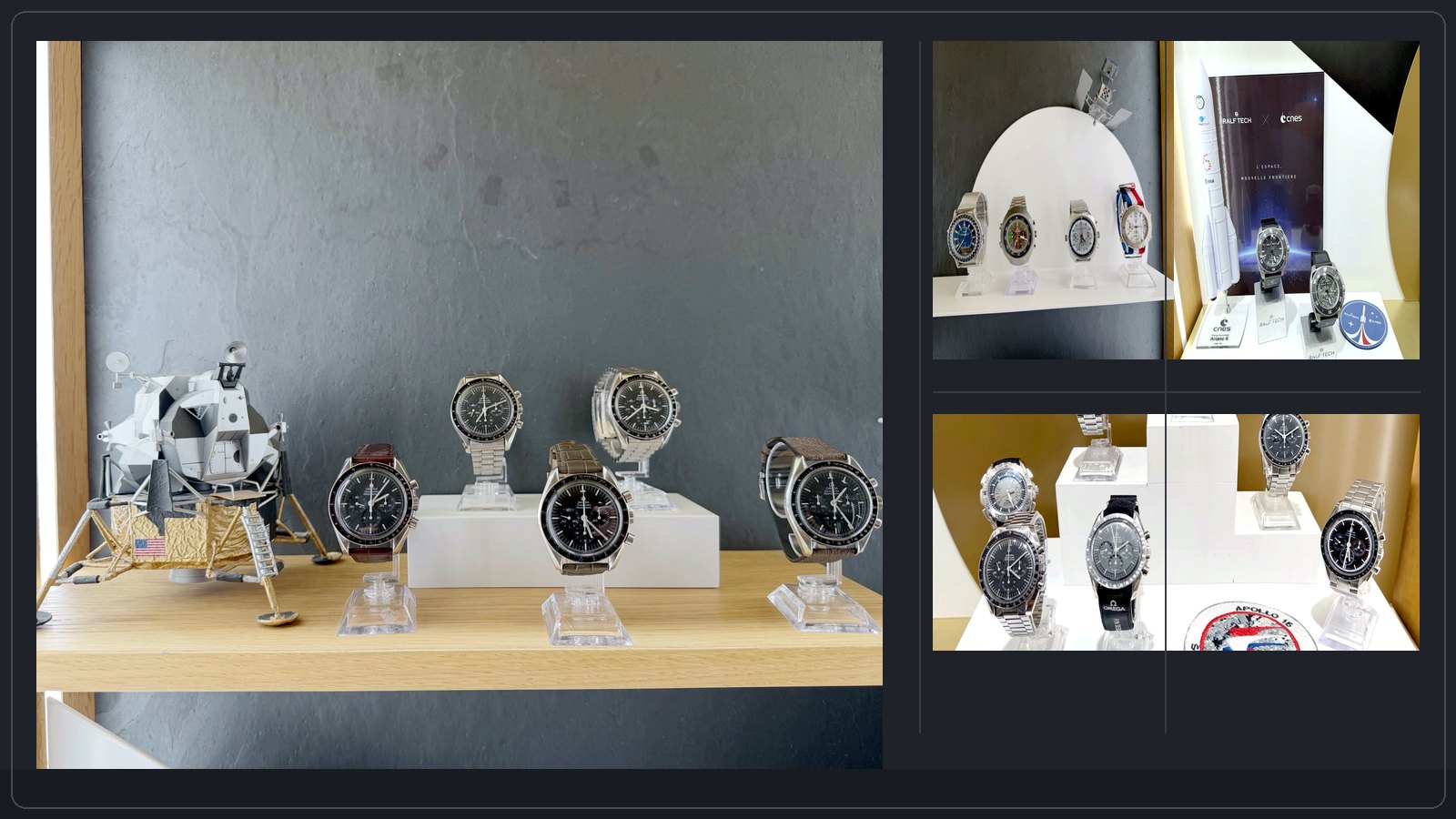
TL;DR – The watches of space conquest are not limited to the Omega Speedmaster. From the Sturmanskie worn in the Soviet space programme to the Mercury chronographs, from the Moonwatch to French Yema Spationaute watches, from the Omega X-33 to contemporary RALF TECH watches linked to the CNES, they tell a story in which time becomes an instrument of mission, memory and collecting.
There are watches that tell the time, and others that accompany history. In the chronology of space conquest, the timepiece has never been a simple accessory. It has been, in turn, a navigation tool, a safety instrument, a mechanical reference point in an environment without reference points, then the symbol of an era when technique, courage and style seemed to move forward together.
From Yuri Gagarin’s first orbital flight to the perspectives opened by Artemis, space watches tell another story of the 20th century and the beginning of the 21st: a story made of metal, glass, proven calibres, legible dials, robust cases and men and women who went further than the horizon.
At Mostra, this story is not an abstraction. It can be read through references, archives, new arrivals and the watchmaking families regularly followed by the maison: Omega Speedmaster, Poljot Sturmanskie, Yema Spationaute, Omega X-33, Flightmaster and RALF TECH x CNES. The purpose of this article is not to replace the pages dedicated to each model, but to place these watches within the same epic narrative.
Before Mercury: Gagarin and the first watch in space
Even before America entered the Mercury era, the Soviet Union had already given history its first wrist in space. On April 12, 1961, Yuri Gagarin took a Sturmanskie into orbit, which has become one of the most symbolic watches of the Soviet space adventure.
At that inaugural moment, the Russian watch was not yet a collector’s icon. It was first and foremost an instrument entrusted to a pilot. That alone gives it a particular density: in the beginning, space did not require luxury. It required legibility, reliability and the ability to function in an extreme context.
A few years later, during the first extravehicular activity in history, Alexei Leonov was associated with the world of Soviet chronographs, notably the Strela. This Soviet side of the story is essential, because it reminds us that the horological history of space is not only American. From the outset, it was built between two technical cultures, two imaginations and two aesthetics.
Mercury: Heuer, Breitling and the first Omega in flight
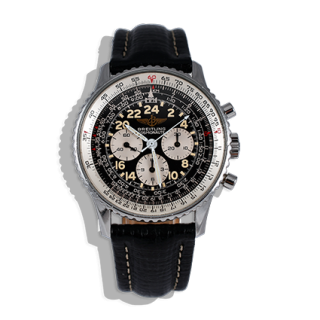
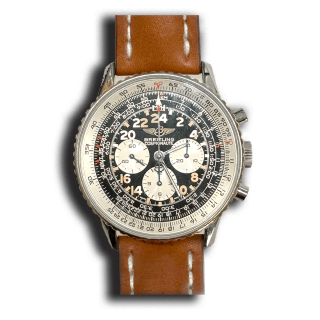
The Mercury programme cannot be reduced to a single watch. On the contrary, it represents a transitional moment, when several instruments still coexisted. In February 1962, John Glenn boarded Friendship 7 with a modified Heuer wrist timer. A few months later, Scott Carpenter wore a Breitling Navitimer Cosmonaute, derived from a 24-hour Navitimer designed for the needs of space.
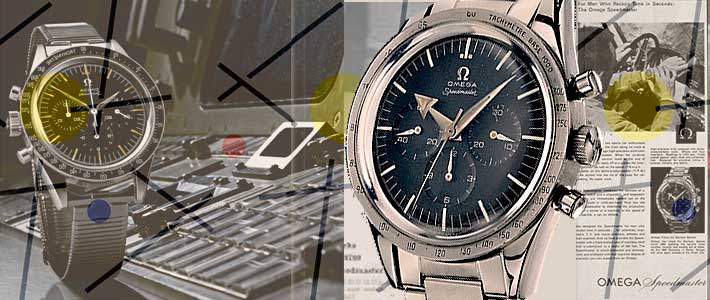
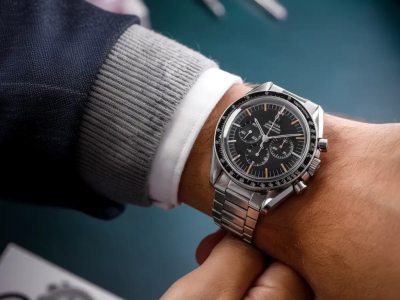
That same year, Walter Schirra took his own Omega Speedmaster CK 2998 on Mercury-Atlas 8. It was not yet the Speedmaster officially qualified by NASA, but it was already the first Omega in space. And perhaps this is where everything shifted: the moment when a chronograph born for motor racing began, almost naturally, to find its true stage in orbital emptiness.
To explore the origins of this line further, you can read the Mostra article dedicated to the Omega Speedmaster CK2915, which looks back at the beginnings of the Speedmaster before it entered space mythology.
Gemini: when the Speedmaster became a mission tool
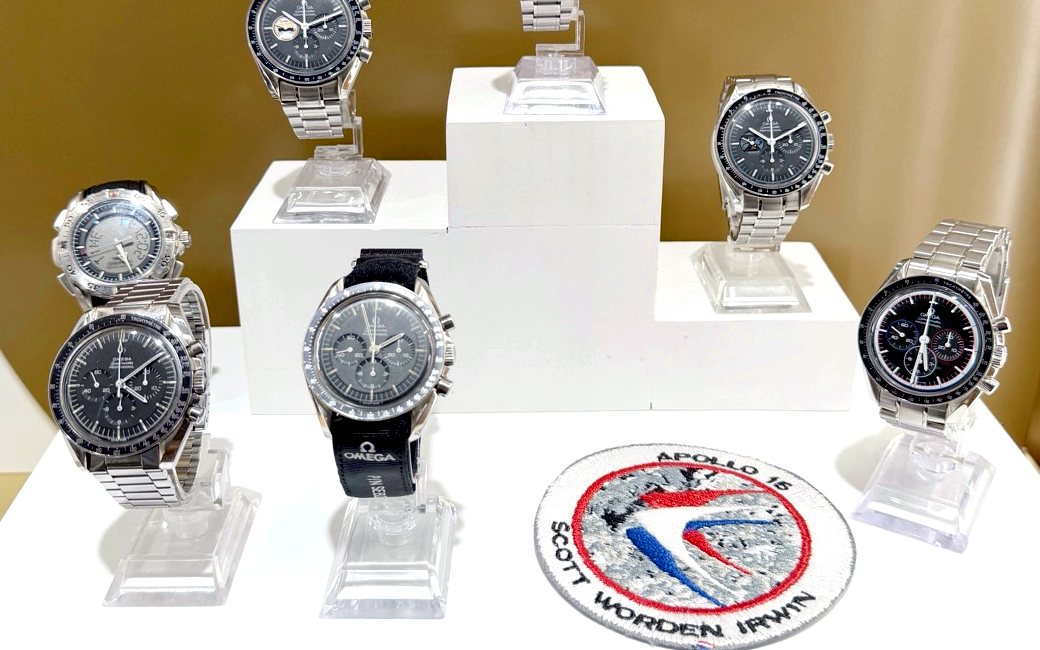
The Gemini programme marked a turning point. The Speedmaster was no longer merely the personal choice of an astronaut: it gradually became a mission tool. Reference 105.003, later nicknamed “Ed White”, occupies a pivotal place in this story. It is associated with the first American spacewalk during Gemini 4, and embodies the transition from the sporty Speedmaster to the space Speedmaster.
The 105.003 remains one of the most important references of the space era. Straight, taut, still very close to the earliest Speedmasters in its design, it did not yet have the more defensive case profile of later references. It is the watch of transition: a Speedmaster still linked to its origins, yet already entering legend.
Mostra has dedicated a specific article to the Omega Speedmaster 105.003 Ed White. This article therefore simply places it back within the broader space narrative, without repeating the full reference-by-reference analysis.
Apollo: from the Moon to the rescue of Apollo 13
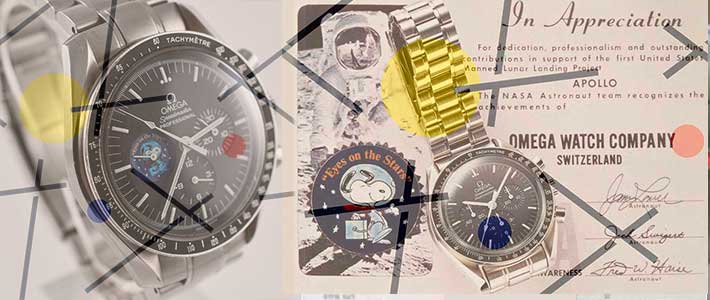
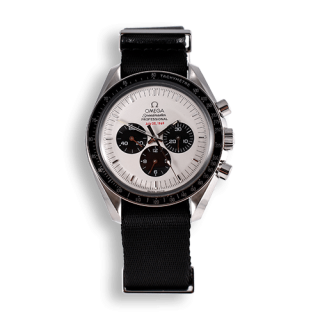
With Apollo, the Speedmaster changed scale. It became the Moonwatch, the watch associated with humankind’s first step on the Moon, then with several crewed missions that fixed its image forever. Apollo 11 gave it its legend. Apollo 13 gave it another dimension: that of an instrument capable of contributing to a critical return to Earth.
During that dramatic episode, measuring time once again became vital. The Speedmaster was used to time an essential trajectory correction manoeuvre, contributing to its lasting association with the Silver Snoopy Award. Few watches can claim such a position: not only a witness to history, but a useful instrument at the moment when the mission turned critical.
For the full history of the Moonwatch, the reference content remains Mostra’s article dedicated to the Omega Speedmaster Moonwatch. For the later calibre 861 period, the article on the Omega Speedmaster 145.022 helps explain how the Speedmaster continued its story after the first great lunar moments.
Apollo-Soyuz: the moment when two worlds observed each other
The Apollo-Soyuz programme of 1975 occupies a special place. The space watch no longer belonged to one side alone. It became an object of encounter, almost a shared language between two cultures that had long opposed each other.
During this period, the Speedmaster continued to appear as the major instrument. But other watches also orbited the story, notably the Omega Flightmaster, a large tool watch born for aviation, time zones and cockpit environments. Its colourful design, powerful case and navigation vocation give it a distinct place in the imagination of mission instruments.
At Mostra, this line is represented, depending on arrivals, by vintage Flightmasters, which remind us that around the Moonwatch there existed an entire galaxy of Omega instruments designed for pilots, long-distance travellers and time professionals.
Soyuz, Mir and the Soviet vein: Poljot Sturmanskie
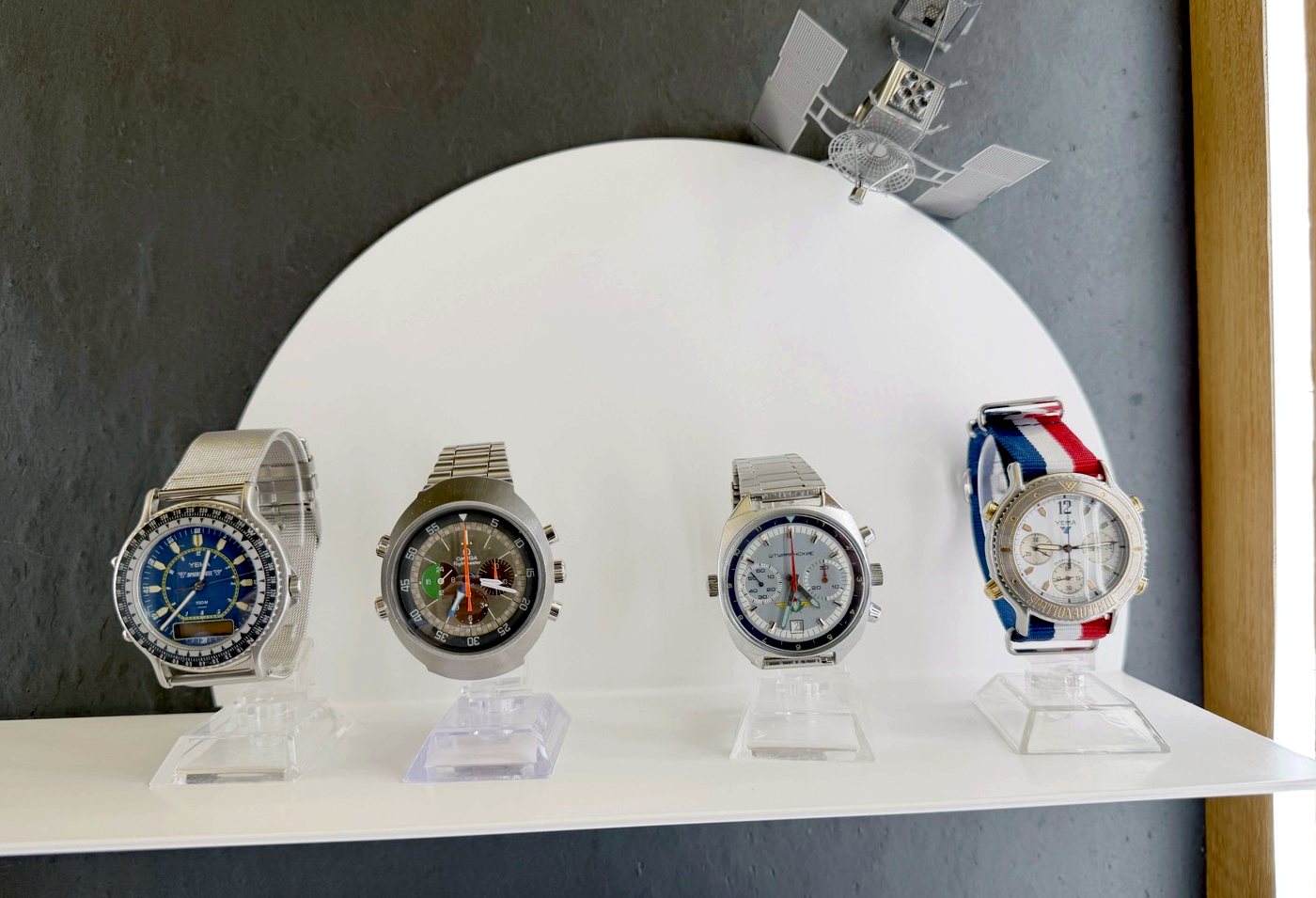
If the Speedmaster dominates the American imagination, Soviet and then Russian culture retained its own instruments. Poljot Sturmanskie watches embody this other grammar of space time: more discreet in the West, less mythologised, but deeply connected to the history of pilots, cosmonauts and the Soviet technical universe.
These watches often speak more strongly to collectors looking for another path than the Moonwatch. They do not always have the same recognition among the general public, but they offer rich historical territory: military aviation, Soviet missions, utilitarian spirit, functional dials, robust calibres and Eastern aesthetics.
In a collection, a Sturmanskie or Poljot linked to this universe allows space to be told differently. Not as a minor alternative to Omega, but as the Russian side of the same obsession: measuring time in conditions where every second can count.
France in space: Yema Spationaute, from Soyuz to the ISS
The French chapter deserves to be treated in its own right. With the Spationaute, Yema enters a space history that is more discreet than Omega’s, but deeply engaging. The French watch follows another trajectory: that of Franco-Soviet missions, Jean-Loup Chrétien, Mir, then the ISS.
Mostra has already dedicated content to the history of Yema, notably recalling the place of the Superman, Rallygraf, Yachtingraf and Spationaute in the identity of the French brand. The Yema Spationaute continues this logic: a technical, popular, French watch rooted in a period when space also became a European adventure.
A French space watch does not copy the Moonwatch. It tells another story, more national, more European, sometimes more intimate. It speaks of programmes less familiar to the general public, but essential to understanding that space conquest cannot be reduced to Apollo.
Mir, Cassiopée and the 1990s: space becomes plural
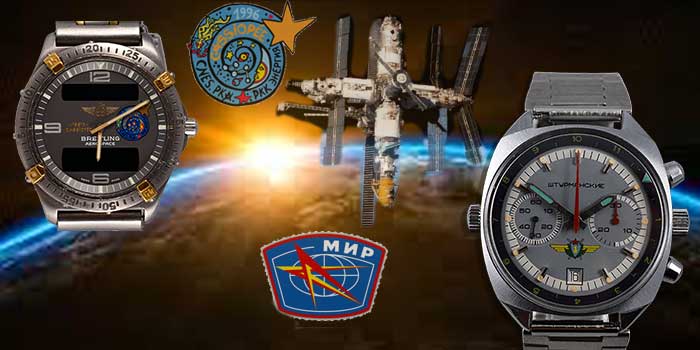
The 1990s opened another period. Space was no longer only the stage for the American-Soviet duel. It became more international, more European, more scientific. Watches followed this movement: they became analogue, digital, ana-digi, aeronautical, sometimes commemorative, sometimes genuinely operational.
The Cassiopée episode, associated with Claudie Haigneré and Mir, recalls this diversity. Breitling, Yema, Poljot, Omega and other watchmaking universes crossed the narratives of orbit at the time. The space watch was no longer a single icon, but a family of different objects, adapted to multiple uses and imaginations.
Space Shuttle and ISS: the Speedmaster changes era, the X-33 enters the scene
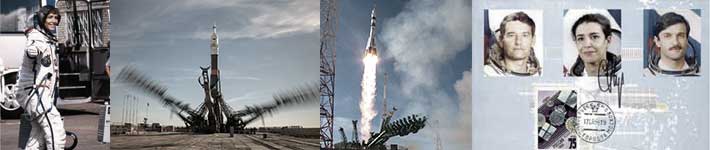
The great strength of the Speedmaster is that it survived its own legend. It did not stop with Apollo. It continued to accompany the stories of Skylab, the Space Shuttle and then the ISS. But with the Shuttle and the station, needs changed. Mission time was no longer only mechanical: it became digital, programmable, multi-time-zone and event-based.
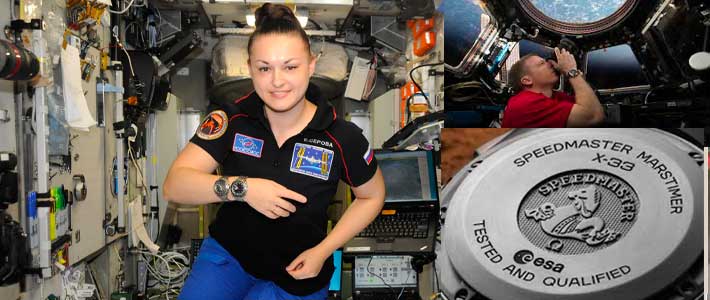
It was in this context that the Omega Speedmaster X-33 appeared. More technical, more modern, more directly oriented towards mission needs, it represents a change in language. The mechanical Moonwatch remains the myth. The X-33 embodies the contemporary tool, designed for astronauts and engineers facing different constraints.
This transition is fascinating for collectors, because it shows that space history did not freeze in 1969. It continues to evolve, with watches capable of speaking about the Moon, the ISS, Mars and future crewed programmes at the same time.
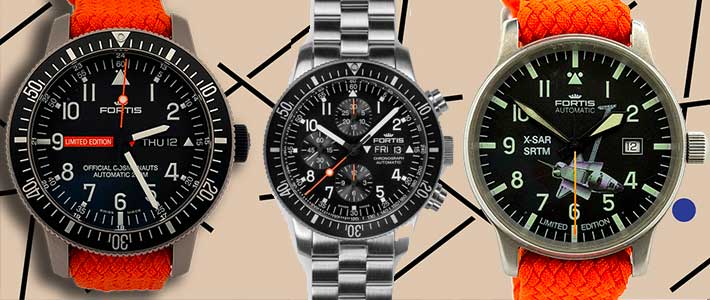
Thierry Serna, Stephan Ciejka and the Omega memory at Mostra
A chapter specific to Mostra should be opened here. In several texts published by the maison, Thierry Serna evokes the discussions and reflections that took place in the 1990s around the editorial revival of the Speedmaster and its space narrative. This internal memory gives Mostra a particular relationship with Omega series linked to NASA, Gemini and Apollo missions, Moon to Mars editions and the watches that helped reactivate the Speedmaster myth at the end of the 20th century.
This point should remain a maison perspective, and not replace the pages dedicated to each reference. Above all, it explains why Mostra looks at space watches as a coherent family: not only through their objective history, but also through the way they have been told, collected, selected and passed on.
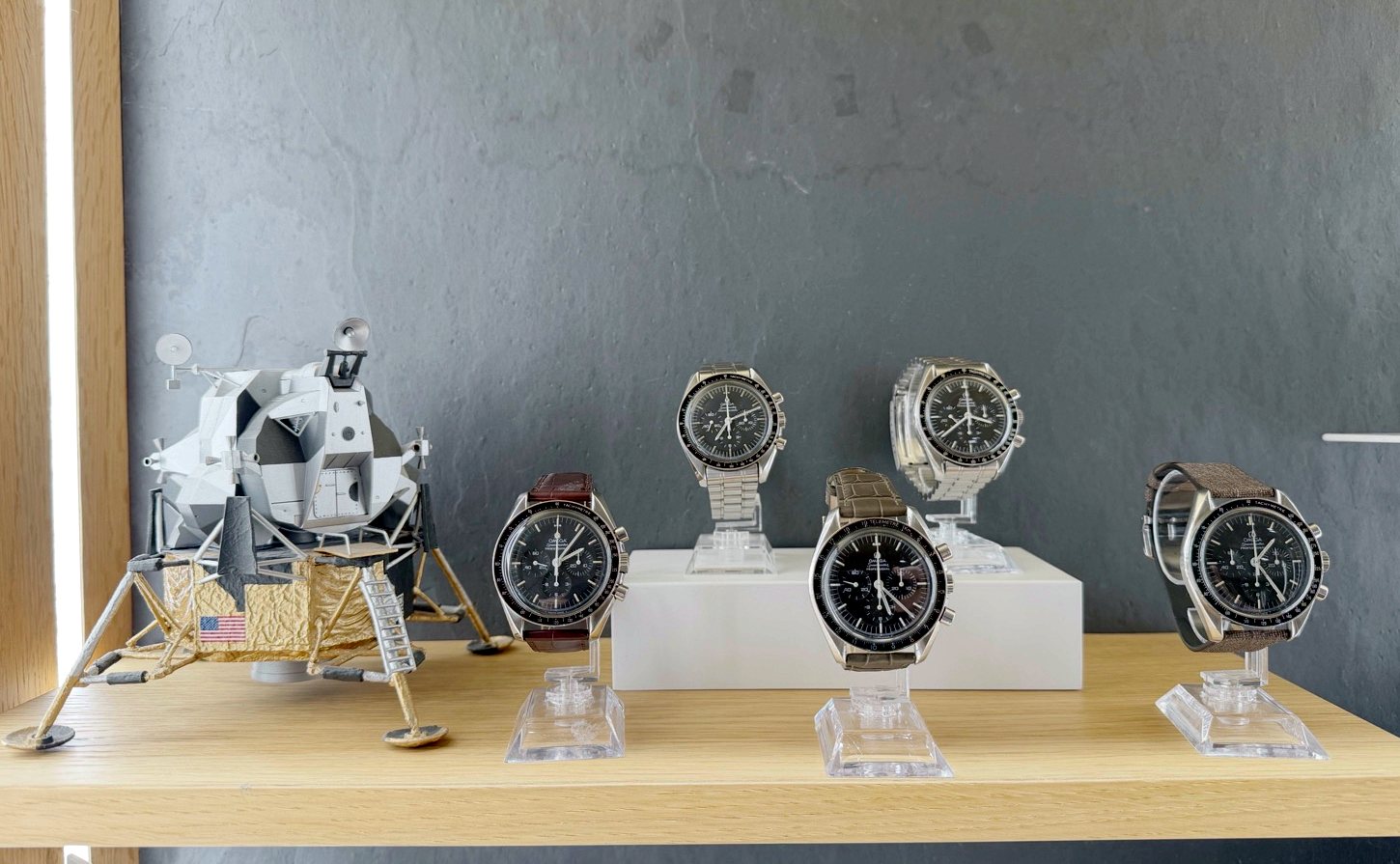
Artemis, Mars and the new frontier
With Artemis, space history enters a new sequence: the return to the Moon and the preparation of more distant missions. For watchmaking, this perspective is essential. It reminds us that the space watch does not only look towards the past. It also accompanies the imagination of future explorations.
In this logic, contemporary space horology is no longer built only around the mechanical chronograph. Ana-digi watches, mission functions, multiple displays, references to Mars or to space agencies extend the tradition without repeating it. From the Moonwatch to the X-33, then to contemporary watches linked to the CNES, the narrative shifts: from the Moon towards a broader culture of exploration.
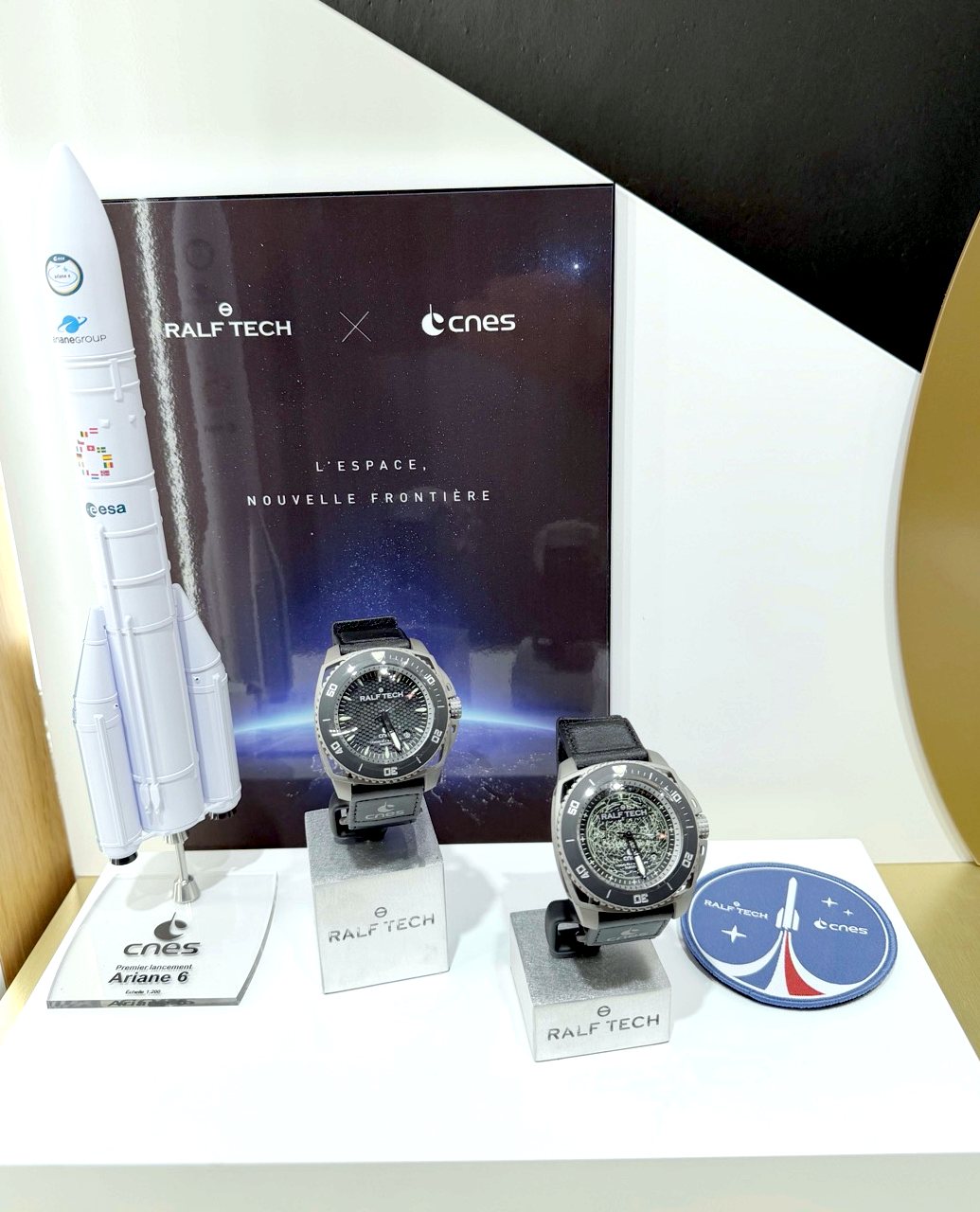
The contemporary French chapter: RALF TECH x CNES
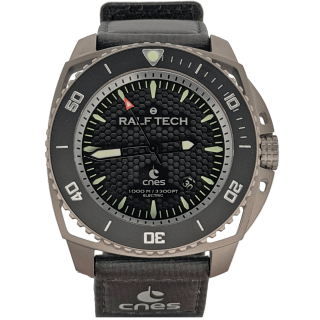
An article about the watches of space conquest cannot stop at historical narratives alone. With RALF TECH and the CNES, a contemporary French chapter opens. It is no longer only about collecting traces of the past, but about following the emergence of a new French mission-oriented watchmaking culture.
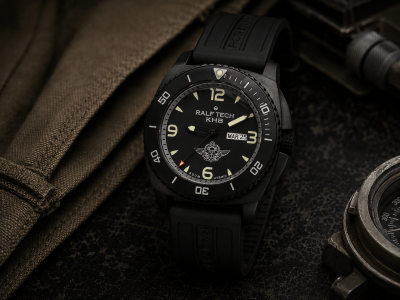
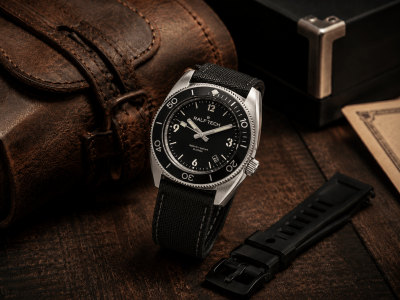
The presence of RALF TECH at Mostra strengthens this connection between instrumental watches, technical culture and space storytelling. The Mostra brand page notably presents RALF TECH models linked to the CNES universe, including the Ralf Tech WRX Electric Galaxy Millenium CNES and the WRX Space Millenium x CNES.
For Mostra, this chapter has particular resonance because it connects the boutique, the selection and the workshop. Space history is not only observed from a display window: it can also be accompanied, checked, maintained and followed over time.
At Mostra: space watches to keep an eye on
Mostra’s strength lies in not reducing space history to a single icon. Of course, the Speedmaster remains central. But around it orbit other fascinating families: Flightmaster, X-33, Poljot Sturmanskie, Yema Spationaute, RALF TECH x CNES, mission-related editions, commemorative pieces and sales archives.
Depending on arrivals, the Mostra selection can therefore cover several ways of collecting space. The mythical route with the Omega Speedmaster. The Soviet route with Poljot and Sturmanskie. The French route with Yema Spationaute. The contemporary route with RALF TECH and the CNES universe. The technical route with the Omega X-33 or watches designed for mission use.
To discover available models, the most relevant approach is to regularly consult the selection dedicated to pre-owned Omega Speedmaster watches, the RALF TECH page, as well as Mostra’s new arrivals in collector’s watches.
Why these watches still fascinate collectors
A space watch always tells two stories. The first is that of a mission, a programme, an achievement. The second is more intimate: it is the link between a person and an instrument, between a hand and a dial, between the unknown and the need to measure time.
Perhaps that is what makes these watches so moving. They are technical, of course. Collectible, obviously. But above all, they remain connected to a human adventure. Whether they were worn, designed, inspired by or simply associated with space, they concentrate a part of the dream that few mechanical objects can claim.
At Mostra, this emotion meets watchmaking rigour: checking, understanding, situating, telling and passing on. A space watch is not valuable only because of its price or its name. It is also valuable because of what it evokes, the history it carries and the way it still makes us look upwards.
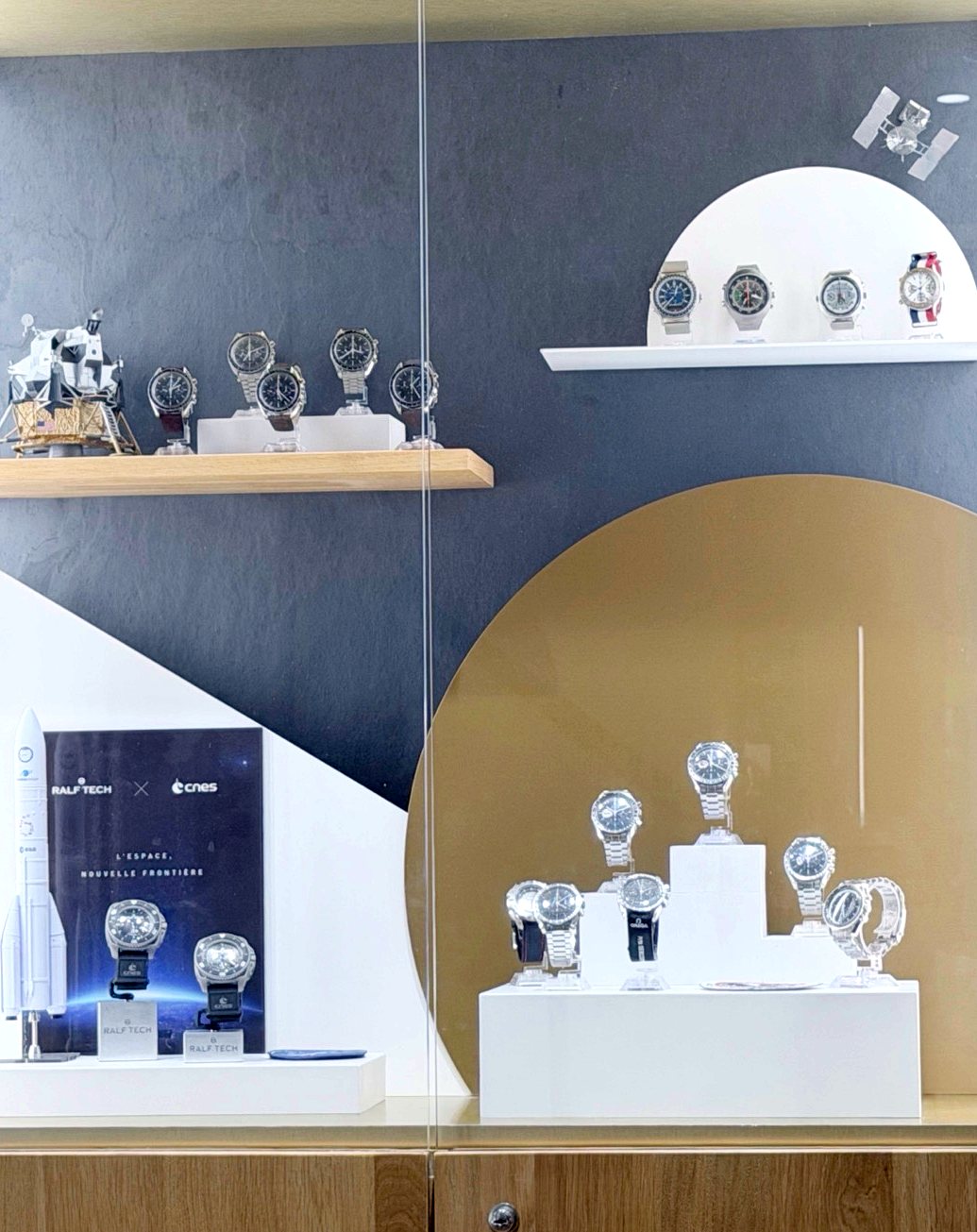
Mostra, watchmaking house in Aix-en-Provence
Located in the heart of Aix-en-Provence, Mostra brings together boutique, expertise and workshop around pre-owned collector’s watches. From the Speedmaster to the Yema Spationaute, from the Poljot Sturmanskie to RALF TECH, each piece is selected, authenticated, checked and supported by a genuine watchmaking eye.
To discover available watches or prepare your visit, you can browse the pre-owned Omega Speedmaster selection, the RALF TECH page or the page dedicated to the Mostra boutique in Aix-en-Provence.
Related products
Cosmonaute navitimer

cosmonaute navitimer tritium
heros union sovietique 1942

cosmonaute
Speedmaster 321 Pre Moon Right-Stuff

Speedmaster Mission Gemini 10

Speedmaster Gemini V Missions NASA

x-33 speedmaster fly to mars

Speedmaster Apollo 15 Full-set Anniversary Unworn

Speedmaster Apollo XI Cal 863 Copper first serie

Speedmaster Panda Apollo XI Dial
sturmanskie pilot navy cccp

spationaute 2 vol sts-51g cnes nasa

Spationaute III

resa

WRX Electric Space Millenium CNES
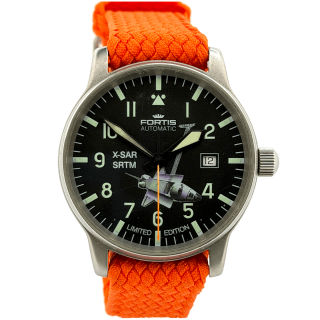
Flieger Astronaut ESA Nasa STS 99 Endeavour Mission STRM
accutron astronaut nasa

Speedmaster Apollo 14 NASA Missions Limited

Speedmaster NASA Missions Skylab 2

Share this content