Yema: the French watch brand that marked the 1970s with the Superman
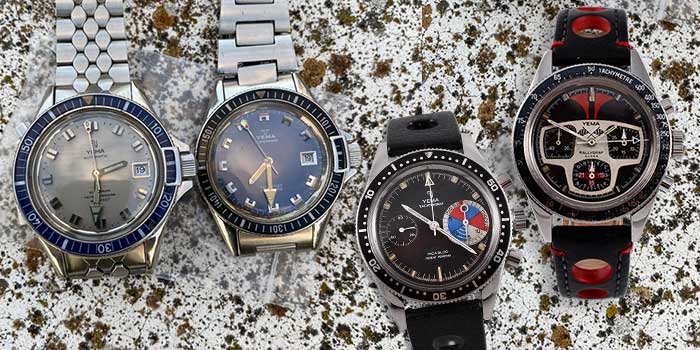
... but also with the Rallygraf, Yatchingraf or Astronaut
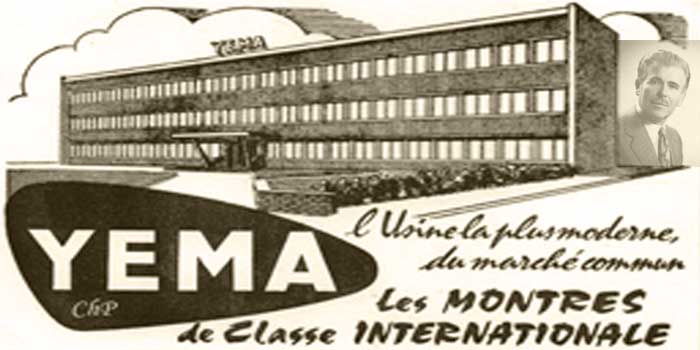
Yema is an iconic French watch brand that rose to prominence in the 1960s and 70s with professional-grade models like the Superman. Founded by Henri Blum, a watchmaker with a strong industrial vision, the brand made its mark in diving, aviation, motorsports, and even space exploration. This article retraces its rich legacy and lasting influence.
The origins of Yema: a founder with vision
Yema, the French watch brand that made its mark in the seventies with the Superman, holds a special place in the collective imagination of watch collectors. Today, Rolex dominates the professional watch segment with models like the Submariner, Explorer, or GMT-Master. But in the 1980s, Yema, the French contender, steadily claimed the territories abandoned by Swiss rivals weakened by the quartz crisis.
The story of a brand is often the mirror of its founder’s path. For Yema, that founder is Henri Blum—son and grandson of watchmakers, deeply rooted in the engineering mindset of his era. Graduating top of his class from watchmaking school in 1931 with a silver medal, Henri spent two years in the family business before joining elite tank units during his military service. He emerged a sergeant, having learned the importance of mechanical layout in confined spaces and the durability of components in operational systems.
From Lip to the launch of Yema
Armed with this insight, he joined Lip in 1935, where he mastered the production processes of watchmaking—scheduling, logistics, supply chains. By 1943, he became Head of Production and soon after, Technical Director. By 1946, he was leading both departments, gaining full control over the operations of a watch factory and its ecosystem.
A strong advocate of French manufacturing, he was intimately familiar with the Jura region's network of precision engineering, parts suppliers, and movement makers. This experience enabled him to launch Yema in 1948, at 3 rue Paul Bert in Besançon. Starting as a small workshop, the company quickly expanded into a full-fledged assembly factory in the 1950s.
Yema’s early success with industrial assembly
The company found success through a proto-industrial method called "établissage", which involved sourcing parts from various suppliers and assembling them in-house at the final stage. This strategy allowed Yema to produce high-quality watches that earned the trust of watchmakers and jewelers across France.
Growth and ambition: the birth of Usine Yema International
By 1961, Yema was producing over 300,000 watches annually. That same year, it inaugurated a new 2,400-square-meter assembly plant: Usine Yema International. With an assembly line on the first floor capable of producing 600 watches a day, the brand expanded its catalog to over 100 models—including its first technical and professional timepieces. The first of these was a dive watch.
The Superman and the golden era of Yema
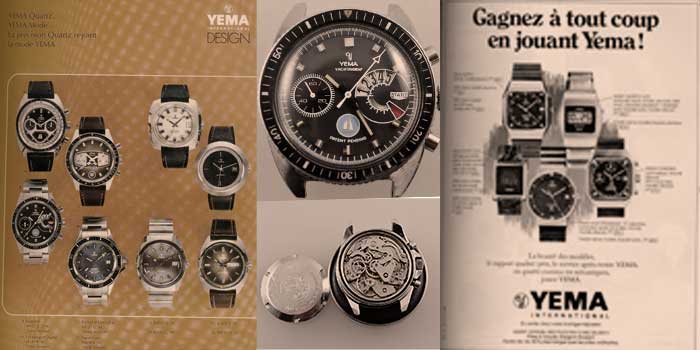
With the launch of the Yema Superman, the brand entered the legend. The French Air Force selected the model to equip its flight crews. The French Sailing Federation chose the Yatchingraf regatta chronograph as the official watch of the national team. It was worn by iconic sailors like Eric Tabarly and Florence Arthaud.
Yema expanded into motorsports with the Rallygraf chronograph, worn by Mario Andretti, and into aviation with the Flygraf. Even space was conquered: French astronaut Jean-Loup Chrétien wore a Yema Spationaute on his first mission, alongside Russian Sturmanskie chronographs.
In 1970, the brand sold over 500,000 watches. By 1977, it hit the one-million mark, and in 1982—when founder Henri Blum, now known as Henry-Louis Belmont, stepped down—Yema had doubled that figure.
The Matra years and a new direction
In 2008, Henry-John Belmont, Henri’s son, decided not to continue the family legacy. He sold Yema to the Matra group, likely under the influence of the then-Minister of Research and Technology, who was also a regional official in Franche-Comté. The aim: to create and lead a new entity called “Matra Horlogerie.”
However, the project was short-lived. After overseeing the merger with Jaz (watches and alarm clocks) and Jaeger’s automotive dashboard division, Belmont was eventually pushed out in 1986—marking the end of a remarkable chapter in French watchmaking history.
These products might interest you


Share this content