Selling your watch in Aix-en-Provence: valuation, trade-in and consignment sale
Looking to sell a watch in Aix-en-Provence? Mostra helps you understand the true condition of your timepiece, assess its value, choose between trade-in, valuation or consignment sale, and avoid the mistakes that can reduce its worth.
Would you like to sell a watch in Aix-en-Provence? Before requesting a valuation, it is useful to understand the true condition of the watch, the factors that influence its value and the different options available: selling it immediately, considering an intervention, requesting a more detailed appraisal or keeping the watch.
In this article
- Why do people sell a watch today?
- Valuation, appraisal and sale proposal: what is the difference?
- What Mostra examines before valuing a watch
- What really affects its value
- Should a watch be serviced before selling?
- How to prepare a valuation request
- Mistakes that can reduce its value
- How to offer a watch to Mostra
- FAQ

There are watches that are purchased methodically. And others that are sold with hesitation.
The watch you wish to part with is rarely a completely neutral object. It was chosen, worn, perhaps given as a gift or passed down, and is generally part of a personal story. It may have accompanied you every day, followed you through changes in your life, experienced regular use or spent many years resting in a drawer.
Selling it therefore rarely means simply disposing of an object. More often, it means clarifying a situation: finding out what it is worth, understanding what it has become, assessing its potential, and then deciding whether to sell it, have it serviced, pass it on or simply keep it.
In Aix-en-Provence, this question can be approached differently from an automated online valuation. A watch must be examined in the light, held in the hand and understood through its proportions, case, dial, movement and the traces left by its past life.
This is the perspective that Mostra offers owners who wish to prepare a sale, better understand their watch or determine whether a more detailed appraisal is required.
Would you like to offer your watch to Mostra?
Send us the initial information and photographs of your watch so that our team can review your request and recommend the most appropriate next step.
Why do people sell a watch today?
Some sales are first motivated by a desire for change. A watch has been loved and worn, but tastes evolve. Its owner may wish to move upmarket, reduce the size of a collection or refocus an assortment that has become too dispersed.
Other sales arise from circumstances: an inheritance, a need for liquidity, a watch that is less appreciated than others, a piece that was received but never truly chosen, or a family watch whose exact period, real interest and best method of preservation remain unknown.
Finally, there are decisions involving a genuine trade-off, where hesitation remains. Should the watch be sold now? Should the owner wait? Have it serviced? Keep it because its story is worth more than its market value? Or sell it because its current interest on the market is greater than its value sitting in a safe?

Valuation, appraisal and sale proposal: what is the difference?
These approaches are closely related, but they do not meet exactly the same need.
A valuation with a view to selling
A sale valuation aims to position the watch within its current market in order to consider a transaction. It takes into account its condition, configuration, desirability, history and real market conditions at the time of the request.
It may lead to a purchase proposal after the submitted information has been assessed and the watch has then been physically inspected. The Sell my watch page is the appropriate starting point when your objective is to offer your watch directly to Mostra.
A detailed watch appraisal
An appraisal serves a broader purpose. It aims to assess the authenticity, condition, component coherence and value of the watch. It may be useful before a sale, but also for insurance, inheritance, donation or collection management purposes.
When you require a detailed examination or a document confirming certain characteristics of the watch, consult our page dedicated to pre-owned watch appraisal.
Technical diagnosis
A technical diagnosis focuses more specifically on the operation of the watch. It helps determine whether servicing, repair or a targeted intervention is required. It does not have the same purpose as a commercial valuation or a heritage appraisal, although its findings may influence the decision to sell.
What Mostra examines before valuing a watch
The true value of a watch does not begin solely with its brand. It begins with its coherence.
The case and its proportions
Has the case retained its lines, edges and volume? Has it been polished with restraint or, conversely, softened to the point of losing part of its original geometry?
The dial and visible components
Does the dial still retain its texture, presence and visual balance? Is it part of the original configuration, a service dial or a more recent restoration? Are the hands, crown, bezel and crystal consistent with the model and its period?
The bracelet, clasp and accessories
Does the bracelet correspond to the reference? Is the clasp coherent? Are all the links present? Does the watch come with its box, papers, purchase invoice or previous servicing documents?
The movement and technical history
A watch must be understood as a complete ensemble. It may remain highly desirable with certain replaced components, provided that these changes are clear, coherent and properly disclosed.
Conversely, an overly simplified presentation may conceal interventions that significantly alter its collector value.
To explore this subject further, you can also read Pre-owned watches: understanding their true condition before buying.
What really affects the value of your watch?
The value of a watch never depends on a single element. It results from a combination of indicators that must be interpreted in relation to one another.
- its aesthetic and mechanical condition;
- the coherence of its configuration;
- the presence of the original box and papers;
- the purchase invoice and traceability of the watch;
- additional links and accessories;
- its servicing history;
- the legibility of references and serial numbers;
- the desirability of the dial;
- the coherence of the bracelet;
- the rarity of the model, series or production period;
- actual market demand at the time of the valuation.
The potential life of the watch after the sale must also be considered. A visually attractive watch requiring significant mechanical work will not be valued in the same way as a healthy, inspected watch that is ready to be worn.
Conversely, a serviced watch is not automatically more valuable if the intervention has altered components that contributed to its heritage interest.
Everything depends on the nature of the watch, its age, its intended use and the way it should be positioned: an everyday watch, a collector’s watch, a family watch or a piece its owner wishes to sell.
Should a watch be serviced before selling?
There is no universal answer.
Some watches benefit from being inspected and returned to working order before a sale. For others, an expensive intervention, replacement component or polishing operation may not be appropriate before the valuation.
The right decision notably depends on:
- the type of watch;
- its age and rarity;
- its mechanical condition;
- the cost of the intervention;
- the actual benefit expected from the sale;
- the risk of altering its historical configuration.
What matters is understanding what the workshop can contribute to the assessment of the watch.
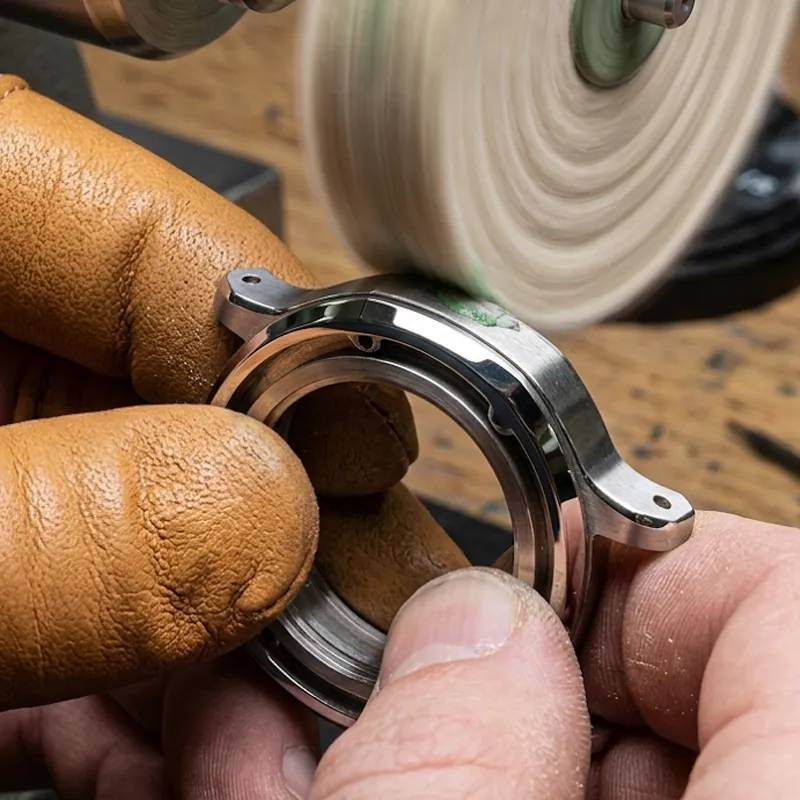
At Mostra, the watchmaking workshop in Aix-en-Provence can check its operation, perform a watch service, carry out a repair or work on the bracelet when justified.
The team can therefore explain what the watch is worth in its current condition and what an intervention would — or would not — change in terms of its coherence, appeal and sale potential.
How to prepare a valuation request
An initial assessment will be more useful when the information provided is complete and precise.
Before completing the form, gather the following items where possible:
- clear photographs of the dial and caseback;
- views of the case, crown, bracelet and clasp;
- the reference and serial number, when accessible;
- the available box and papers;
- the purchase invoice or any document establishing ownership and provenance;
- service invoices or reports;
- any links, bracelets, buckles or components that have been retained;
- an honest description of the watch’s current operation.
It is preferable not to clean the watch aggressively, polish it or dismantle it before this initial assessment. A rushed intervention may remove useful information or alter the value of the piece.
Mistakes that can reduce a watch’s value before sale
Trying to obtain a price too quickly
A valuation based on incomplete photographs, an imprecise memory or a listing read too quickly almost always produces a distorted picture. What is missing is not merely a price, but a fair analysis of the individual watch.
Trying to make the watch look artificially newer
Excessive polishing, an incoherent replacement bracelet, an unsuitable service component or an overly extensive restoration can damage precisely what made the watch interesting.
Overlooking documents and accessories
A box, papers, an invoice, an old quotation, a spare link, an original buckle or a bracelet kept in a drawer can all influence the understanding and value of the watch.
Overstating the watch’s history
A modest watch does not need to be overvalued to be interesting. An important watch does not need to be dramatised to be recognised. Serious work consists of describing the watch for what it is and distinguishing established facts from assumptions.
Are you unsure whether to sell, keep or service your watch?
Mostra helps you identify the most appropriate approach according to the watch’s true condition, market potential and heritage interest.
How to offer a watch to Mostra
The Sell my watch page allows you to provide the initial information required to assess your request.
- You provide the main details of the watch.
- You send photographs of the front and back.
- You specify its operating condition and the available accessories.
- You confirm that you are the legitimate owner of the watch.
- The team examines the submitted information and contacts you.
- If a proposal is considered, the watch then undergoes the necessary inspections before final confirmation.
If an agreement is reached, the arrangements for collecting the watch and issuing payment are organised with the seller.
This clarity is important. Selling a watch, particularly when it carries emotional or heritage value, requires method. A serious specialist does not seek to accelerate the process artificially: it makes each step understandable.
Why visiting the boutique can change the decision
Some watches can begin to be understood through photographs. Others only truly reveal themselves when examined in person.
This is as true when selling as it is when buying. A watch that initially appeared secondary may regain depth when held in the hand. A piece thought to be very simple may become more interesting once its coherence is understood. A family watch may appear in a different light when it is placed within its period, series, intended use or transmission context.
Mostra brings together the boutique, appraisal services and watchmaking workshop in one location. This continuity between the object, its condition, history, value and possible need for intervention gives the assessment greater depth than a simple figure communicated remotely.
Discover the Mostra boutique in Aix-en-Provence
Sell, pass on or keep: sometimes another choice is more appropriate
A serious assessment does not always lead immediately to a sale. Sometimes that is preferable.
A watch may have greater meaning as part of a family inheritance. Another may deserve to be inspected before being offered for sale. A third may be worth selling because demand is currently favourable. A fourth may be worth less for its market price than for the story it continues to carry.
The value of professional advice lies precisely in avoiding confusion between valuation and haste.
A proper valuation does not merely state how much a watch is worth. It also explains why, in what condition, according to which market logic and with which possible next steps.
Frequently asked questions about selling a watch in Aix-en-Provence
Can a watch be valued without its box and papers?
Yes. A watch can be assessed without its original presentation box or papers. Their presence may nevertheless improve its traceability, facilitate the assessment and influence its final value.
What is the difference between a valuation and an appraisal?
A valuation positions the watch in the context of a possible transaction. An appraisal is a more detailed examination of its authenticity, configuration, condition and value, sometimes accompanied by a specific document.
Does the watch need to be working perfectly before it can be offered?
No. A watch can be offered even if it is not operating correctly. It is nevertheless essential to describe its condition honestly so that the cost and nature of any required intervention can be taken into account.
Does servicing always increase a watch’s value?
No. It depends on the model, age, rarity, collector interest, cost of the intervention and the components that may need to be replaced.
Which documents should be prepared when selling a watch?
The purchase invoice or other proof of ownership, the watch papers, service documents and identification may be required depending on the stage of the transaction. These documents notably help confirm ownership and the lawful provenance of the watch.
Can I visit Mostra directly in Aix-en-Provence?
Yes. Mostra has a boutique at 3 Place Forbin, Cours Mirabeau, in Aix-en-Provence. It is preferable to send the available information first or contact the team so that the discussion can be prepared efficiently.
Mostra, helping you prepare the sale of your watch in Aix-en-Provence
Would you like to offer a watch, have a family piece assessed or understand whether an intervention is required before making a decision? Mostra assists you in Aix-en-Provence with a precise assessment of its condition, coherence and market potential.
Offer my watch Discover our appraisal service Plan my visit to Aix
Share this content