CWC: the history of Cabot Watch Company, supplier of British military watches
...Serving her Majesty!
Founded by Ray Mellor in the 1970s, Cabot Watch Company (CWC) became the official supplier of military watches to the British Armed Forces. Built on patriotic conviction and precision watchmaking, CWC replaced Rolex for the Royal Navy and created robust, mission-specific timepieces used in conflicts from the Falklands War to Desert Storm. Here’s a look back at this unique legacy in British military horology.
The origins of CWC: A patriotic mission
CWC, Serving the Kingdom… With the best watchmaking solution of all timepieces...
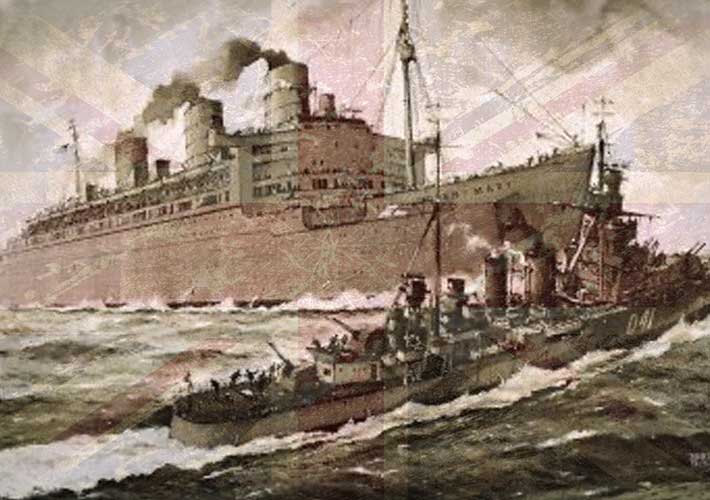
The desire to serve his country—England—is what led Ray Mellor to found the Cabot Watch & Clock Company in the mid-1970s. This ambition was born during World War II, when he served aboard HMS Queen Elizabeth, transporting American troops to Europe. The experience made him acutely aware of how critical time and logistics were in military operations.
Lessons from history and the inspiration of Cabot Tower
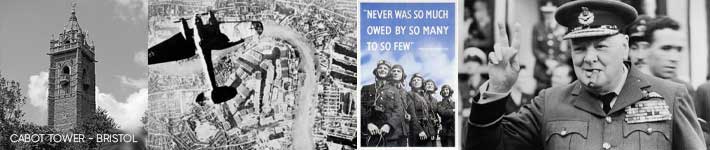
Winston Churchill’s famous quote "Act rather than endure" deeply resonated with Mellor. Cabot Tower, overlooking Bristol, symbolized bold action. Named after Giovanni Caboto—who opened England to transatlantic trade—it inspired Mellor to believe in individual impact on history. At the time, Mellor was running Hamilton UK and had secured key military contracts across the Commonwealth.
From Hamilton to CWC: Filling the gap
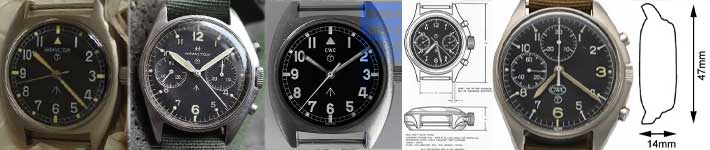
The quartz crisis forced Hamilton to abandon military tenders. Refusing to let the UK Armed Forces go unsupported, Mellor founded Cabot Watch & Clock Company. His goal: deliver professional-grade timepieces suited to each military branch, mission, and budget. CWC created mechanical, automatic, and quartz watches, each built for a specific function—“one mission, one watch.”
The Falklands War: A proving ground for CWC
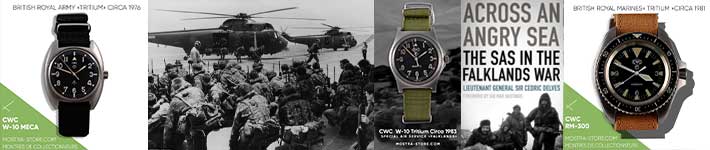
In 1982, the Falklands War confirmed CWC’s excellence. The brand supplied chronographs for the RAF, W-10 models for the Army and Navy, and specialized watches for elite units like the SAS and Pegasus Airborne. CWC also produced dive watches for the Royal Marines and instruments for submariners—including torpedo timers and dashboard clocks.
Replacing Rolex: The Royal Navy Diver RN300
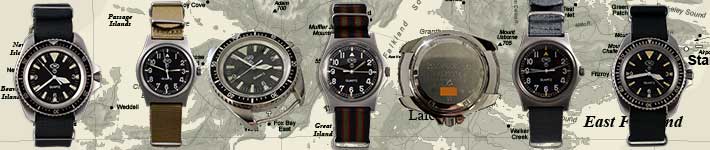
CWC achieved historic status when its RN300 diving watch replaced the Rolex Submariner Milsub in 1980. Adopted by Royal Navy divers and Marines, it was later issued to other Commonwealth nations. During Operation Desert Storm, CWC adapted again, offering new models while maintaining full operational reliability—becoming the last brand to supply issued wartime watches to the British military.
Legacy and limited editions
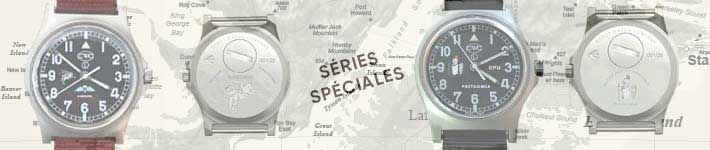
In 1980, CWC secured the Royal Navy contract for automatic dive watches, followed in 1983 by a quartz version issued until 2000. Built on the Monnin case design (famous from the Heuer 844), these models evolved through the years. Before the 2000s, Mellor sold the company due to illness, ensuring continuity and maintaining military supply lines. Even today, CWC produces elite-limited editions for the Close Protection Unit (CPU) and Pegasus Airborne Regiment.
Detailed history of CWC Royal Navy Diver models
1980: First production (Dodane)
- Small CWC logo, small circled “T”, no “Swiss” marking
- Acrylic bezel insert with luminous triangle
- Movement: ETA 2783 automatic
- Production: ~100 units
1981: M.R.P. production
- Enlarged logo, medium “T”, “Swiss Made” added
- Movement: ETA 2872
- Production: ~100 units
1982: Prototype redesign
- New oval CWC logo, large “T”, “Swiss Made”
- Very rare prototypes (only 3 known)
- Movement: ETA 2872
1983–1986: Transition to quartz
- “QUARTZ” added on dial
- Bezel: green luminous (1983), orange (1985–86)
- Movement: ETA 555.115 / 555.112
- Production: ~850 units across 3 years
1992: Updated movement
- Movement: ETA 955.122 quartz (7 jewels)
- Bezel: wider metal hash marks
- Production: 250–300 units
1994–2000: Final series
- Bezel: finer hash marks
- Annual production: 300–500 units
End of production and legacy
In the early 2000s, the RN Diver gave way to the SBS model, the new official issue for British forces. Navy-issued watches were retired and sold by the MOD. In total, around 3,000 CWC divers were produced between 1980 and 2000—leaving an enduring mark in military watchmaking history.
Related products


Share this content