The history of Hermès watches
On the wrist, a line of tawny leather, a boldly drawn case, and the measured stride of the Faubourg. At Hermès, time is not counted—it is tamed. One does not own it; one wears it, as one would wear a graceful gesture.
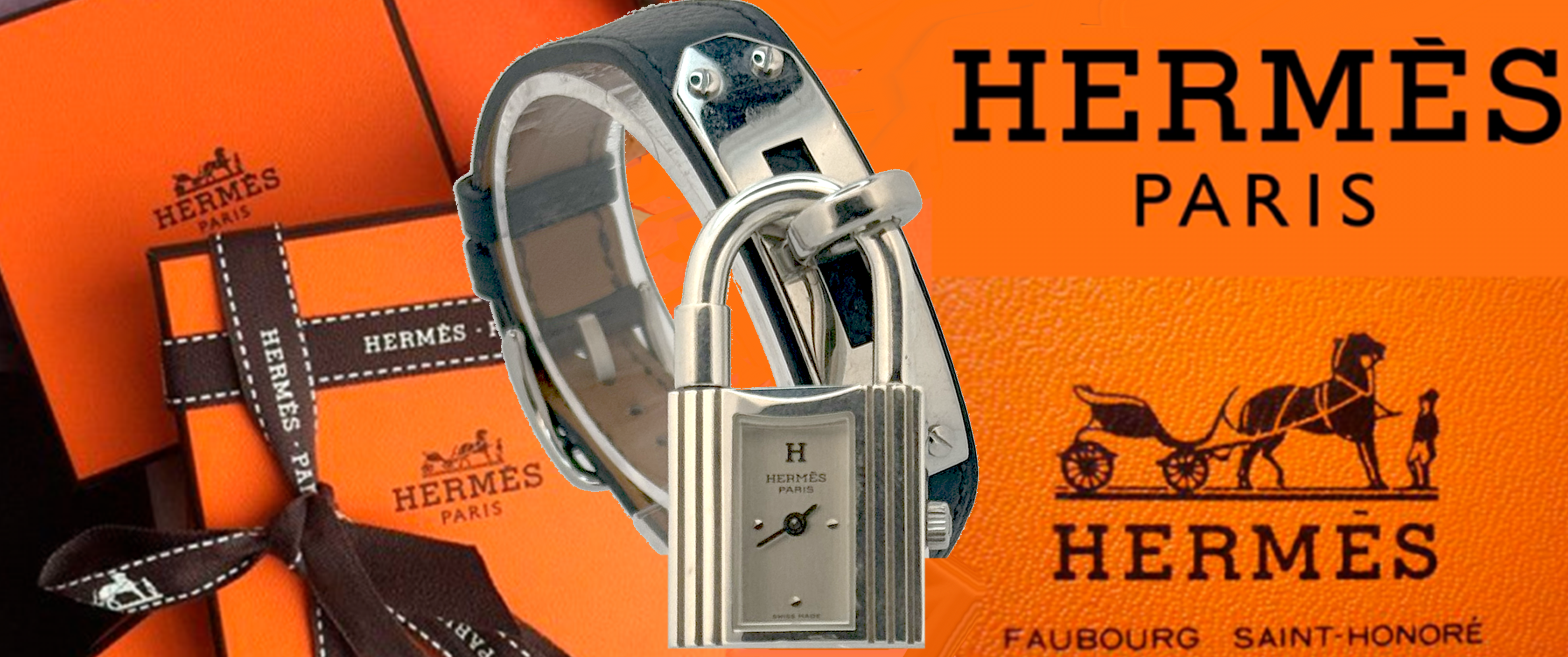
Since 1837, the house has cultivated craftsmanship and leatherwork. The founding image of 1912—Jacqueline Hermès wearing a leather “porte-oignon” that transformed a pocket watch into a wristwatch—set the tone: the watch was first and foremost an object of style and function. In 1928, the first Hermès-signed watch, the Ermeto, appeared at 24, Faubourg Saint-Honoré, sealing decades of collaborations with leading Swiss makers. These years also saw double-signed pieces with Universal Genève or Jaeger-LeCoultre, reflecting close ties between Paris and Switzerland. From 1975 to today: Kelly, the padlock on the wrist. Even before La Montre Hermès, the house reimagined the iconic clasp of the Kelly bag as a small padlock-watch: a jewelry piece turned wardrobe signature. The modern Kelly 2 perpetuates the idea, often mounted on a double tour strap. In 15 mm quartz, reference KT1.210 is one of the most recognizable on the vintage market, combining jewelry spirit, couture nod, and quartz practicality for carefree daily wear.
1978: La Montre Hermès and the Arceau, Henri d’Origny’s Perfect Line
In 1978, Hermès founded La Montre Hermès in Biel and entrusted Henri d’Origny with designing a round watch with stirrup-shaped lugs: the Arceau. Its asymmetrical silhouette reflects the house grammar: equestrian inspiration, finesse of line, and dial sobriety. Worn daily, Arceau suits the city—shirt, blazer, shoes—as much as a weekend in the countryside. Contemporary versions showcase poetic complications, even suspending time itself.
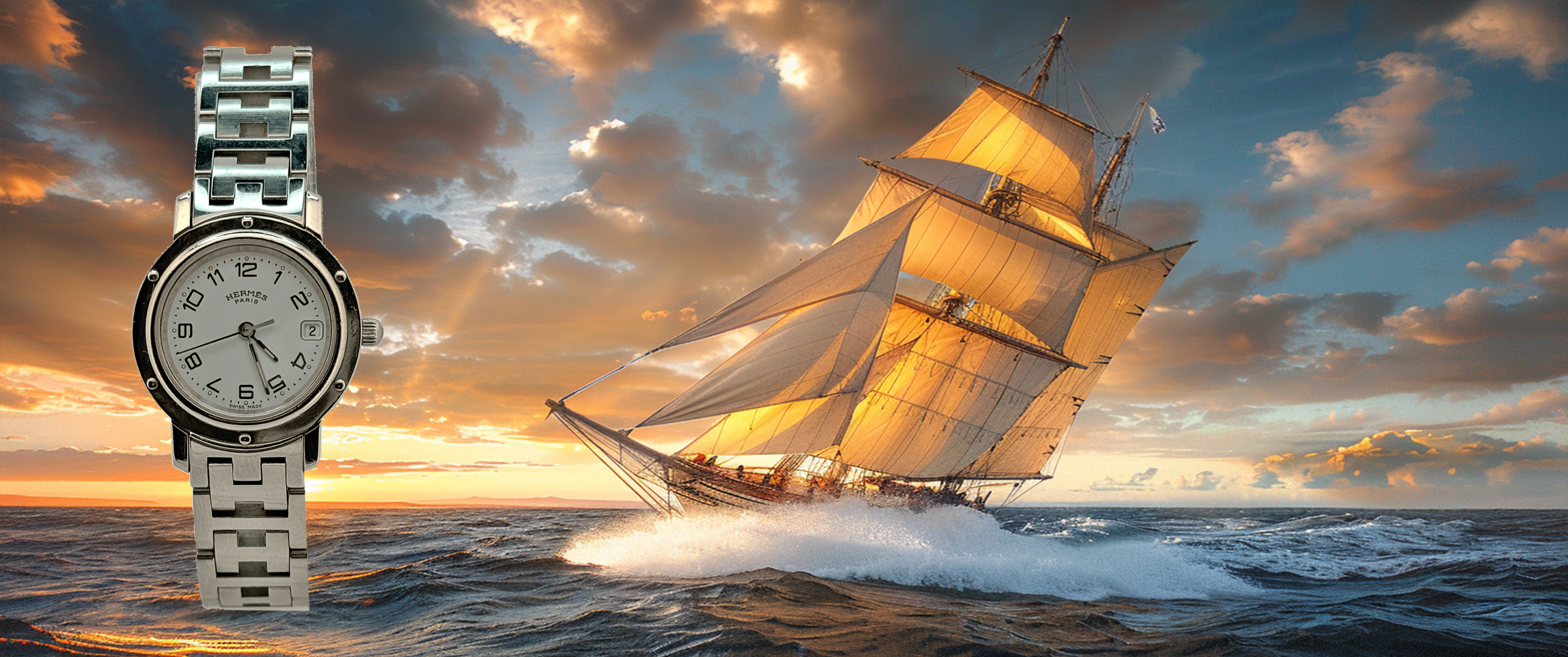
1981: Clipper, Nautical Spirit and Functional Roundness
In the early 1980s, the era dreamed of escape. Hermès responded with Clipper, named after the fast 19th-century sailing ships, with a round case and bezel inspired by a porthole. A chic sports watch, it could be worn on steel or rubber, by the sea or in the city. In 24 mm quartz, reference CL4.210 illustrates a safe feminine format—versatile, robust, and easy to slip under a trench sleeve.
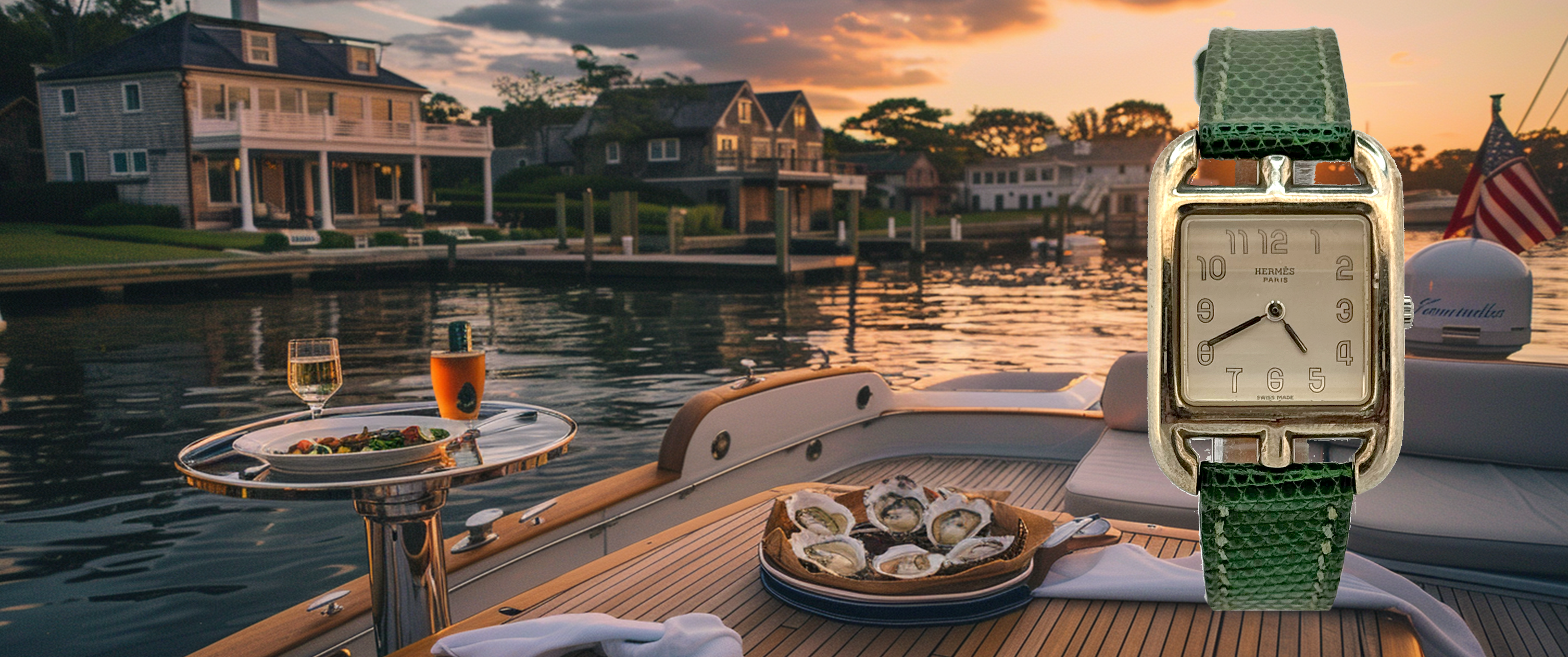
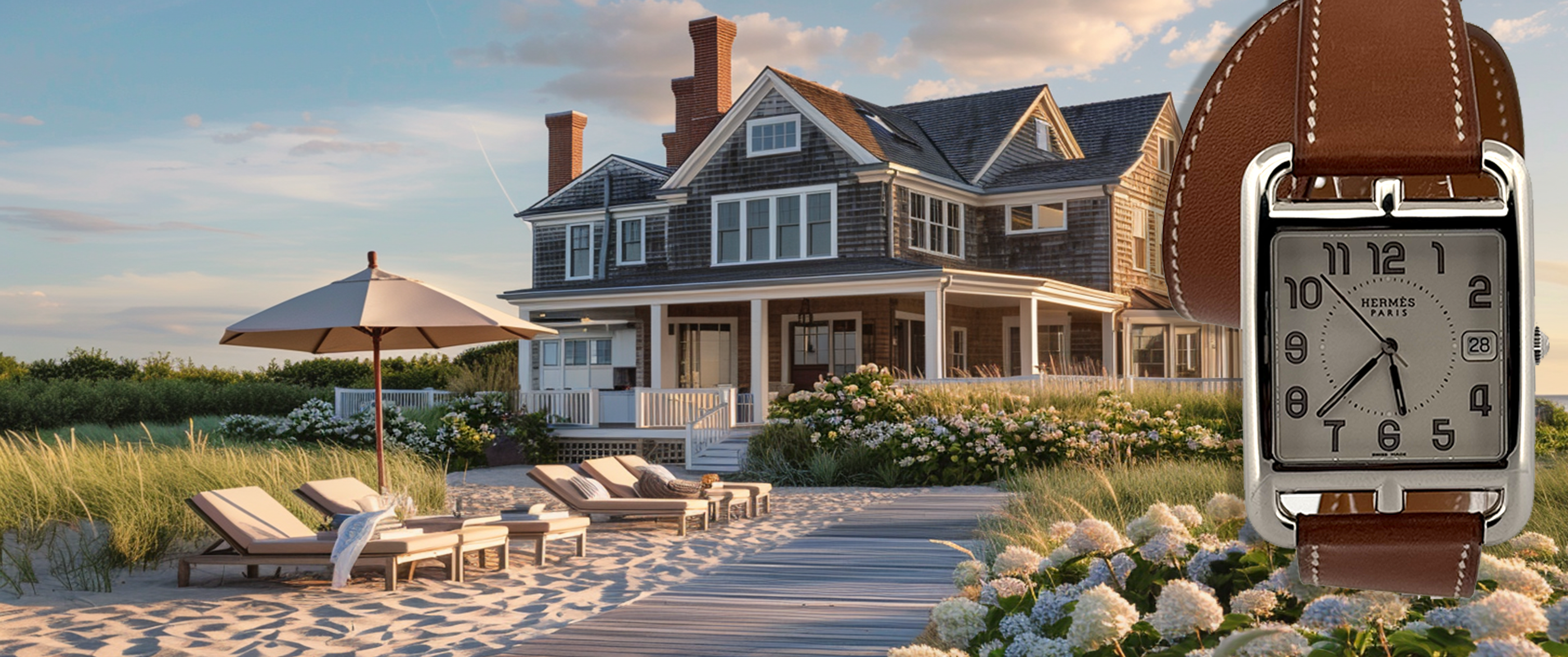
1991: Cape Cod, the “Square within the Rectangle” and the Invention of the Double Tour
Henri d’Origny imagined Cape Cod: a square inscribed in a rectangle, anchored in the Chaîne d’Ancre motif. Graphic and luminous, it is as much a design object as a functional jewel. In 1998, Martin Margiela created the famous “Double Tour” strap: leather wrapped twice around the wrist, an iconic gesture of natural Parisian chic. Cape Cod exists in several sizes, from the 23 mm “PM” to GM/TGM formats, and in many dial and interchangeable strap variations. Among common references, the CC1.210 in 23 mm quartz is a classic, easily recognizable and highly sought after on the pre-owned market.
1993: Médor, the Studded Secret
Médor translates the famous “clous de Paris” studded bracelet into a secret watch: a pyramid cabochon lifts to reveal the time. A piece of character, it transforms between bold jewelry and discreet timekeeper, perfect for a minimalist black silhouette or a chic rock look.
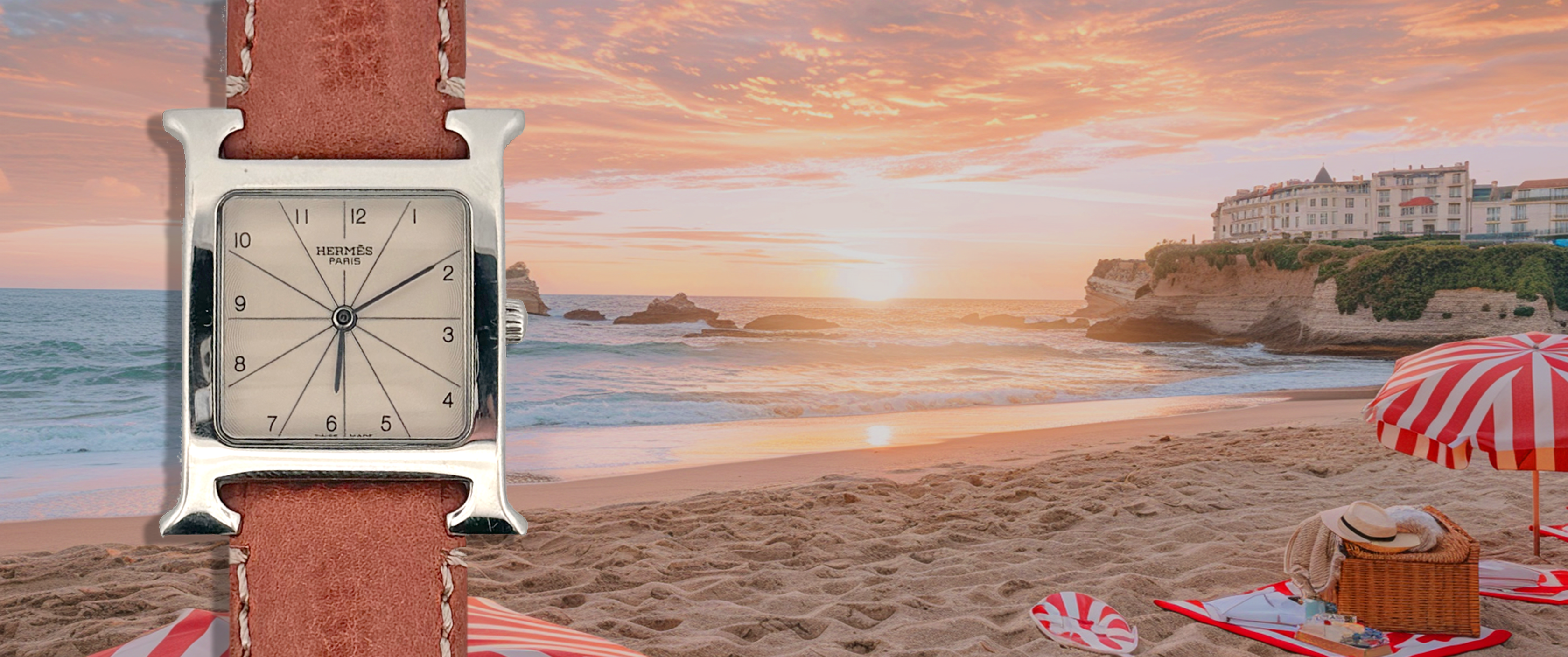
1996: Heure H, Framing Time
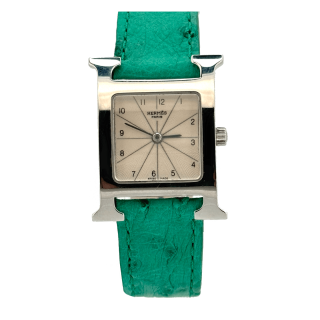
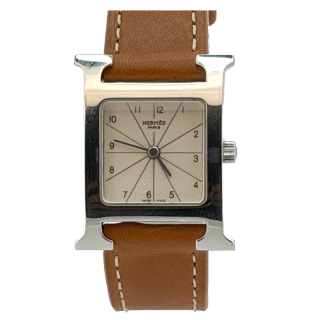
Philippe Mouquet designed Heure H: a totem-letter case, with the “H” itself becoming bezel and lugs. It is a strong graphic sign, easy to wear daily, welcoming colorful straps or the famous Double Tour. In 21 mm quartz, the HH1.210 is widely distributed; in its gold-plated version, one finds HH1.201. In life, Heure H suits both an office day and an evening dinner, thanks to its legibility and modern presence.
The 2000s: From Creation to Manufacture
From 2006 onwards, Hermès integrated vertically: a 25% stake in Vaucher Manufacture Fleurier for movements, then the acquisition of dial maker Natéber in 2012 and case maker Joseph Erard in 2013. In 2017, Les Ateliers d’Hermès Horloger opened in Le Noirmont. The house presented its first “H” calibres (H1837, H1912), then the ultra-thin H1950 micro-rotor for the Slim d’Hermès (2015), with typography specially designed. This shift transformed Hermès into a true manufacture, capable of combining design, métiers d’art, and Swiss technique.
2011–2019: Award-Winning Horological Poetry
Arceau Le Temps Suspendu (2011) offered to “put time in brackets”: at the press of a button, the hands leave real time for a waiting position, before returning exactly to the elapsed time—a poetic manifesto rewarded with major prizes. In 2019, Arceau L’Heure de la Lune reinvented moon phases with two wandering discs over northern and southern lunar globes, crowned at the GPHG in the Calendar & Astronomy category. These pieces affirm Hermès’ distinctive, sensitive, and narrative idea of time.
2015–2021: Slim d’Hermès and H08, Clear Lines and Sporty Style
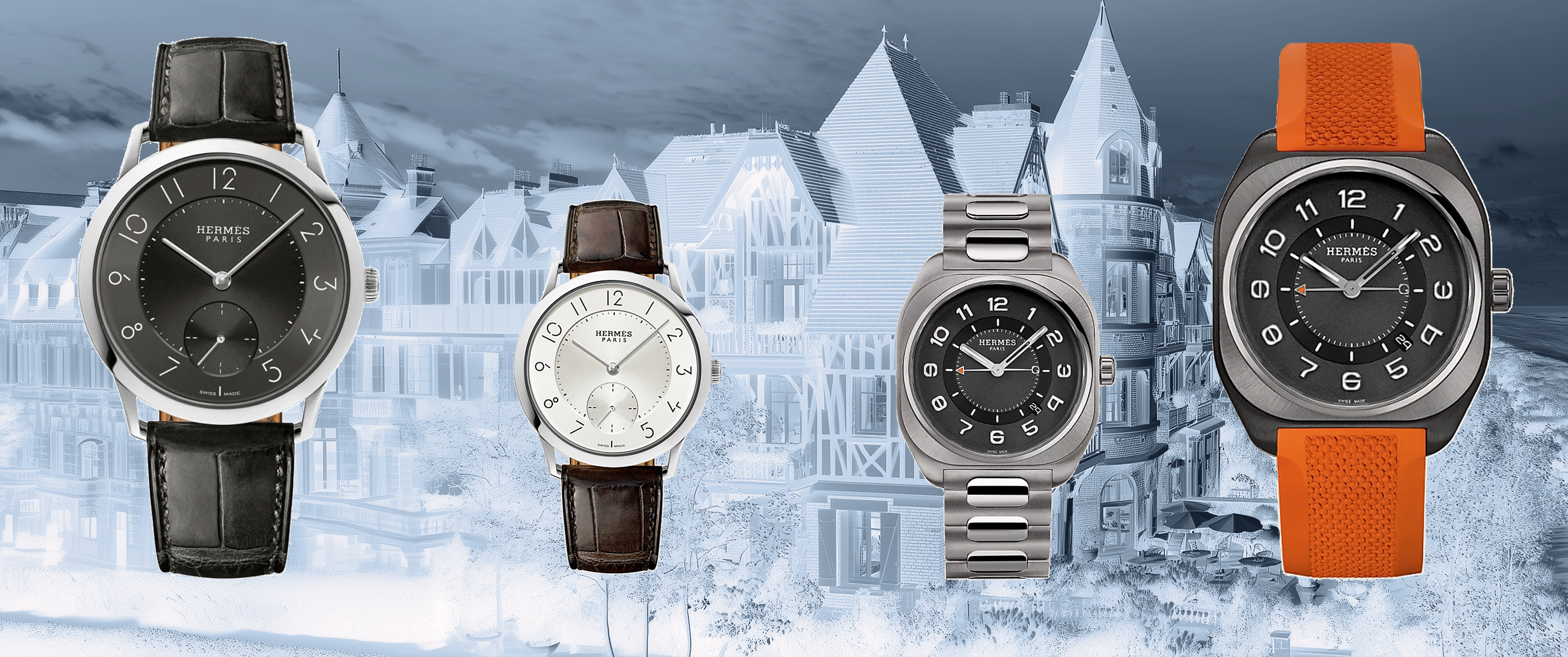
Slim d’Hermès, with its extra-thin case, airy dial, and dedicated typography, embodies clarity of line; its H1950 micro-rotor calibre delivers technical and everyday elegance—a lightweight suit on the wrist. In 2021, H08 offered a more sporty proposition, with taut volumes and contemporary materials, ideal for an active urban wardrobe, from morning cycling to evening meetings. These collections, like the complication-rich Arceau models, illustrate the maturity of a watchmaker that has become an editor of shapes and sensations.
Iconic References and Sizes (Pre-Owned Market)
Clipper CL4.210: 24 mm, quartz, steel, porthole-style bezel, reliable and affordable feminine piece, widely found on the vintage market. Kelly 2 KT1.210: 15 mm padlock, quartz, often on double tour strap, an iconic jewelry-watch. Cape Cod CC1.210: 23 mm “PM”, quartz, square-rectangle case, often seen in Double Tour version. Heure H HH1.210: 21 mm steel, quartz, white readable dial; HH1.201: gold-plated version. These references, easy to document, streamline authentication and the search for pieces/straps, while framing wrist-size expectations.
Uses, Style, and Clientele
A Hermès watch is chosen like a glove: for its cut, material, and fit. Arceau for formal sobriety—cashmere cape and fine soles; Hermès Cape Cod for modularity—switch straps, play with color, move from single to Double Tour between office and dinner; Clipper for nautical chic and daily wear; Heure H for the graphic sign that completes a minimalist outfit; Kelly and Médor for a jewelry dimension, in the lineage of the house’s bags and bracelets. Quartz suits fast-paced lives that dislike time-setting or winding; in-house calibres H1837/H1912/H1950 provide the smoothness of mechanical movement for lovers of fine Swiss craft.
Why These Watches Are So Successful on the Pre-Owned Market
The Hermès promise lies in the consistency of its lines and the quality of its leathers. On the market, the most sought-after models combine strong identity with immediate wearing comfort. The emblematic references above ensure excellent legibility, easy servicing (common quartz movements or maintained manufacture calibres), and wide strap compatibility: the guarantee of refreshing the watch’s style with the seasons, just like renewing one’s leather goods.
These products might interest you
Cape Cod Orange Strap

Cape Cod Silver Small Size

Cap Cod Big Size Stainless Steel

Premiere CC21893

Clipper Steel H Strap

Kelly II Double Tour Brown Havana Strap

Cape Cod Automatic Date big Size
Heure H White Sun dial
Heure H Black Dial Star

Heure H Cream Sunny Dial
Nantucket Lady Blue strap

Nantucket Lady Watch white Dial

Share this content