TAG Heuer history: innovation & performance since 1860
Edouard Heuer's watchmaking challenge
Since 1860, TAG Heuer has been a pioneer in watchmaking, blending innovation and performance. From the invention of the crown-winder to the Mikrograph and the Autavia, the brand has constantly redefined precision in sports timing and luxury horology.
Edouard Heuer: From a bold idea to horological revolution
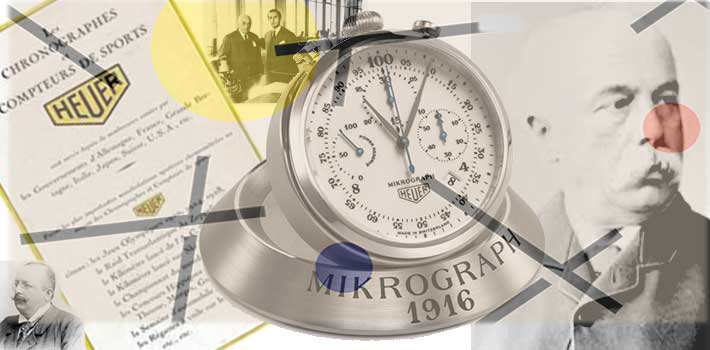
It was initially a challenge that prompted Edouard Heuer, a mechanics enthusiast from the Jura, to create his watchmaking business in 1860. At that time, all watches were wound using a key. The emergence of the automobile and industrialization made him aware of the importance of integrating the winding mechanism as an inseparable part of the watch.
Like an engine replacing horsepower in a vehicle, the goal was to optimize the whole system for greater efficiency. Less than ten years later, after moving his company to Biel to be closer to the Swiss watchmaking ecosystem, he patented a watch with an autonomous crown winder.
Always pursuing perfection, he became the first to industrialize chronograph production, which laid the foundation for the brand’s focus on performance measurement and innovation. This led to major patents such as the first waterproof case and the oscillating pinion—still the basis of all modern chronographs.
A family legacy and relentless pursuit of precision
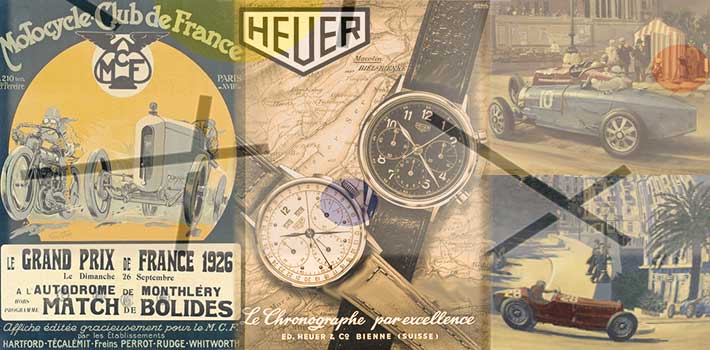
With a strong family presence, Heuer’s two sons, Jules-Edouard and Charles-Auguste, took over the company in 1892. By then, a subsidiary had already been established in England since 1876. A new era of precision and industrial progress followed.
This period saw the development of the Mikrograph—the world’s first mechanical counter capable of measuring 1/100th of a second. Heuer then became the official supplier of the Olympic Games, a role it held uninterrupted until 1969, when Mikrograph production ended.
In 1911, Heuer introduced the “Time of Trip,” the first on-board chronograph for cars and airplanes. It was widely adopted by British forces during the Great War. By 1914, Heuer launched its first chronograph designed to be worn on the wrist.
Scaling up: From the workshop to the world
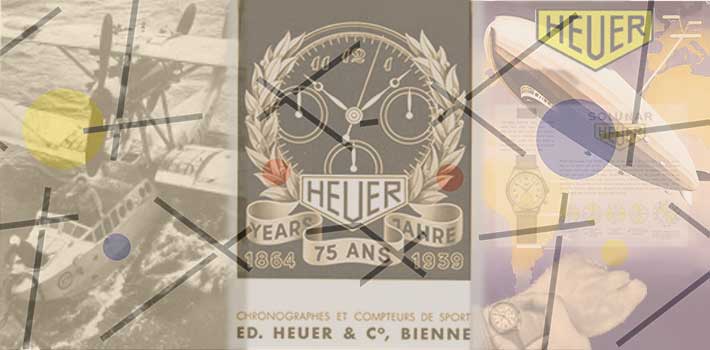
Alongside this watchmaking expertise, the firm leveraged its Taylorist approach to develop industrial-scale production. In the early 1930s, this allowed Heuer to mass-produce watches for the booming automotive and aviation industries.
In 1933, the iconic Autavia was born—short for AUTomobile and AVIAtion. This versatile counter, exported worldwide, was the first on-board instrument suitable for a car, airplane, or airship. It was often paired with a master clock offering an eight-day power reserve: the Hervue.
This era marked a turning point in Heuer’s international expansion, setting the stage for post-WWII growth and for competing directly with Rolex in the technical and luxury watch market.
These products might interest you





Share this content