Claudie Haigneré & Breitling Aerospace: the first French woman in Space
...The first French astronaut in space
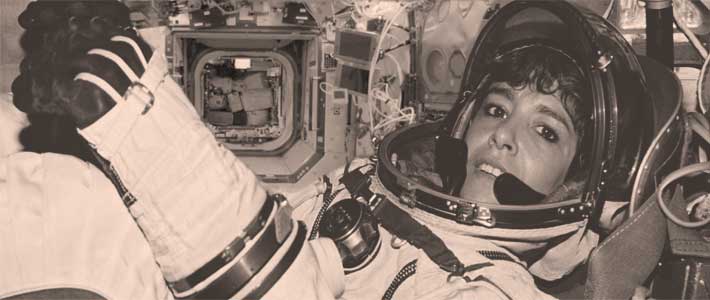
In 1996, Claudie Haigneré became the first French woman in space during the Cassiopée mission aboard MIR, accompanied by a Breitling Aerospace watch specially designed for the occasion. This article explores her exceptional journey, the historical significance of the mission, and the iconic timepieces associated with it — including the Breitling Aerospace and the Poljot Sturmanskie worn by Soviet cosmonauts.
Claudie Haigneré: the first Frenchwoman in space
Claudie Haigneré… Breitling Aerospace, Cassiopée mission, the first Frenchwoman in space aboard the MIR station.
"At the origin of a feat, there is inspiration and enormous preparation" — these are the words with which Claudie Haigneré concluded her inspiring address to the SFR Business Team in the 2010s, marking the start of the company’s transformation journey.
On August 17, 1996, after 11 years of rigorous selection, Claudie Haigneré (née Claudie André-Deshays) took off aboard the Soyuz TM-24 for the historic Franco-Russian Cassiopée mission. Over the course of 16 days, she conducted scientific experiments on board the MIR orbital station alongside Russian cosmonauts Yuri Onufrienko and Yuri Usachov — paving the way for future Mars missions. She became a national icon and a role model for women entering aerospace and military careers.

From MIR to the ISS: a career full of milestones
This mission marked the start of a remarkable public and scientific career. Claudie flew again on the Andromède mission on October 21, 2001, staying aboard the International Space Station (ISS). Her résumé is extraordinary: baccalaureate at age 15, rheumatologist specialized in aviation medicine, PhD in neuroscience, ESA astronaut, government minister, and head of Universcience (the union of the Cité des Sciences and Palais de la Découverte).
The origin of the Breitling Aerospace Mission Cassiopée
In 1995, at the Paris Air Show, Breitling’s CEO Ernest Schneider was approached by journalists Stefan Ciejka and Thierry Serna about the future of the Cosmonaute Navitimer range. They also drew attention to the upcoming Cassiopée mission. This led to a reflection: if tasks in space are gender-neutral, shouldn't the watch be the same for men and women?
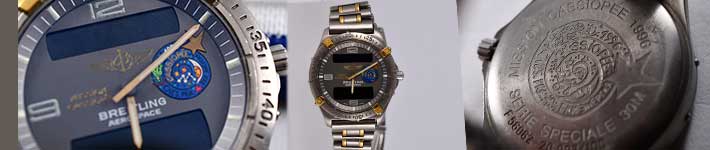
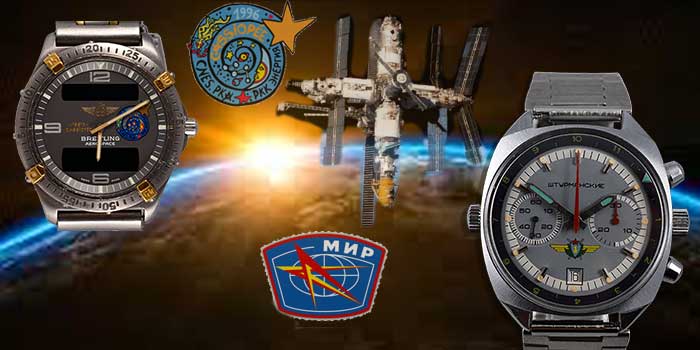
This reflection birthed the idea of a unisex mission watch — the Breitling Aerospace Cassiopée Edition — produced in a limited run of 100 pieces, featuring the mission logo on the dial and unique serial markings on the case back.

The Breitling Aerospace Cassiopée: technical overview
This limited-edition timepiece offers dual digital and analog display within a 40 mm case and two-tone satin-brushed titanium bracelet. It is powered by a Quartz Caliber 56 movement that offers multiple functions: chronograph, 24-hour countdown, GMT, alarm with buzzer, and a date display — all accessible via a rotating crown.
Movement and features
Based on the ETA 998.332, the movement was manufactured exclusively for Breitling and later evolved into the COSC-certified B65 Superquartz. The Aerospace Cassiopée features a unidirectional rotating bezel, anti-reflective sapphire crystal, Luminova-coated hands and markers, and an adjustable folding clasp designed for wear over or under a flight suit.
The alternative: Poljot Sturmanskie Flyback Chronograph
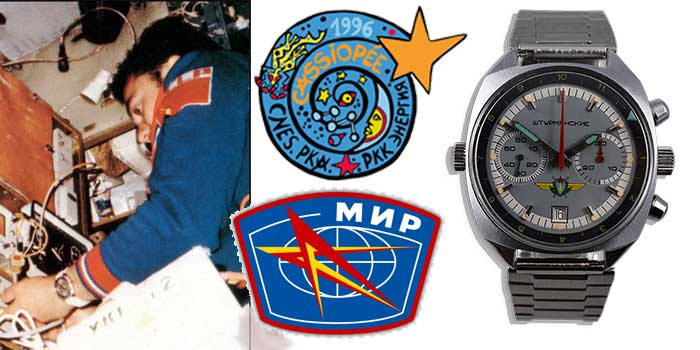
Russian cosmonauts on board MIR traditionally wore the Poljot Sturmanskie — a robust analog chronograph. Powered by the Caliber 31659 (17 jewels), it featured flyback functionality, a small seconds sub-dial, and operated at 18,000 vph. It came in a 38 mm steel case with a winding crown on the right and a rotating internal bezel crown on the left.
Durability and design
The watch’s internal bezel (indexed in 12-hour intervals) was protected by a domed plexiglass crystal, ensuring it wouldn’t damage pressurized suits. The watch included luminous triangular markers and optimal contrast sub-dials, aiding legibility during missions.
Details and legacy
The right sub-dial tracks 30-minute intervals, featuring alternating white and grey segments. The left sub-dial is indexed over 60 seconds, with a white railroad-style minute track. Main hour markers are baton-style, tritium-lumed, and complemented by a red seconds hand. At six o’clock lies a date window beneath the Soviet Air Force insignia.
The caseback bears official military issue markings. Due to the extensive time Russian cosmonauts spent in orbit, the Poljot Sturmanskie holds the distinction of being the most-used space watch to date.
Share this content