Rolex Sea-Dweller: the ultimate professional dive watch
...a tool at the service of deep-sea divers
The Ultimate Diving Watch, from History to Innovation
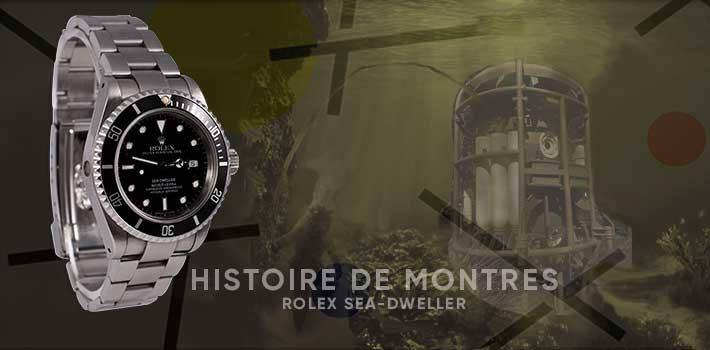
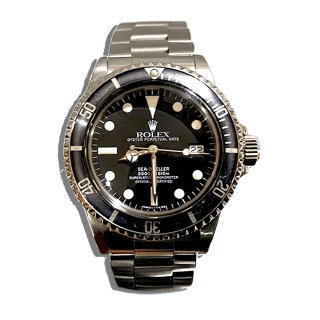
The Rolex Sea-Dweller is one of the most iconic diving watches ever made. Designed for the most extreme underwater conditions, it became a reference for both military units and deep-sea explorers. This article traces the history of underwater exploration and how Rolex rose to the challenge with the invention of the helium escape valve.
From Ancient Divers to Submarine Frontiers
It is in Antiquity that the first known underwater works date back: research by snorkelers to recover valuables from wrecks (the initiative of which is attributed to King Xerxes) or the refloating of ships and the construction of port works by the divers of Alexander the Great equipped with diving bells. These forays into the seabed forged the legend and the mystery that still surround diving today.
A hostile and mysterious world
A mysterious world, for some disturbing, whose depths remain one of the last frontiers resistant to man. Only technical progress can push back this boundary: man is not in his element, and over time, only innovation has allowed him to explore this realm — so close yet so difficult to conquer.
The 20th Century: Revolution in Diving Technology
The twentieth century brought a leap forward: in 1945, following the Panerai-equipped combat swimmers of Prince Valerio Borghese during WWII, Air Liquide founded Spirotechnique and launched the CG-45 prototype (Cousteau-Gagnan). In the 1950s, Georges Beuchat created the first isothermal diving suit. In 1955, Frenchmen Jean Bronnec and Raymond Gauthier filed a patent for a two-stage regulator named Cristal, marketed in 1957 by U.S. Divers, a subsidiary of Air Liquide.
Beyond 60 Meters: Technical Barriers
But the intoxication of the depths experienced by many compressed air divers and frequent equipment malfunctions due to extreme pressure began to limit progress and underwater operations.
Diving Watches Face Their Limits
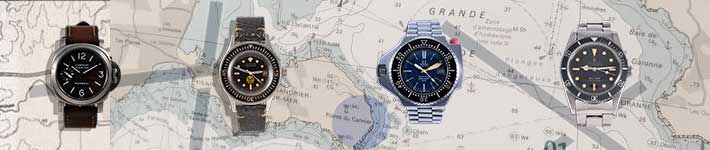
At that time, watchmakers offered various diving tools: Panerai with the Luminor, Blancpain and its Fifty-Fathoms, Rolex and the Submariner. But when trying to go deeper — beyond 1000 ft or 300 meters — manufacturers had to reinforce cases, improve crown seals, and use monobloc cases like Omega's Seamaster 600 PloProf used by Comex divers.
The Helium Problem
With the use of helium-based gas mixtures in bathyscaphes, even the best waterproofing reached its limit. Helium molecules were so small they could penetrate traditional diver watches like the Submariner. During decompression, pressure imbalance could cause the crystal to pop off. Once again, reinvention was required.
The Invention of the Helium Escape Valve
Doxa and Rolex began working — almost simultaneously — on a technical solution. Rolex developed a spring-loaded, one-way valve that would open automatically once the internal case pressure exceeded three bars, allowing the expanded gas to escape without compromising waterproofness. This breakthrough gave birth to the Rolex Sea-Dweller.
1967: The Sea-Dweller is Born
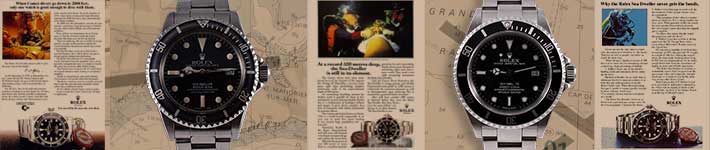
Published in the 1967 Rolex catalog, the Sea-Dweller was introduced as a revolutionary professional tool. After delays due to valve refinement, it was finally released in 1971. With its helium escape valve and extreme depth resistance, it quickly became essential for Comex divers and military forces.
A Professional's Favorite
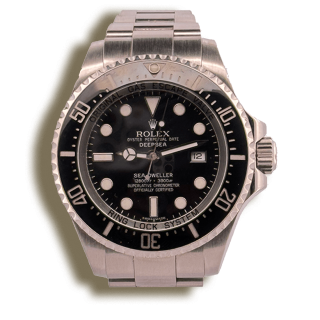
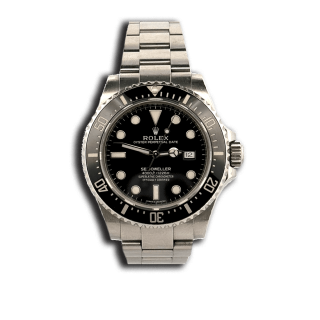
Having earned its "best of the pack" reputation, the Sea-Dweller contributed to countless deep-sea missions. From the original 1665 model waterproof to 2000 ft (610 m), to the modern Deepsea reference 116660 rated to 12,800 ft, the Sea-Dweller remains a must-have for aquatic professionals.
The Valve's Evolution Over the Years
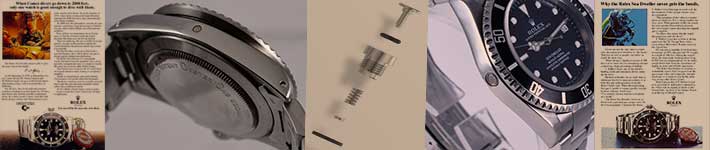
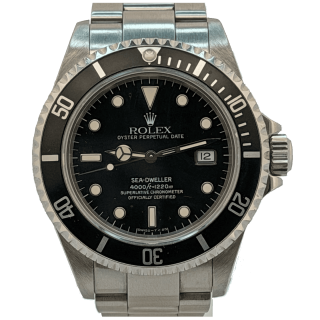
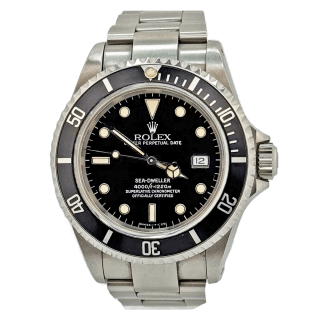
In its early version on the Sea-Dweller 1665, the valve resembled a small pinhead. A circular engraving on the caseback read "Rolex Patented Oyster Gas Escape Valve". In 1980, with the release of the Sea-Dweller 16660 — nicknamed the “triple six” — the valve was upgraded to a type 2: larger, more reliable, easier to service, and requiring less effort to replace its gaskets. This architecture still powers current models like the 12660 and the Deepsea 116660.
James Cameron & the Deepsea Challenger
A remarkable and evocative nickname, “James Cameron,” was given to one specific Deepsea model that accompanied the filmmaker on his 2012 solo dive aboard the Deepsea Challenger submarine. On March 26, 2012, he reached 10,898 meters below sea level — setting the record for the deepest solo dive in history, with a Rolex Deepsea on board.
Related products

Share this content