Omega: the history of an iconic watch brand
....History of the Swiss brand that walked on the Moon
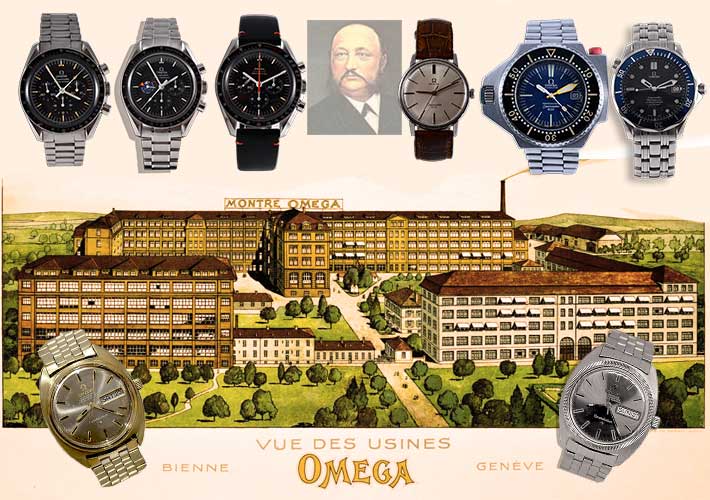
From its beginnings in 1848 as a small workshop to becoming one of the most iconic Swiss watch brands, Omega has marked the history of watchmaking with groundbreaking innovations, legendary models like the Speedmaster and Seamaster, and a pioneering spirit that continues to shine in both professional and luxury markets.
From a Small Workshop to a Prestigious Manufacture
In 1848, at the age of 23, Louis Brandt founded a modest establishment counter which, in 1880—after the founder's death—became a factory established in Bienne. In 1894, the brand made a breakthrough with the design and production of a completely new movement for the time: the Omega caliber. Run by Louis's sons, César and Louis-Paul, the company adopted the Omega name, which would become its emblem.
This remarkable movement’s success came from its ability to reset the hands via the winding stem, a method that became a standard in watchmaking. Its design, with interchangeable components, was a major step toward the Taylorization of the watch industry.
The Shift to Wristwatches and Early Expansion
Firmly established among the great names in watchmaking, Omega underwent a significant transformation during the First World War with the rise of the wristwatch. This trend gradually shifted production from pocket watches to wristwatches—a change further fueled by the miniaturization of movements and evolving gender roles after the war. Women, too, began to adopt this timepiece, making it a universal accessory.
Omega in the Early 20th Century
With the boom of automobiles, railways, and aviation, Omega became a key player in professional applications. The brand, a pioneer with numerous patents, produced station clocks, table clocks, and a wide range of time-measuring instruments. These products helped spread Omega’s name in an increasingly globalized world.
The 1929 Crisis and the SSIH Formation
The Great Depression pushed the Swiss watch industry toward consolidation. Omega, together with Tissot and movement maker Lémania, formed the SSIH (Swiss Society for the Watch Industry), creating one of the largest watch groups of the first half of the 20th century.
World War II and Post-War Growth
During World War II, Omega supplied over a million military watches to the Allied forces, alongside brands like Longines, Hamilton, Waltham, and Benrus. These timepieces served pilots, infantrymen, and sailors.
After the war, Omega embarked on an ambitious expansion plan to meet the soaring demand of the 1950s. Iconic models were born during this era: the Omega Seamaster, an evolution of the DeVille, targeted professional and underwater use, while the Constellation catered to the growing class of international travelers. But the most legendary release came in 1957: the Omega Speedmaster, destined to accompany Neil Armstrong to the Moon just 12 years later.
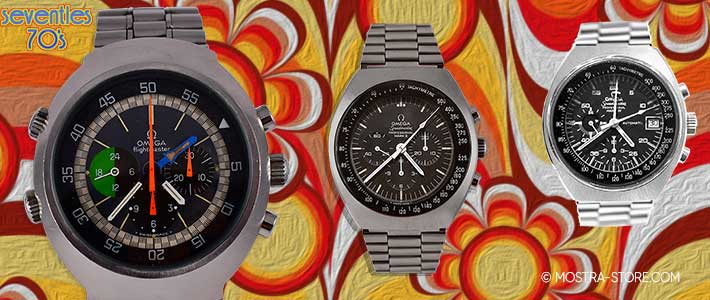
Omega Flightmaster Speedmaster MK II Speedmaster Mark 4
The Quartz Crisis and Structural Changes
In 1970, the quartz revolution—led by Japanese watchmakers—reshaped the industry. Omega responded by modernizing its classics, such as the Speedmaster Mark II, a reinterpretation of the Moonwatch with a bold, 1970s-inspired case. This professional-grade model offered various bezels for specific uses in health, sport, industry, and outdoor sectors.
Building the World’s Leading Watch Group
Under Pierre Waltz, SSIH acquired Hamilton in 1971 and over fifty component manufacturers, enabling an annual production of over 13 million watches across multiple brands. This expansion made SSIH the largest Swiss watch producer and the world’s third-largest watch manufacturer.
The Swatch Group Era
In 1985, Nicolas Hayek integrated Omega into SMH (later The Swatch Group), alongside prestigious brands like Blancpain, Breguet, Longines, and Rado. This move marked a new growth phase for the company.
The Jean-Claude Biver Influence
At the end of the 1990s, Jean-Claude Biver refocused Omega on its two flagships: the Speedmaster—celebrated through NASA Apollo limited editions—and the Seamaster, which became James Bond’s official watch, replacing the Rolex Submariner. This era also saw the revival of the Constellation with Cindy Crawford as ambassador and the reissue of iconic models like the Seamaster Ploprof and Speedmaster Mark II with a co-axial movement.
Innovations in the 21st Century
Omega has embraced innovative marketing with initiatives like “Speedy Tuesday,” offering limited editions online for a very short time. One notable release was the Ultraman Speedmaster, a tribute to the 1980s Japanese TV hero, which became a highly sought-after collector’s piece.
Share this content