Omega Speedmaster Mark II: the revolutionary chronograph of 1969
Professionals who keep their feet on the ground also need a watch…
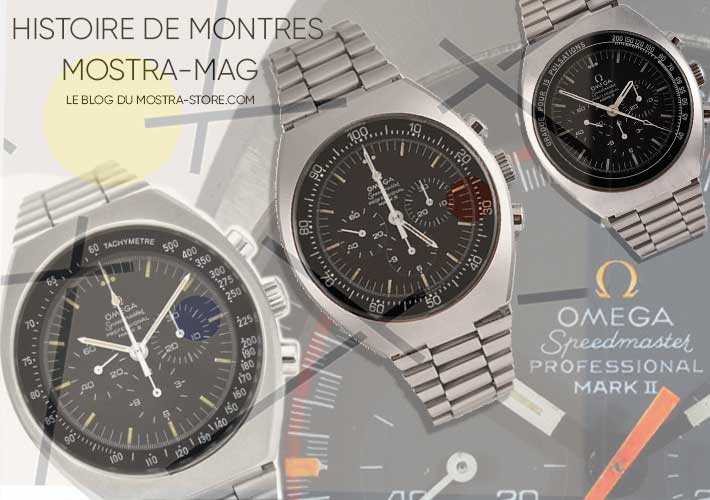
Released in 1969, the Omega Speedmaster Mark II was designed for professionals on Earth rather than astronauts. Equipped with the same reliable caliber C-861 as the Moonwatch, it introduced a modern aerodynamic case, better water resistance, and interchangeable bezels (pulsometer, telemeter, decimal scale, tachymeter) tailored to various fields like healthcare, finance, agriculture, and motorsports. Long overshadowed by the classic Moonwatch, this robust and still-affordable chronograph is now becoming a rising star among collectors.
From the Moon to the Ground: Reimagining the Speedmaster
Omega Speedmaster Mark II – the Swiss watch that refuses to play a supporting role… Professionals who keep their feet on the ground also need a watch…
Year 1969. For twelve years, Omega has reigned supreme in the air and space with its Speedmaster 145.012 chronograph (affectionately nicknamed the pre-Moon and later the Moonwatch due to its historic role on the wrists of NASA astronauts). Even as the Speedmaster accompanies Neil Armstrong and Buzz Aldrin onto the Moon’s surface, Omega's designers are already working on a new version.
A chronograph for Earth-bound professionals
The design team at the Bienne-based manufacture embarks on a project to reimagine the now-legendary three-register chronograph—this time, to conquer the Earth. They study repair records and feedback from clients and retailers, and investigate how the new C-861 caliber could be better suited to civilian and professional uses. Their goal: improve usability and durability while modernizing the look.
Addressing the Moonwatch’s weaknesses
Analysis of service records reveals two main issues: a fragile plexiglass crystal and a tachymeter bezel prone to damage. Customers also requested better water resistance, a more user-friendly crown, and a more modern design. With this data in hand, Omega set out to expand its reach beyond astronauts.
Targeting new professional audiences
Four key sectors were identified: medicine and healthcare, finance and commerce, agriculture and industry, and the world of aviation and motorsports. Each sector presented new use cases for Omega to address—especially through bezel customizations tailored to real-world needs.
Omega Speedmaster Mark II: New Design, Same Legendary Engine
With the specifications finalized, Omega’s engineers developed the new Speedmaster Mark II in record time, launching production in 1969. The watch featured a modern, lugless 42mm case with bold, angular lines typical of 1970s design. Inside: the same 17-jewel Omega C-861 manual movement as in the Moonwatch 145.022-69 ST. Beating at 21,600 vph, it provided a 40-hour power reserve—rugged, precise, and easy to service.
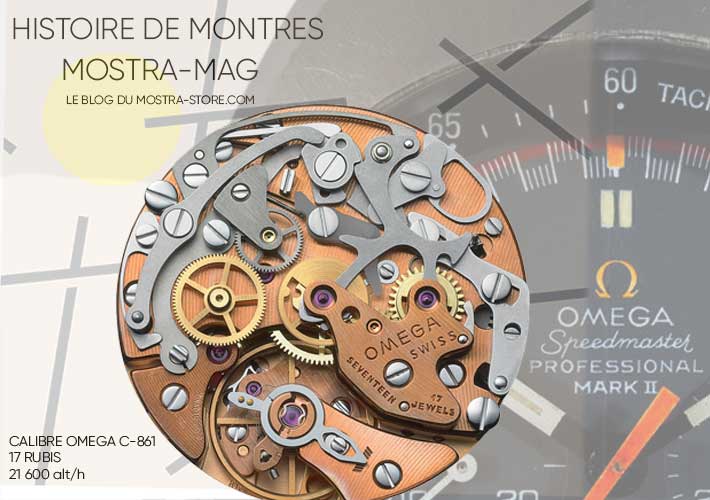
A futuristic case and modern materials
The aerodynamic brushed steel case gave it a Space-Age look, even appearing in the sci-fi series *Space: 1999*. Its integrated metal bracelet reinforced the monobloc impression. The mineral crystal was anti-reflective and protected the bezel insert beneath it—solving previous issues with moisture and fragility, while making the crown easier to operate. But its true strength lay in its versatility…
Custom Bezels for Every Profession
What truly set the Speedmaster Mark II apart was its ability to serve various professions, thanks to interchangeable bezels and two dial versions.
Pulsometer bezel: For healthcare professionals
Designed to calculate heart rates over 15 seconds, the pulsometer insert became a favorite in hospitals and among sports coaches. Its popularity in medical dramas like *ER* and *House M.D.* earned it the nickname *Speedmaster ER* or *Paramedics*.
Decimal bezel: For industry and finance
Nicknamed *Wall Street*, this version allowed base-100 time calculations, perfect for traders and manufacturing productivity metrics. It quickly gained traction on trading floors and production lines alike.
Telemeter bezel: For agriculture and military
By timing thunder after lightning, the telemeter insert helped workers estimate storm distance—vital in agriculture. It also proved useful for artillery, leading to Omega supplying certain military units during the Vietnam War’s final years.
Tachymeter bezel: For motorsports and aerospace
Still favored by racing fans, pilots, and astronauts, the tachymeter insert allowed speed measurement over a known distance. The Mark II with this bezel was used up to the Speedmaster Mark 4.5 and even made it into space aboard the Space Shuttle and Mir station.
Two Iconic Dials: Professional and Japan Racing
The Speedmaster Mark II came with two main dial options:
- Professional version: Black dial with white text and tritium-filled hands and indices. Features three sub-dials (small seconds, 30-minute, 12-hour).
- Japan Racing version: Gray dial with orange accents, checkered outer track, and orange Omega logo. Reserved for models with the tachymeter bezel only.
A Rising Star for Collectors
Overshadowed for years by the Moonwatch, the Mark II has gained attention thanks to rising vintage interest and a 2014 reissue. Its sporty 42mm size, modular design, and C-861 movement (now increasingly rare due to cannibalization for Moonwatch repairs) make it an attractive investment. Its supply is shrinking, while demand grows steadily among enthusiasts and professionals alike.
With its bold lines, professional utility, and accessible pricing, the Omega Speedmaster Mark II is a chronograph that has finally earned its place in the spotlight.
Share this content