The history of the Omega Seamaster: from origins to James Bond icons
Born in 1948 as the world sought renewal, the Omega Seamaster blended elegance, strength, and water-resistance. From post-war peace to deep-sea diving and onto the silver screen with James Bond, it became an icon of style and adventure.
Born in 1948, the Omega Seamaster bridges elegance and performance through decades of innovation. From its post-war beginnings to its iconic role on James Bond’s wrist, it stands as a timeless symbol of adventure, precision, and style.
1948: the birth of a Legend
The Omega Seamaster emerged in a world eager for renewal, blending elegance, durability, and water resistance. From post-war peace to the depths of the ocean, and later the big screen, it became an icon of style and adventure.
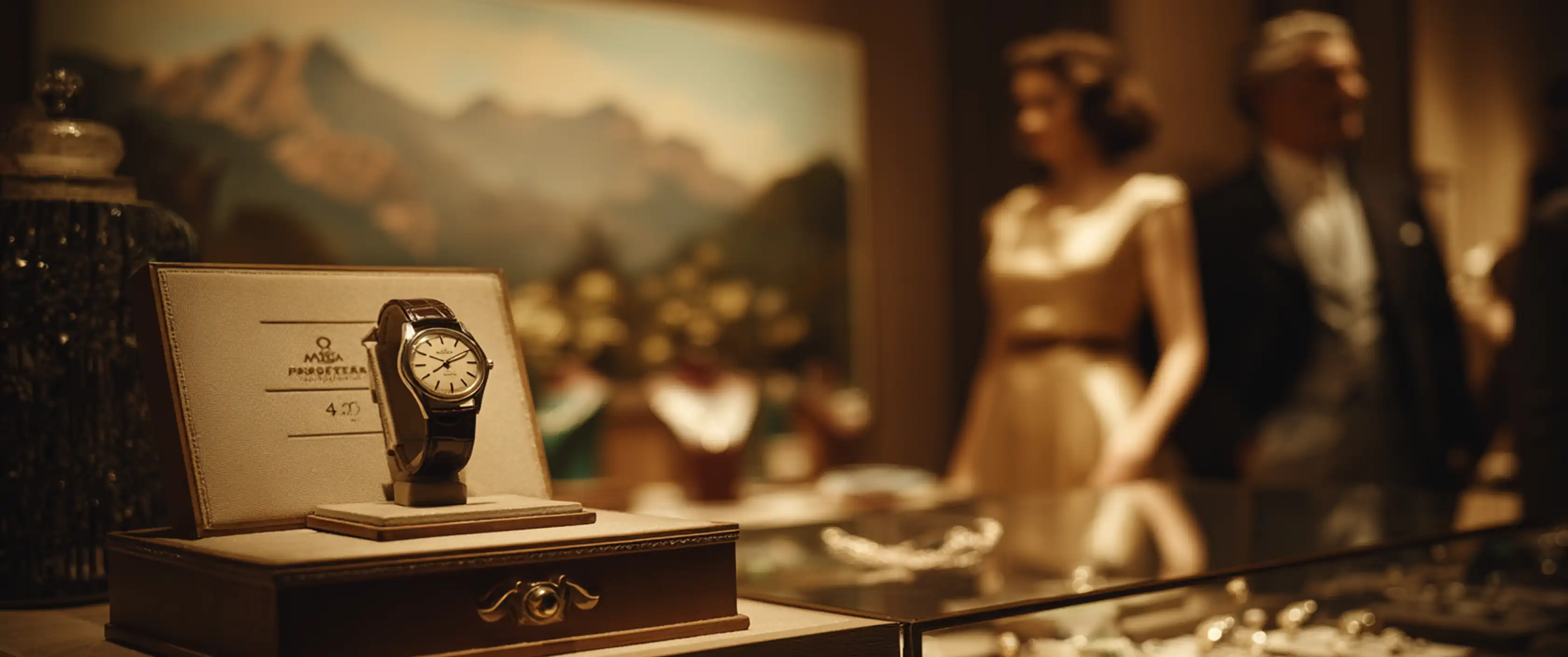
A breath of salt and sea air accompanied the birth of the Omega Seamaster. It was 1948, Europe was still healing from the scars of war, and people once again dreamed of travel and exploration. In jeweler’s windows, a new watch caught the eye: elegant, robust, and water-resistant. It was not born for war, but for peace restored and a renewed taste for adventure. Named Seamaster, its destiny would soon intertwine with deep-sea diving, sporty fashion, and, later, cinema.
The story begins in 1948, Omega’s centenary year. The Swiss maison introduced a water-resistant model inspired by the military watches it had supplied to Allied forces during World War II. The round steel case, sealed with a rubber gasket system, housed a precise and durable automatic movement. This first Seamaster was above all a dress watch, yet designed to withstand humidity and harsh environments—a first step into the marine world that would shape its legend.
1950s: the era of diving watches
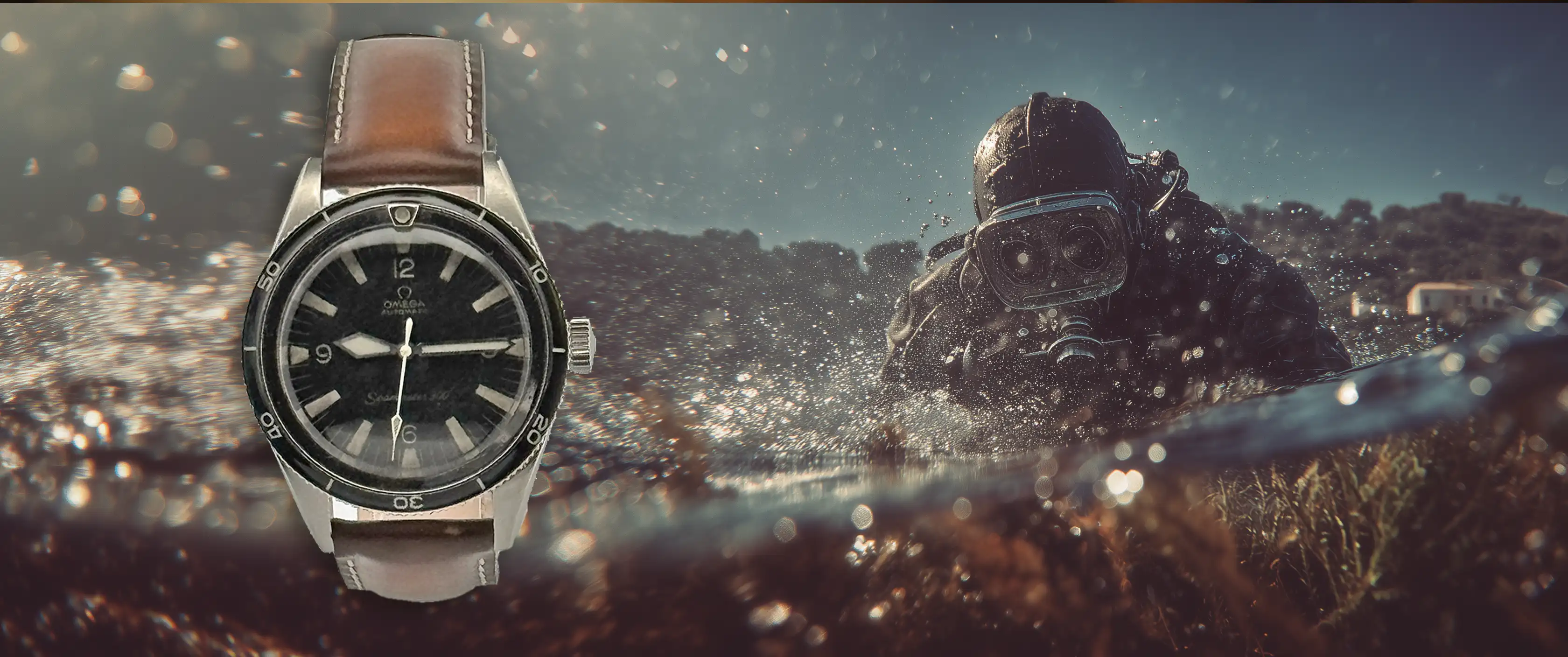
During the 1950s, demand for sports watches surged. Omega introduced the Seamaster 300 Ref. CK2913 in 1957, a true professional diving watch. With its broad black dial, luminous markers, rotating bezel, and 200-meter water resistance, it became an essential tool for divers.
This was the era of Jacques-Yves Cousteau and the first great underwater documentaries. The Seamaster 300’s “broad arrow” hands and functional design made it a cult object, symbolizing both marine exploration and Omega’s technical mastery.
1960s: conquering seas and cities
The 1960s extended this momentum. The Seamaster adapted to new technologies and a broader audience. The Refs. 165.024 and 166.024, powered by the calibre 552 and reinforced crystals, became trusted companions for military divers, notably in the British Royal Navy.
It was also the decade when watchmaking entered cultural dialogue: the Seamaster became the timepiece of the urban adventurer, equally suited to sporty weekends and modern metropolitan life.
1970s: boldness and depth
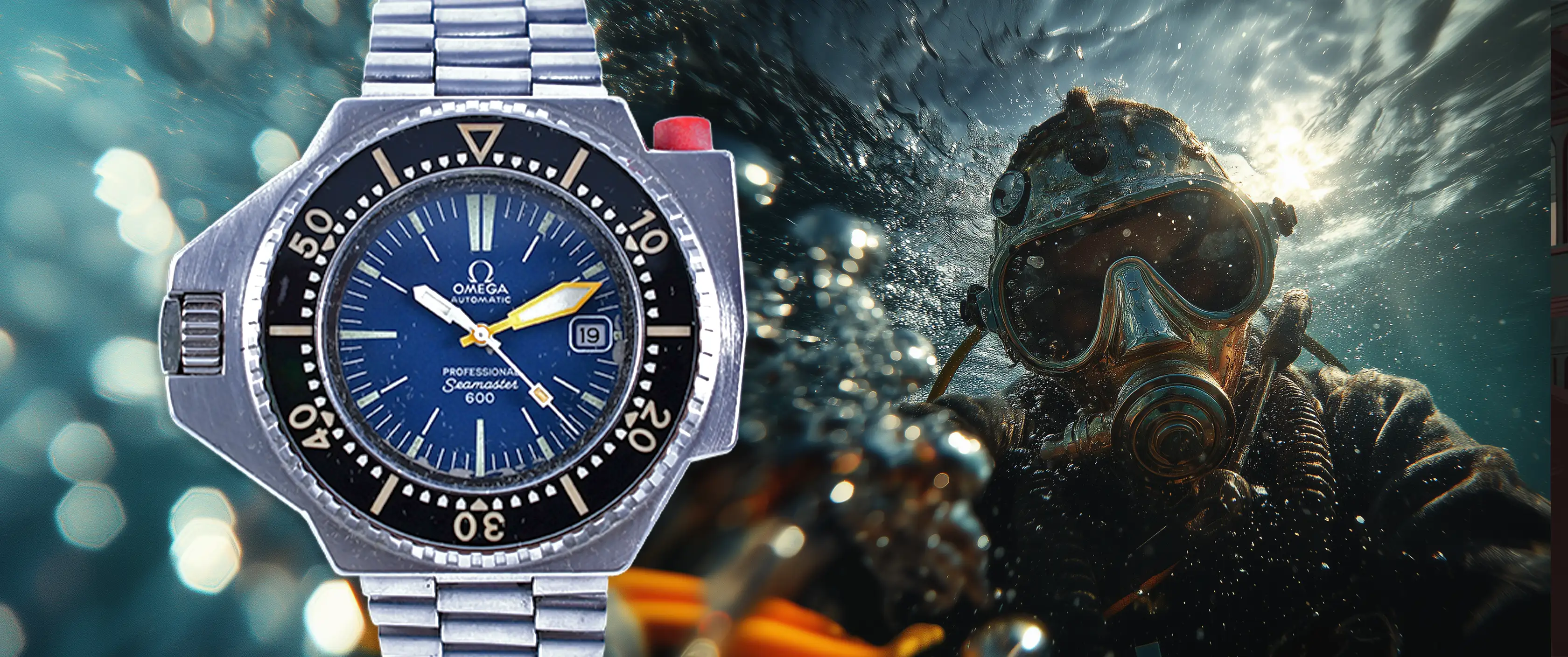
The 1970s brought a wave of creativity. Omega launched the Seamaster 600 Ploprof (short for “plongeur professionnel”), a massive steel block engineered to resist depths of 600 meters, recognizable by its protected crown and red bezel-lock button. This tool watch equipped COMEX divers and became an absolute reference in utilitarian watchmaking.
At the same time, Omega embraced bold design codes: tonneau-shaped cases, colorful dials, and mesh steel bracelets. These psychedelic years—marked by sci-fi cinema and progressive rock—perfectly matched the Seamaster’s adventurous and daring spirit.
1980s–1990s: the return to classicism and the arrival of James Bond
In the 1980s, the Seamaster returned to more classic lines. The arrival of quartz movements, followed by a revival of mechanical calibres, diversified the range. The Seamaster became a versatile timepiece, offered in both refined and sporty versions, appealing to urban professionals as much as to sports enthusiasts. But a decisive turning point came in 1993.
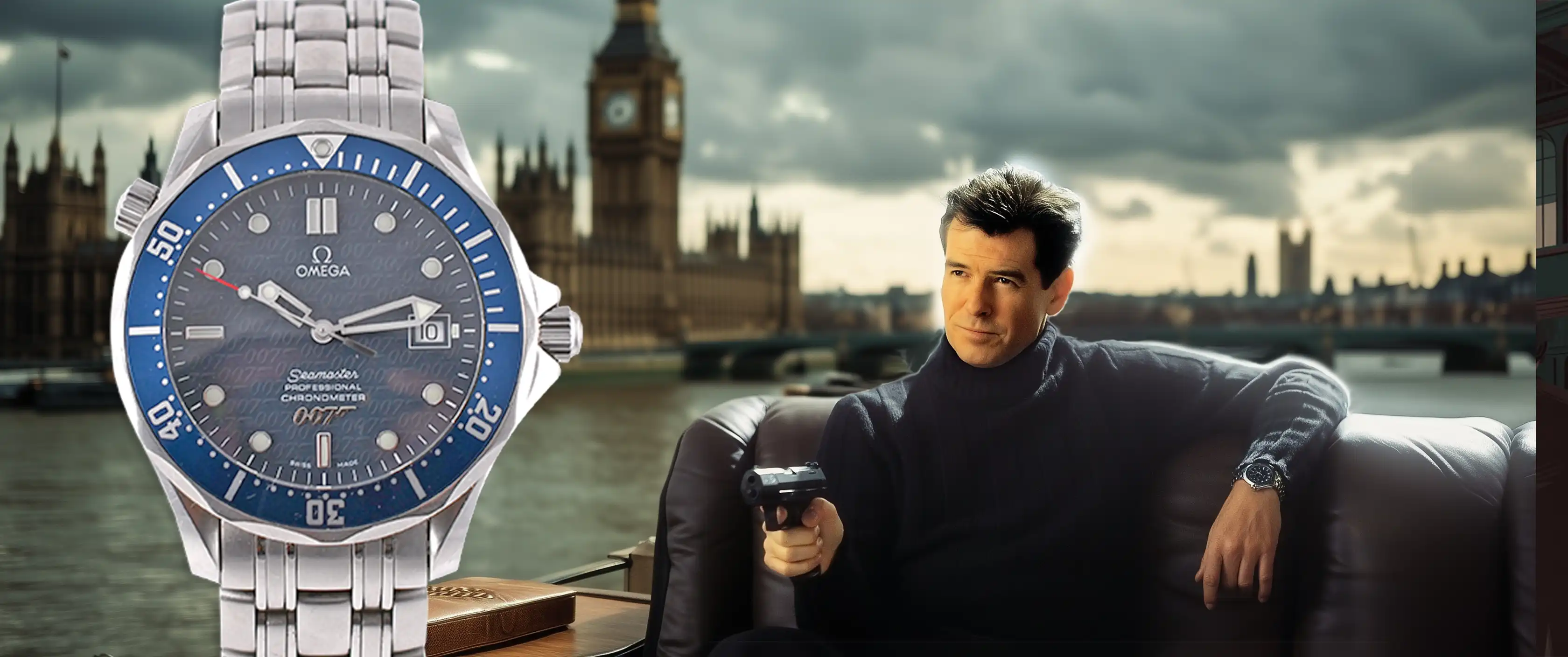
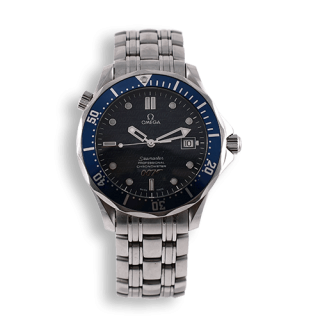
That year, Omega launched the Seamaster Professional 300M, recognizable by its blue bezel, wave-pattern dial, and helium escape valve at 10 o’clock. A few months later, it appeared on Pierce Brosnan’s wrist in GoldenEye (1995), inaugurating a partnership that would redefine the Seamaster’s identity.
From that moment, James Bond became its most famous ambassador. Whether quartz (Ref. 2541.80) or automatic (Ref. 2531.80), the Seamaster Professional embodied both the toughness of a diver and the sophistication of a British spy.
2000s–2010s: innovation and recognition
The 2000s and 2010s solidified this reputation. Daniel Craig succeeded Brosnan, and each Bond film introduced a new Seamaster. The Planet Ocean (launched in 2005), water-resistant to 600 meters and powered by the Co-Axial calibre, became the ultimate gentleman diver’s tool.
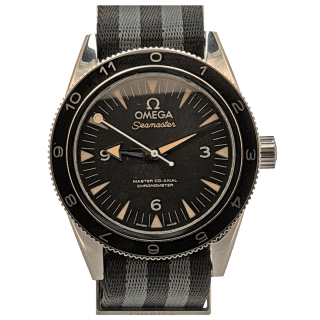
The Seamaster 300 Master Co-Axial of 2014 reinterpreted the iconic 1957 design with state-of-the-art anti-magnetic technology. The Seamaster thus evolved into both a tribute to its heritage and a showcase of Omega’s constant innovation.
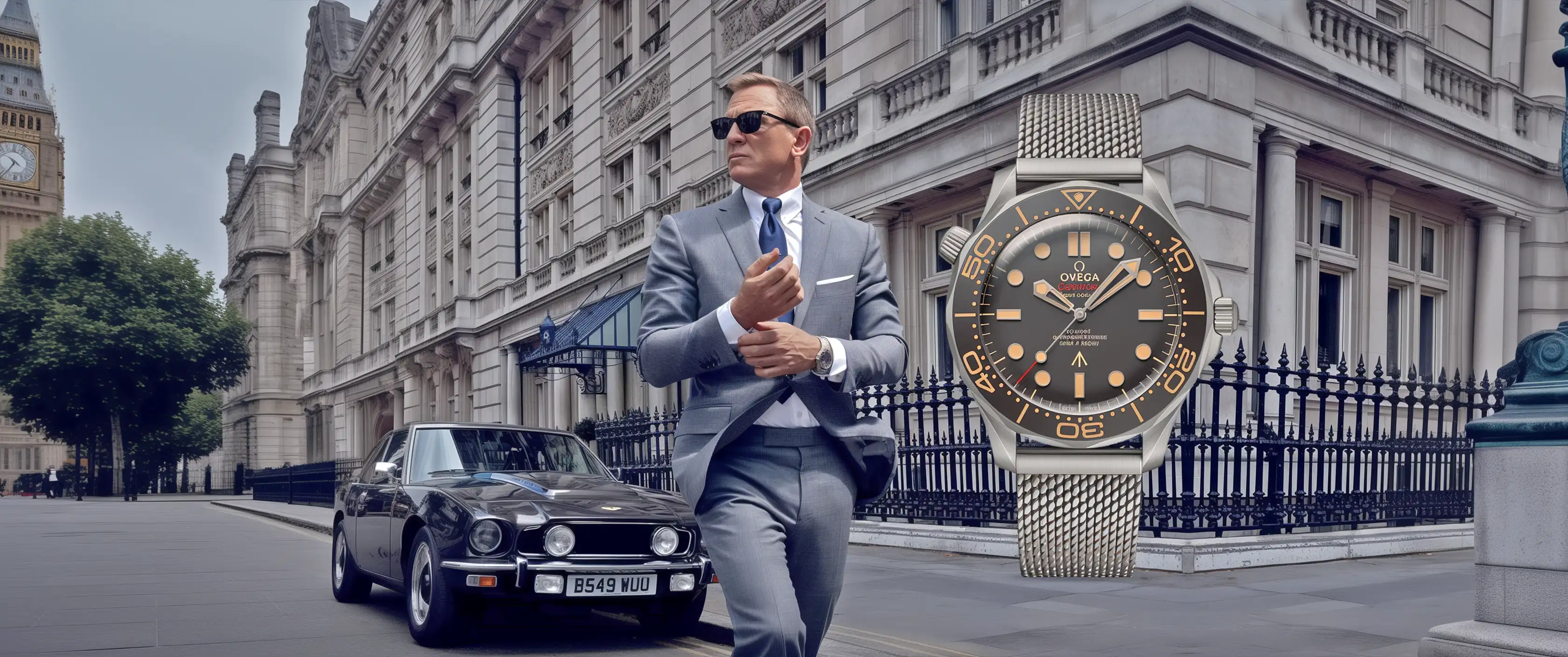
Today: between heritage and modernity
Today, the Seamaster collection includes several distinct families: Seamaster Diver 300M, Planet Ocean 600M, Aqua Terra, and Seamaster 300 Heritage. Each expresses a facet of Omega’s identity—professional diving, sporty elegance, urban travel, or vintage homage.
What unites them all is a balance between refined design, technical innovation (Co-Axial escapement, anti-magnetism, enhanced water resistance), and a deep connection to Omega’s legacy.
From the Seamaster of 1948 to James Bond’s Seamaster Diver, this story is more than a chronicle of watchmaking. It mirrors the evolution of lifestyles, the pursuit of adventure, and the enduring dialogue between horology and popular culture. In the 1950s, it was the age of underwater pioneers; in the 1970s, the era of bold experimentation; in the 1990s, the time of cinematic glamour. Today, the Seamaster continues to embody the unique link between technology and style, between sea and city, between past and future.
These products might interest you




Share this content