Dirty Dozen: the history of Churchill's military watches
The British military watches from World War Two
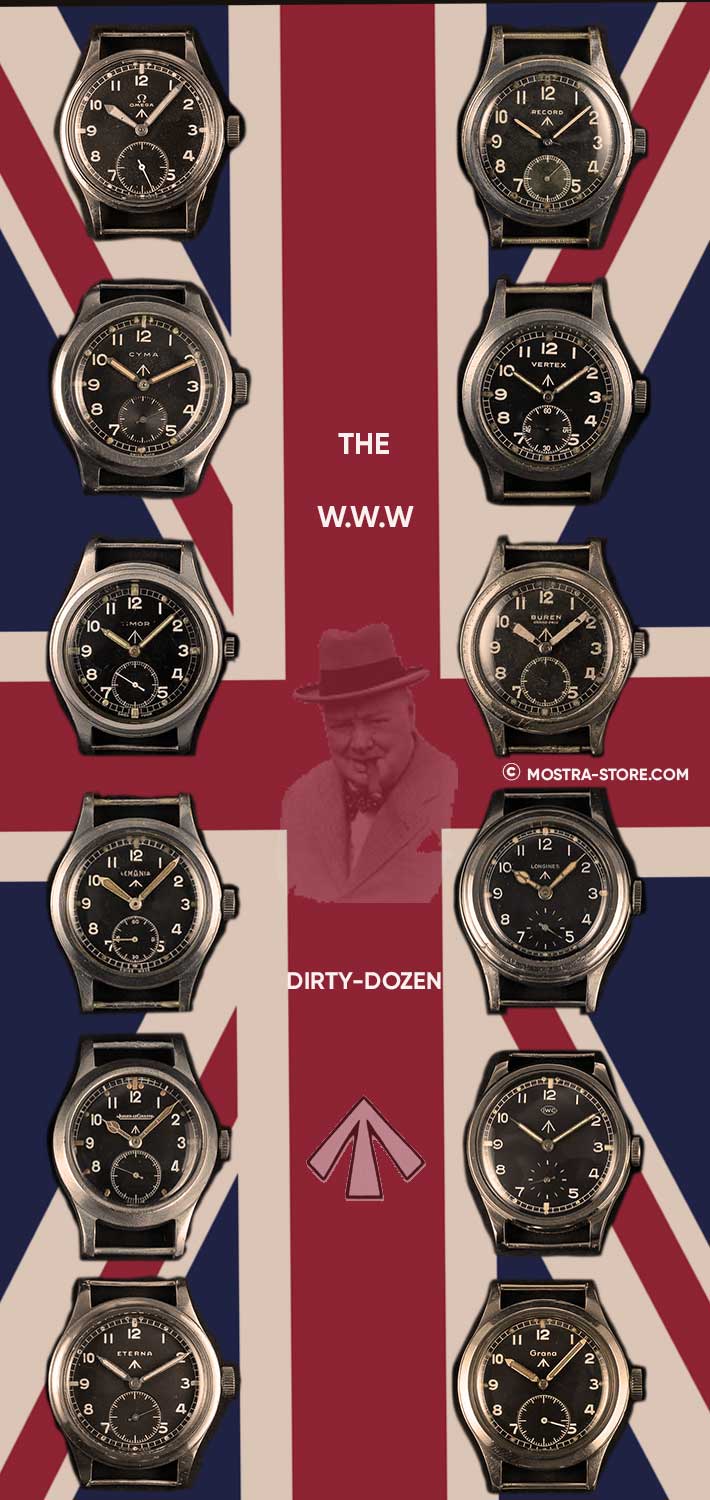
TLDR: The "Dirty Dozen" Military Watches
Commissioned by the British Army under Winston Churchill, the twelve military watches known as the Dirty Dozen were produced during World War II by twelve different manufacturers. Standardized, rugged, and reliable, they became a cornerstone of military timekeeping history and remain highly sought-after collector’s pieces today.
Churchill’s Vision for Military Watches
Appointed Minister of Armaments in July 1917, Winston Churchill realized, long before the outbreak of World War II, the importance of standardizing the military equipment used in battles. During World War I, Allied armies used different weapons and gear, which complicated ammunition supply and maintenance. Many soldiers even went to the front with their own personal equipment, leading to confusion, inconsistency, and sometimes disaster.
The Critical Role of Synchronization
In a meeting analyzing a particularly deadly battle for the British Expeditionary Force, Churchill understood the crucial need for precise timekeeping and the synchronization of group leaders’ watches during offensives. Poor coordination had caused assault waves to be destroyed one after another by enemy fire, whereas a simultaneous attack could have overrun the enemy. This observation inspired Churchill to design the War Wrist Watch, stamped with the "WWW" marking, the direct predecessor to the famous Dirty Dozen.
The Birth of the Dirty Dozen
Well before World War II, and under Churchill’s watchful eye, the British Empire commissioned twelve manufacturers to ensure production security through multiple supply sources. The goal: create a modern combat watch that was robust, reliable, easy to maintain, operable in combat conditions, and affordable under wartime constraints.
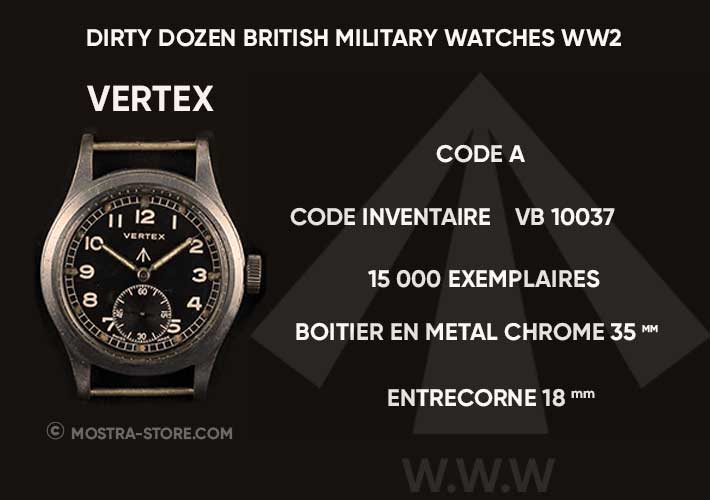
Ambitious Technical Specifications
The British Army’s requirements were demanding for the time:
- Black dial with luminous numerals and 12-hour railway minute track.
- Small independent seconds sub-dial at 6 o’clock to verify movement operation.
- Hack-watch (stop-seconds) hand-wound movement with at least 15 jewels and shock resistance.
- Movement size between 11.75 and 13 lignes, with near-chronometer precision.
- Plexiglas crystal, water- and dust-resistant to the standards of the time.
- Large crown operable while wearing gloves.
- Mandatory engravings: Broad Arrow (property of the British Crown), "WWW" marking, civilian serial number, and military serial number with manufacturer code.
- Fixed lugs with 18mm width, screw-down caseback for easy maintenance.
Related products


Share this content