Hans Wilsdorf: the man who revolutionized watchmaking and founded Rolex
The visionary from the beginning of the 20th century
Visionary and founder of Rolex, Hans Wilsdorf transformed watchmaking by harnessing the industrial revolutions of the early 20th century. From Bavaria to the heart of the British Empire, he built a brand crowned with global prestige.
Hans Wilsdorf: The Man Who Revolutionized Watchmaking
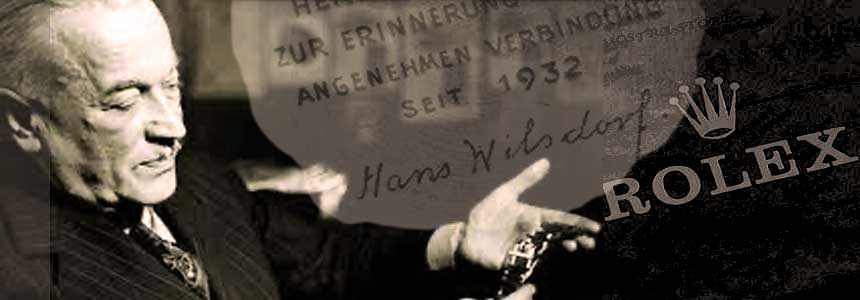
Hans Wilsdorf was a man who would leave a lasting mark on the industrial Europe of the early 20th century through innovative and forward-thinking methods. He understood how to take advantage of a rapidly evolving context to transform the world of watchmaking.
A Thriving Industrial Context
By the late 19th century, significant social and economic changes were reshaping industrialized European nations. Labor reforms, industrial improvements, and the rise of the middle class fueled economic growth. Technological breakthroughs—rail transport, aviation, automotive mechanization, domestic electrification, and widespread access to running water—enabled industries to decentralize, allowing countless workshops and artisans to operate independently of large corporations.
Watchmaking Still in an Artisan Era
At the dawn of the 20th century, watchmaking was still dominated by small independent workshops, subcontracting through local alliances. The principles of Taylorism and scientific work organization, already applied in many other industries, remained rare in this sector. Hans Wilsdorf quickly grasped the untapped potential of modernizing the watchmaking trade.
From Bavaria to London: The Birth of an Empire
Born in Bavaria in 1881, Hans Wilsdorf left his homeland in 1905 to settle in London—one of the epicenters of the global industrial and financial revolution, and the heart of the British Empire’s prosperous trading network. It was here that he began building his watchmaking empire, with the clear ambition to become the king of the industry.
A Crown as a Symbol
To embody his vision, he chose the crown as the emblem of his brand, naming it “Rolex.” Short, powerful, and elegant, the name evoked the prestige of the British Crown, which at the time held global influence. Wilsdorf would recount the story of this inspiration many times in later years—a spark that ignited his ambition to conquer the world of watchmaking.
Share this content